Erosion Control Blanket vs Hydraulic Mulch in Ontario
An erosion control blanket vs hydraulic mulch review compares one group of rolled erosion control products with applied mulch. Soil, water setting and protection period shape the review. Compare evidence and inspection needs, not a universal product ranking.
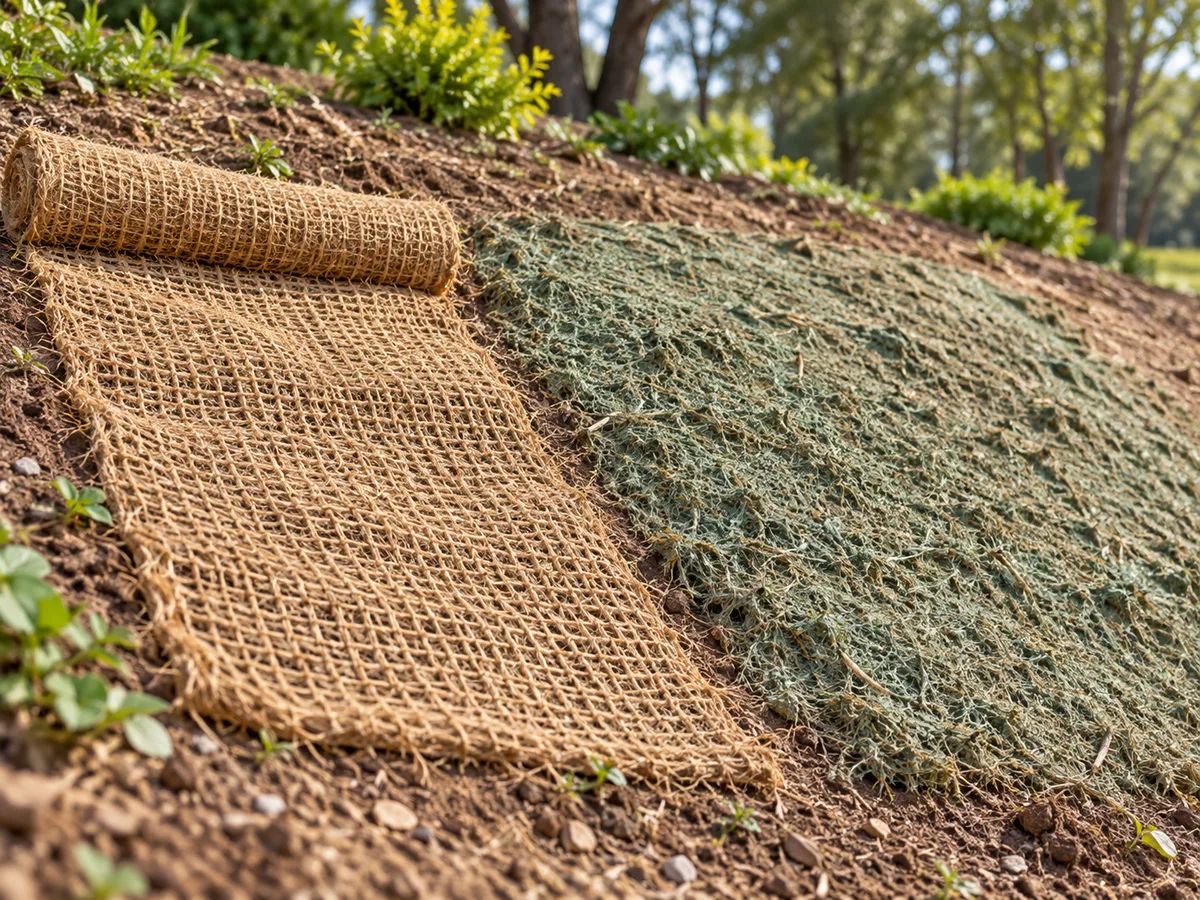
An erosion control blanket vs hydraulic mulch comparison starts with the site, not the product catalogue. Both approaches can help protect exposed soil. However, the right choice depends on the required protection, water movement, surface condition and time available for vegetation to establish.
For an Ontario construction project, use the comparison to organize a design discussion. Do not treat either product name as a complete specification. A suitable selection needs a defined location, supporting product information and a workable inspection arrangement.
Erosion control blanket vs hydraulic mulch: what changes?
An erosion control blanket is a manufactured covering placed over the soil. Hydraulic mulch is a mixture applied to the surface. Those different forms create different questions about contact, coverage and how the selected material remains effective.
The STEP rolled erosion control products guidance distinguishes netting, blankets and turf reinforcement mats. These are not interchangeable labels. The resource describes differences in composition, strength and intended service life.
By contrast, the STEP mulching guidance describes hydraulic mulch as a sprayed mixture of fibres, water and a tackifier. It identifies temporary protection of bare soil outside concentrated-flow areas as an application. A product comparison therefore needs more detail than “rolled” or “sprayed.”
Blanket vs hydraulic mulch: compare the application
A useful question is whether a particular product suits a particular area during a particular work stage. “Which is better?” leaves out the facts that control that answer. It can also conceal different assumptions in competing proposals.
For example, one proposal may assume that the final soil surface is ready. Another may include additional surface preparation. Comparing only the material name would miss a meaningful difference in the work.
Likewise, two hydraulic mulch proposals may describe different formulations. Two rolled-product proposals may offer different reinforcement or degradation characteristics. Ask for the actual product information before treating either pair as equivalent.
Keep soil protection separate from sediment capture
This article concerns protecting exposed soil. It does not replace the wider erosion and sediment control plan. A selection for one slope must fit the site’s other controls and drainage arrangements.
A perimeter measure does not answer the surface-protection question. Similarly, a protected slope does not explain every downstream sediment-control requirement. The designer should consider how the measures work together without assuming that one eliminates the need for the others.
Build a brief for erosion control blanket vs hydraulic mulch selection
Before requesting alternatives, identify the area on the current drawing. Give it a useful reference, such as the west embankment or the temporary work-stage slope. Avoid descriptions that different people could interpret as different locations.
Record whether the surface is existing, recently graded or still due to change. Then identify the expected construction activity around it. A protection proposal based on a finished surface may be unsuitable if another trade will disturb the same ground.
Keep observations separate from assumptions. A photograph can show an exposed patch or visible rut. It cannot establish every property needed for design. Where information is missing, name the question rather than filling the gap with a confident description.
Describe the water setting before selecting the cover
Show where water approaches the area and where it continues afterward. Ask whether the location is a broad surface, a defined drainage route or an interface between the two. Also identify upstream work that could alter that setting.
This distinction matters when comparing an erosion control blanket vs hydraulic mulch. A supplier’s statement about one application does not establish suitability in a different flow setting. Obtain the relevant product evidence and let the responsible designer assess the proposal.
If the water route remains uncertain, keep that decision open. Do not select a product first and assume that the drainage will somehow fit it. Resolve the route or define the additional information needed before final selection.
Define the exposure period and the next stage
Describe how long the area needs protection and what will replace or supplement it. The answer may depend on construction sequencing, access or the intended final surface. A date alone is not enough if the next activity remains unsettled.
For example, “until landscaping” does not explain whether the area will be regraded first. Nor does it identify who decides that the temporary measure has served its purpose. Make those transition questions visible in the design brief.
Compare the required protection period with documented product characteristics. Do not infer service life from appearance or a broad marketing category. Also consider how the project will respond if the next work stage starts later than expected.
Before comparing products, assemble the same brief for both options:
- Place: the marked area and its relationship to the water route.
- Surface: the observed condition and any preparation still planned.
- Stage: the expected protection period and the activity that follows.
- Evidence: the identified product and information supporting its proposed use.
Questions to ask about erosion control blankets
First, establish which rolled product the proposal actually includes. Ask whether it is a temporary blanket, netting or a reinforcement mat. Its product sheet should support the intended role rather than rely on a photograph of a similar installation.
STEP emphasizes ground contact, suitability for the expected conditions and manufacturer-specific installation instructions. It also warns against installation on frozen ground. These points frame a design review; they do not supply a universal anchoring detail for every site.
Can the blanket maintain the intended ground contact?
Ask the construction team to identify surface conditions that could prevent the selected covering from sitting as intended. The designer needs that information before accepting the arrangement. A drawing symbol alone cannot confirm the condition of the ground beneath it.
Discuss how the proposed work will address irregular surfaces and changes in grade. Then establish who will check the finished installation against the specified detail. That check should relate to the selected product, not a generic memory of another project.
When an observation suggests a gap or lifted area, record its location and extent. Do not label it acceptable simply because the surrounding surface looks covered. The appropriate response may require a closer inspection or a revised detail.
Are the transitions and boundaries explained?
A rolled covering has edges and connections. The proposal should explain the relevant transitions to surrounding surfaces and other measures. Those interfaces deserve attention because a product description rarely explains the entire site arrangement.
Review the drawing and the product information together. If they appear inconsistent, request a coordinated answer before installation. Do not leave the site team to choose between conflicting instructions without an agreed process.
Also identify areas where future work could disturb an edge. An access change or utility activity may affect an otherwise suitable selection. The design discussion should address that foreseeable interface rather than assume the protected area will remain untouched.
What evidence supports the rolled-product selection?
Keep the product identity, relevant technical data and accepted detail together. Record which location and stage the review covers. This makes a later substitution easier to assess without recreating the entire discussion.
A product brochure may contain broad claims that do not apply to every configuration. Ask which documented information supports the proposed application. If a statement depends on a particular substrate or installation arrangement, keep that condition attached to the claim.
Do not convert a product limitation into a universal site rule. The purpose of the record is to explain this selection and its assumptions. It is not to produce a standard answer that everyone can copy onto unrelated drawings.
Questions to ask about hydraulic mulch
Identify the proposed mixture and its intended function. Ask whether the proposal concerns temporary soil protection, a seeded application or another documented system. Similar application equipment does not make different mixtures technically equivalent.
STEP’s mulching appendix calls for surface preparation, adequate coverage and time for the application to dry before rain. It cautions against application to frozen soil or during freezing or rainy conditions. Confirm the selected product’s requirements rather than assuming that spraying can proceed in any weather.
Identify the proposed hydraulic mulch formulation
The product description should identify the formulation and its documented capability. The term “equivalent mulch” is not enough to establish that two proposals have the same composition or intended application.
Keep this identification clear before comparing options. Availability on short notice does not establish technical acceptance.
Record the final product description clearly enough for the site team to recognize it. Avoid a package that refers to one formulation in the quotation and another in the drawing note. Consistent document names make the handover easier to check.
How will the team check coverage and access?
Ask how the responsible site team will document the application and inspect the protected area. Access matters during the work and afterward. An area that looks reachable from the construction entrance may be difficult to inspect safely once other activities begin.
Agree what information the installer should provide under the project arrangements. That may include the product identity, application area and records requested by the designer or authority. Do not invent a standard certificate that the selected system does not require.
Likewise, distinguish a visual record from technical verification. Photographs can help identify missed areas or later damage. They do not prove every aspect of the application or replace the agreed inspection method.
Is the planned work window realistic?
The schedule should reflect the conditions needed for the proposed product. A fixed delivery date does not establish that the site is ready for application. Ask who will review changing conditions and who can authorize a revised sequence.
If weather prevents the intended work, refer the problem back promptly. Do not assume that using more material or switching products removes the limitation. The alternative needs its own review against the actual site conditions.
Keep seasonal planning focused on the whole site rather than the cover alone. Shutdown access, response arrangements and restart decisions belong in the wider seasonal plan. The product comparison should identify those interfaces without duplicating the winter programme.
Blanket versus hydraulic mulch during vegetation establishment
Where the design relies on vegetation, explain the intended sequence. Seed placement, surface protection and the eventual vegetated condition are different stages. A record that simply says “seeded” does not describe the condition the project has actually achieved.
Ask which party will assess the transition and what project criteria they will use. Keep that decision separate from the delivery of seed or protective material. Completion should reflect the relevant condition, not only an invoice or a calendar date.
What happens if establishment takes longer?
Discuss the possibility before selecting the temporary measure. A delayed work stage or unsuccessful establishment can leave the project relying on the original protection for longer. The design and site team need a clear way to raise that concern.
Do not assume that the original choice will work indefinitely. Preserve inspection access and use a clear review sequence when establishment takes longer:
- Record: identify the current condition and the changed programme assumption.
- Assess: ask the responsible parties whether to maintain the arrangement, obtain more information or review an alternative.
- Coordinate: keep access available and bring changed site logistics into the protection review.
Can one site use more than one approach?
A site can present more than one design situation. Therefore, a blanket vs hydraulic mulch comparison may lead to different selections for different areas. It does not need to produce one winner for the entire property.
Use a clear location reference for each proposed treatment. Then check the boundary between them. A plan that identifies separate zones but leaves their interface unexplained can still create an implementation gap.
Keep the reason for each selection concise. For example, explain the relevant surface, duration or access constraint without turning the drawing into a product advertisement. The record should help the next reviewer understand the design basis.
Record the erosion blanket and hydraulic mulch decision
An erosion control blanket vs hydraulic mulch comparison record can make proposals easier to review. Start with the problem the protection must address. Then list the information supporting each option and the unresolved questions that affect selection.
Compare like with like. Both options should refer to the same area, work stage and intended protection period. If one assumes a different grading arrangement, resolve that difference before comparing prices or programme implications.
A useful selection record answers six questions:
- Which area and work stage does the decision cover?
- What site information supports the comparison?
- Which exact products or systems are proposed?
- What conditions and limitations apply?
- Who accepts the selection and carries out each task?
- What change would trigger another review?
Blanket vs hydraulic mulch: compare the complete scope
A material price does not describe the full proposed work. Ask whether the quotation includes the preparation assumed by the design, access arrangements and the information needed for acceptance. Confirm how the contractor handles repairs and later disturbance.
This is a scope comparison, not a claim that one method always costs less. Costs depend on the project and the services included. Avoid publishing a universal price difference without a defined basis.
Also separate engineering services from construction pricing. A design review may identify missing information or necessary coordination. It does not automatically include procurement, installation management or ongoing site supervision.
Review substitutions without losing the design basis
Ask the proposer to identify the original item, proposed replacement and reason for the change. Include the affected location and current drawing issue. Attach the relevant product information rather than relying on a brief verbal assurance.
The reviewer should consider whether the replacement changes any assumption behind the original selection. If it does, revise the affected drawings and supporting notes together. Obtain any required acceptance through the project’s agreed process.
Keep the decision with the current drawing set so the site team can distinguish an accepted change from a suggestion.
If the evidence is incomplete, describe what remains missing. A focused request is more useful than a blanket rejection or an unsupported acceptance. It also gives the proposer a clear path to resolve the issue.
Read product evidence in its proper context
A technical submission should let the reviewer connect the evidence to the proposed use. Start with the product name and document version. Then identify the application the information describes, rather than treating every number in a brochure as relevant to the site.
Ask whether the proposal relies on a test result, an installation recommendation or a general description. These serve different purposes. A test result does not automatically establish that the site’s proposed arrangement reproduces the conditions behind it.
Keep qualifications beside the information they limit. If the evidence applies only with a stated preparation method or supporting component, do not remove that condition from the comparison. A short summary should preserve the reason the reviewer considered the evidence relevant.
Where the supplier offers several grades, confirm which one the quotation includes. A family brochure may describe options that the project has not selected. The purchase description, accepted technical information and working detail should identify the same item.
Make the final selection understandable to the next person
After the review, issue a concise decision record with the appropriate drawing revision. Identify the accepted selection, covered area and any conditions that still need action. Keep a proposed alternative separate from the option the project will actually use.
Give the site team a clear route for questions. An unexplained instruction to use an equivalent product can create uncertainty when stock changes. A named review process lets the contractor raise a practical issue without silently changing the engineering basis.
Also identify what information should return after the work. The agreed records may help the team understand later observations or a change in conditions. Define their purpose rather than collecting documents that nobody will check.
At the next work-stage handover, carry forward unresolved actions. A new contractor or supervisor should not need to reconstruct the selection from scattered emails. A current drawing and short decision record provide a clearer starting point.
Hydromulch vs erosion blanket: inspection questions
A blanket versus hydraulic mulch review should also compare inspection needs. Follow the accepted design and applicable project requirements. Establish who inspects the protected areas and who arranges corrective work.
Those responsibilities are not automatically included in the drawing author’s assignment.
Use questions that relate to the chosen system. For a rolled covering, the review might focus on the specified attachment and contact. For a sprayed application, it might focus on the documented coverage and visible changes. The actual inspection scope must match the selected detail and site conditions.
Describe the condition before prescribing the response
A useful observation identifies the location, date and visible issue. Include photographs where they explain the problem. Distinguish what the inspector could see from what remained inaccessible or hidden.
For example, “damage on the west slope” gives the next person little to work with. A marked location and description of the affected area create a clearer starting point. They also help the team compare a later check with the original observation.
Do not assume that repeating the same repair will resolve a recurring problem. Ask whether the surface, water route or site activity differs from the design basis. A repeated defect may need a coordinated review rather than another isolated maintenance note.
Identify the changes that require design review
Changes to the work area, grading, access or construction sequence can affect a previously reviewed selection. The project should have a route for reporting those changes. Otherwise, an unchanged drawing may appear current while the site it describes has moved on.
Provide the designer with the revised information and a short explanation of the difference. This is more useful than asking whether a product is still “okay” without context. The answer depends on what has changed and which assumptions the original review used.
Keep urgent site-response procedures separate from routine document review. Where a condition creates immediate risk, the responsible site team should follow its established response arrangements. A request for a drawing revision should not replace those duties.
Erosion blanket and hydraulic mulch comparison: site examples
The following hypothetical situations illustrate a hydromulch vs erosion blanket comparison. They show how to organize the decision, not which product to install. Elmid Design Inc. provides engineering and design consulting that connects selected measures with site-specific ESC drawings and related grading information.
A newly graded slope beside an active access route
Suppose a contractor proposes hydraulic mulch on a recently graded slope. Another proposal offers a rolled blanket. The owner asks which option is better, but the access arrangement remains unsettled.
First, mark the protected area and the proposed equipment route on the same current drawing. Ask whether either proposal assumes access that the contractor cannot maintain. Also confirm whether further grading will change the surface before the protection serves its intended purpose.
The comparison can then focus on the actual options. Review the proposed products, surface assumptions and expected duration together. If access would disturb either option, resolve that interface rather than selecting solely on the initial price.
A broad slope that narrows toward a drainage feature
Consider an exposed area that appears uniform in a photograph. On the drawing, however, the lower part connects to a defined water route. A single treatment label may conceal different design conditions.
Ask the designer to separate the relevant areas and establish the flow setting for each. Do not assume that an option suitable for the broad surface also suits the receiving feature. Product information must address the proposed application.
The useful outcome may be a clearer zone plan or a request for additional drainage information. It need not be an immediate purchase decision. The example shows why water movement belongs in the comparison before a preferred material becomes fixed.
| Observation | Question for the design team |
|---|---|
| An access route crosses the proposed protection area | Can the construction sequence preserve the selected arrangement? |
| A broad surface narrows toward a water route | Does each zone have evidence supporting its proposed application? |
| The next stage moves later in the programme | Does the changed protection period need another assessment? |
A restoration stage delayed by other work
Imagine that the original plan expected the protected area to reach its next stage promptly. A later construction change delays that work. The existing surface protection now needs another review against the revised sequence.
Record the current condition, original selection and new programme assumption. Ask the responsible parties whether the current arrangement remains suitable. Also confirm the inspection and maintenance responsibilities during the extension.
Do not treat a postponed date as automatic acceptance of a longer service period. Equally, do not replace a functioning system without a reasoned review. The decision should follow the updated facts rather than a general preference for one product family.
Elmid Design Inc. Support for Blanket vs Hydraulic Mulch Decisions
Elmid Design Inc. provides site-specific erosion and sediment control engineering. Within an agreed assignment, the work can connect the proposed protection areas with grading, drainage and construction-stage information. The intended deliverables should be clear before the review begins.
Send the current drawings, site address, relevant authority comments and the proposed work sequence. Include the actual product information if a contractor has suggested a selection or substitution. Identify whether the question concerns an unbuilt proposal or a condition already observed on site.
Keep consulting deliverables and construction tasks distinct
The engineering scope may include design notes, relevant details and coordinated revisions. Any construction-stage review needs a separate, clear description of its purpose and limits. Preparing an ESC drawing does not mean continuous inspection of every installation.
Elmid Design Inc. does not sell or install erosion control blankets or hydraulic mulch. Supply, application and maintenance remain with the responsible construction parties. The reviewing authority makes its own decisions about required submissions and acceptance.
For broader requirements, consult TRCA’s technical guidelines and checklists where that authority is relevant. Confirm the requirements for the actual property instead of treating a general Ontario article as a permit or product approval.
Frequently Asked Questions
Is an erosion control blanket always better than hydraulic mulch?
No. The comparison depends on the site, product and intended application. Review the required protection, water setting, surface condition and duration together. A broad product category cannot establish a universal winner.
Are hydraulic mulch and hydroseeding the same specification?
No. Do not assume that similar application methods mean the same proposed mixture or purpose. Ask for the actual formulation and confirm whether the proposal includes seed. The design review should address what the contractor intends to apply.
Can any blanket be used in a drainage channel?
No. A rolled-product label does not establish suitability for a particular flow setting. The selected product and supporting detail need review against the site’s conditions. Do not transfer a slope application into a drainage feature without that assessment.
Can we apply either system when the ground is frozen?
Do not assume that either approach is suitable for frozen ground. The cited STEP guidance identifies frozen-ground limitations for both product groups. Review the actual conditions and selected system with the responsible designer before relying on the proposed method.
Does a seeded area still need inspection?
Follow the project’s accepted inspection arrangement rather than treating seed placement as completion. The team needs to establish the condition of the protected area and the next-stage requirements. Assign responsibility for observations, repairs and any necessary design referral.
Can a contractor substitute another available product?
A proposed substitution needs review through the project’s agreed process. Provide the replacement product information and explain the affected location and stage. Availability alone does not establish equivalence or acceptance.
What should an owner send for an erosion-control design enquiry?
Provide the address, current site and grading drawings, relevant ESC documents and the reason for the enquiry. Add product information, dated photographs and authority comments where available. Explain known changes so the engineering scope reflects the actual question.
Geographic Locations That We Service:
Elmid Design Inc. provides erosion and sediment control engineering and design consulting across Ontario service areas. The agreed scope depends on the proposed work, available evidence and applicable review requirements.
We provide engineering services across a wide range of municipalities, each with its own requirements and review processes.
Toronto and Surrounding Areas
We provide engineering services in Toronto and provide grading engineering resources through our Toronto grading plan page.
Our service area also includes Oshawa, Pickering with our Pickering grading plan resources, and Clarington.
Our engineering services also cover Ajax through our Ajax grading plan resources, Whitby, Brock, Scugog, and Uxbridge, including our Uxbridge grading plan resources.
Halton Region
Within Halton Region, we provide engineering services in Burlington, including projects requiring Burlington grading plans.
Our engineering services also cover Halton Hills, supported by our Halton Hills grading plan resources.
Our service area also includes Milton and Oakville, including our Oakville grading plan resources.
Peel Region
Within Peel Region, we provide engineering services in Brampton, including projects requiring Brampton grading plans.
Our engineering services also cover Mississauga through our Mississauga grading plan resources and Caledon through our Caledon grading plan resources.
York Region
Within York Region, we provide engineering services in Vaughan and provide information about Vaughan grading plans.
Our engineering services also cover Aurora through our Aurora grading plan resources and East Gwillimbury through our East Gwillimbury grading plan resources.
Additional service areas include Georgina with our Georgina grading plan resources, Markham with our Markham grading plan resources, and Newmarket with our Newmarket grading plan resources.
Our engineering services also cover Richmond Hill with our Richmond Hill grading plan resources, Whitchurch-Stouffville through our Whitchurch-Stouffville grading plan resources, and King through our King grading plan resources.
Our service area also includes Bradford West Gwillimbury.
Other Southern Ontario Cities and Towns
We provide engineering services in many additional Southern Ontario communities, including Hamilton, St. Catharines, Niagara-on-the-Lake, Brant, Cambridge, Kitchener, Waterloo, and Woodstock.
Our engineering services also cover Guelph, Centre Wellington, Shelburne, Orangeville, New Tecumseth, Essa, Collingwood, Wasaga Beach, and Barrie, including our Barrie grading plan resources.
Additional service areas include Midland, Orillia with our Orillia grading plan resources, Ramara, Minden Hills, North Kawartha, Kawartha Lakes, Peterborough, Selwyn, and Brighton.