
Peel Region · Water and sanitary servicingPeel Servicing Permit Changes for 2027
Peel’s October 19, 2026 notice sets a new preparation requirement for Peel servicing permit applications starting January 1, 2027. New site servicing connection permit applications proposing an addition, modification, replacement or extension to Peel’s water and sanitary sewer systems must be prepared by a Licensed Engineering Practitioner.
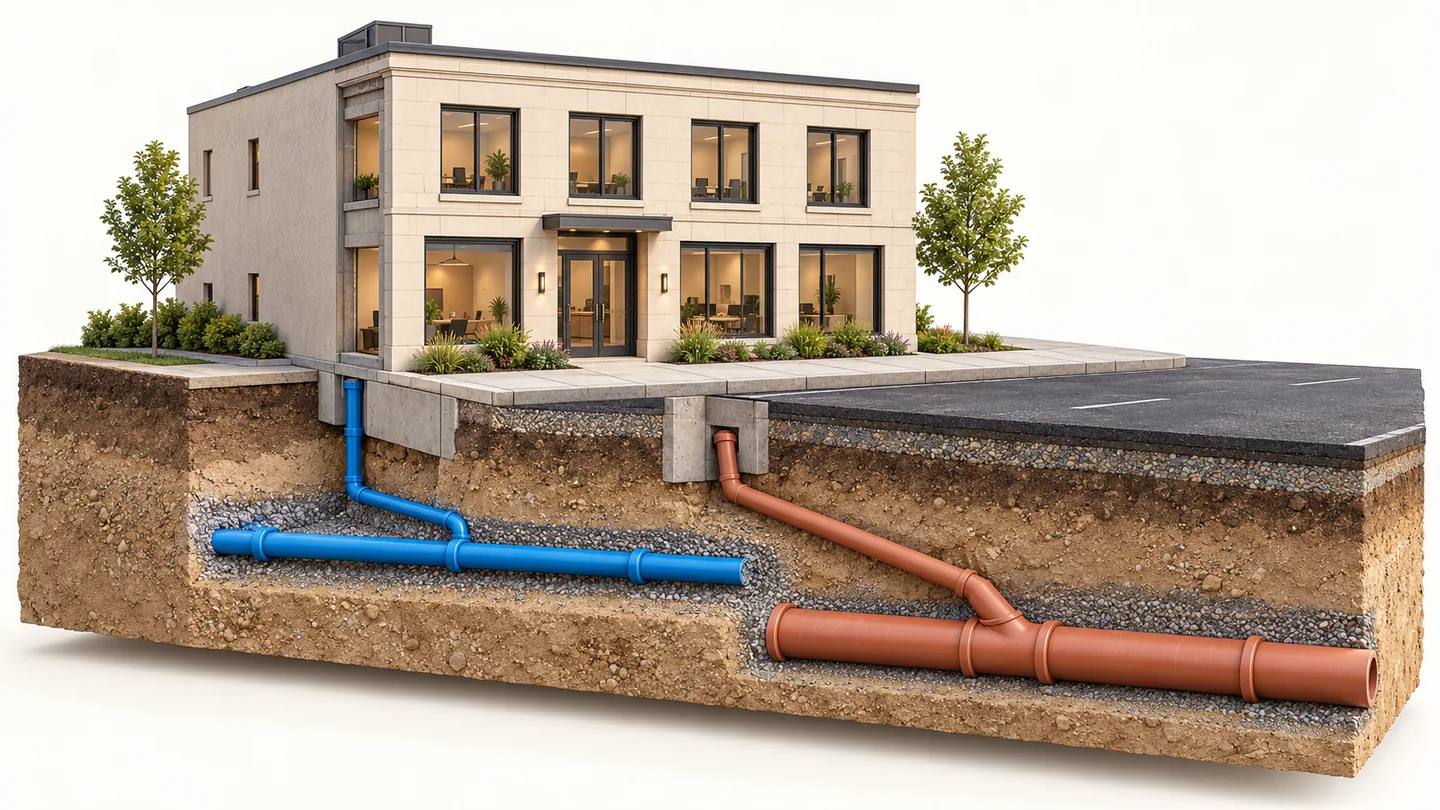
The notice identifies three qualifying categories under Ontario’s Professional Engineers Act: a licence, limited licence or temporary licence. For owners planning work in Brampton, Mississauga or Caledon, the practical next step is to involve the appropriate practitioner while the servicing scope is taking shape.
What changes for a Peel servicing permit in 2027?
The change described in the notice concerns who prepares a new site servicing connection permit application. It covers proposals that add to, modify, replace or extend the Regional water and sanitary sewer systems. Consequently, the application needs professional preparation rather than a last-minute signature added to an otherwise finished package.
The wording matters. An addition to a water system is not automatically the same thing as an addition to a house. A building project may create a servicing change, but its effect on the water or sanitary connection needs assessment. The project title alone does not determine whether the notice applies.
Likewise, replacement work can still involve design decisions. Existing records may be incomplete, a connection location may change, or a proposed building may alter servicing needs. Owners should describe the actual infrastructure work when asking Peel about the application route.
The requirement concerns Peel’s water and sanitary sewer systems. Other municipalities set their own connection-application processes, while Ontario’s professional engineering framework governs practitioners’ professional authority.
What does the January 1 date mean for project planning?
In its October 19, 2026 notice, Peel’s Servicing Connections team confirmed that it will continue reviewing applications submitted before January 1, 2027 and already in the permit process. A proposal designed earlier may still involve a new application after that date.
For a file already in progress, ask Peel how it will handle revisions, resubmissions and material changes. Keep the response with the project records so the owner and consultant work from the same direction. Do not assume that paying a fee, preparing a drawing or booking construction fixes the applicable requirements.
Which projects should check Peel servicing permit requirements?
Owners should check the requirement whenever their proposal may change a connection to Peel’s water or sanitary sewer systems. Examples can include a proposed new connection, an altered route, a replacement service or an extension associated with development. These are screening examples, not a complete permit classification.
A residential renovation may leave the existing services unchanged. Alternatively, changes in building use, layout or demand may lead the design team to examine them. Therefore, begin with the proposed use and servicing arrangement rather than assuming every renovation has the same requirements.
Commercial and land development projects can involve several linked documents. A site plan may establish the layout, while servicing drawings explain the connections and an engineering report addresses capacity questions. The professional preparation requirement should fit into that coordinated work, not sit apart from it.
In Caledon, also establish whether the property actually connects to Regional services. A private well or septic project follows its applicable approval route. The notice does not, by itself, extend the new requirement to every private servicing system or stormwater-only proposal.
Identify the system before choosing the application
Describe the existing service, the proposed change and its connection point. Then distinguish the Regional infrastructure from private plumbing, site drainage and other utilities. This simple scope check helps the team ask the right authority the right question before developing detailed drawings.
Who can prepare a Peel servicing permit application?
The notice requires a Licensed Engineering Practitioner holding a licence, limited licence or temporary licence under Ontario’s Professional Engineers Act. It does not restrict its wording to the P.Eng. designation alone. However, each practitioner must have authority and suitable competence for the particular assignment.
Before retaining a consultant, identify the person responsible for the engineering preparation. Ask how that responsibility will continue through design revisions and responses to review comments. A clear appointment helps prevent an application from circulating between parties without an accountable technical lead.
The Professional Engineers Ontario public directory provides a starting point for checking individuals and engineering businesses. Review the actual record and any relevant limitations rather than relying only on a website biography. If the licence scope is unclear, seek clarification before committing to the assignment.
Limited and temporary licences need a scope check
PEO explains that a limited licence permits professional engineering within a defined scope. It does not authorize work beyond that scope. Accordingly, the owner should not treat the category’s inclusion in Peel’s notice as proof that every limited licence holder can prepare every servicing application.
A temporary licence also has applicable terms and requirements. Confirm that the practitioner’s authorization covers the proposed Ontario assignment. Where conditions require collaboration or other arrangements, address those in the appointment and document responsibilities clearly.
For a larger project, several disciplines may contribute information. The servicing practitioner still needs a clear understanding of the interfaces within their responsibility. Architectural, structural and plumbing inputs should reach the relevant designer early enough to influence the servicing package.
Peel servicing permit preparation and submission are different roles
Preparing the application means developing the engineering material for the proposed servicing work. Submission is the administrative step of providing the package to Peel. One person may perform both roles, but the roles do not have to be identical.
Peel’s current water or wastewater service connection page identifies several possible submitters, including an owner or representative. That current submission process should not be confused with the professional preparation requirement described for 2027. An owner’s ability to submit documents does not settle who must prepare them.
Agree who will receive comments and distribute them. Also identify who authorizes a scope change, who updates the drawings and who assembles the response. Otherwise, an owner may send an outdated package while the licensed engineering practitioner is working from a revised site plan.
Use a simple document register with a drawing number, title, revision and date. A submission cover note can identify the current set and explain what changed. These are practical coordination measures, not a substitute for Peel’s forms or project-specific instructions.
Why Peel links the change to water and sewage approvals
The notice connects professional preparation with compliance under Peel’s Drinking Water Works Permits, Municipal Drinking Water Licences and Environmental Compliance Approval for a Municipal Sewage Collection System. These instruments relate to the public systems that receive the proposed connection changes.
Peel’s explanation of drinking-water quality management distinguishes permission to establish or alter a drinking-water system from the licence to operate it. This helps explain why a connection proposal needs more than a convenient route from a building to a street.
For an owner, the practical implication is coordination with the relevant system requirements. The designer needs to understand the proposed work, available records and applicable review pathway. The notice does not mean that every property owner must obtain a separate new municipal drinking-water licence.
Nor should a connection permit be described as blanket approval for all development work. The project team must identify the approvals relevant to its own scope. Keep that approval list tied to the actual proposal rather than adding requirements from unrelated project types.
What information supports a Peel servicing permit application?
Start with a clear description of the property and proposed work. Explain whether the project involves a new building, an addition, a change of use or a servicing alteration. Then describe what is known about the existing water and sanitary services.
Available survey information, municipal records and previous drawings can help establish a starting point. However, an old plan may show a proposal rather than the installed condition. Tell the licensed engineering practitioner where each document came from and whether later work may have changed the site.
Provide the latest architectural or site plan, not just an early concept. Building position, entrances, access routes and proposed grading can affect servicing coordination. If the layout remains unsettled, identify those decisions so the designer can avoid treating assumptions as fixed inputs.
A useful first-meeting checklist
- Property address, owner contact and a concise description of the proposed work.
- Available survey, existing servicing records and relevant prior approvals.
- Current site plan, building layout and proposed use or occupancy information.
- Known connection changes, site constraints and utility information.
- Correspondence from Peel and the local municipality, including review comments.
- Target milestones, current application status and decisions still outstanding.
Do not fill information gaps with guessed pipe sizes, depths or connection locations. Mark uncertain records clearly and let the licensed engineering practitioner determine the appropriate verification approach. Reliable inputs reduce avoidable redesign and make assumptions easier for reviewers to understand.
Separate records from verified conditions
A municipal record, a survey and an earlier design drawing can contain different kinds of information. Give the licensed engineering practitioner the complete document, including its title, date and notes. A cropped screenshot can remove the context needed to judge how the information should be used.
For example, a drawing may identify a proposed connection without confirming that crews installed it in that location. A survey may record visible features while leaving buried infrastructure unverified. The licensed engineering practitioner can then decide which information supports the design and which needs further investigation.
If an owner knows about previous alterations, share that history early. Include available records without treating recollection as a measured condition. In a Peel servicing permit package, clear source information helps distinguish an existing condition from a design assumption.
What should Peel servicing permit drawings address?
The scope depends on the property, proposed work and the reviewing authority’s requirements. A servicing package may show existing and proposed infrastructure, connection locations, routes and relevant design details. It may also need supporting engineering information for the questions raised by the proposal.
The aim is a coordinated explanation of how the site will connect, not a drawing that merely includes water and sewer lines. Where levels or utility crossings affect feasibility, the licensed engineering practitioner determines how to document them. Where demand or capacity is relevant, the appropriate analysis needs to support the design.
Water and sanitary design need related inputs
Water servicing design can depend on the building’s proposed demands and the information available about the supply system. Sanitary servicing can depend on the proposed use, discharge assumptions and the receiving infrastructure. The licensed engineering practitioner should define what information is needed rather than assume a standard solution fits every property.
Keep water, sanitary and stormwater information distinct while coordinating their physical interfaces. For example, a proposed route may conflict with a drainage feature or another utility. Resolve the arrangement through the design team instead of leaving an unidentified conflict for construction.
Peel’s design standards and procedures are an important source for the applicable Regional criteria. Check each relevant document’s revision and project applicability. A date on one manual does not establish the version of every standard used on the project.
A connection permit does not replace capacity assessment
A servicing drawing and a functional servicing report answer related but different questions. The drawing communicates the proposed arrangement. A report may evaluate how the development’s servicing needs relate to available infrastructure, depending on the project scope and review requirements.
An owner should therefore ask whether the assignment needs only connection drawings or a broader analysis. A functional servicing report is not automatically required for every small connection change. Equally, a short drawing package should not stand in for analysis that the project actually needs.
Agree the deliverables before comparing proposals. Two engineering fees may cover different records, calculations, submissions or review cycles. A clear scope makes that difference visible and gives the owner a more useful basis for selecting support.
Keep design responsibilities visible at interfaces
The servicing layout should connect sensibly with information prepared by other disciplines. Establish who provides the building’s connection requirements, who coordinates grades and who addresses a utility conflict. These assignments should reflect the actual consultant team rather than an assumed standard arrangement.
When one discipline changes its design, identify the affected interfaces before issuing a new submission. A revised entry location or service room can change the preferred route even when the site boundary stays the same. Likewise, a revised route can create questions for another designer.
The owner does not need to resolve those engineering questions personally. Instead, arrange for the relevant people to exchange current information and record the resulting decisions. This supports a coherent Peel servicing permit application without blurring professional responsibility.
Plan the Peel servicing permit around the whole project
A sound programme allows time to obtain records, develop the design and respond to comments. The professional preparation requirement adds a reason to appoint the right practitioner early, but it does not establish a universal review duration. Avoid promising a permit date before the project’s information and review needs are understood.
Separate design milestones from authority milestones. The consultant can identify planned deliverables and dependencies, while the reviewing authority controls its own assessment and decisions. Construction scheduling should reflect the permissions and information the work actually requires.
For projects approaching January 2027, record the anticipated application date and ask Peel about any uncertain transition treatment. If the scope changes, revisit that question. A small change in programme can matter when it changes which application is being submitted.
A practical preparation sequence
- Define the proposed connection work and confirm the relevant authority and application route.
- Appoint a licensed engineering practitioner whose authority and expertise fit the work.
- Gather records, confirm important inputs and coordinate the building and site layouts.
- Prepare the engineering documents and address identified design interfaces.
- Submit the current coordinated package, then manage comments and revisions through the responsible team.
Build a programme around information, not assumptions
Ask the licensed engineering practitioner to identify the inputs that control the design schedule. Some tasks can progress while records are being gathered; others depend on an unresolved building layout or servicing decision. Separating these dependencies helps the owner understand what can move forward safely.
Also distinguish consultant preparation time from authority review time. An early design target is not a commitment that Peel will issue approval by the same date. Where a construction milestone depends on that approval, keep a contingency rather than presenting an unconfirmed date as settled.
Coordinate the Peel servicing permit with local permissions
Peel servicing work can intersect with requirements administered by Brampton, Mississauga or Caledon. Building permits, site planning, private-property works and other permissions may have separate review processes. Identify the actual interfaces before assuming a Regional servicing approval resolves them all.
For example, a change to the building position can affect the proposed connection route. Revised site grades may affect levels or access. Therefore, distribute changes to the relevant disciplines and check their effect before submitting a revised sheet in isolation.
Peel distinguishes between Regional standards for municipal property and requirements relevant to work on private property. The project team should confirm the applicable boundary and criteria. Do not copy a Regional standard onto a private-property detail without checking that it applies.
Maintain a short approval register listing the authority, document package and outstanding decision. This helps the owner see dependencies without treating every approval as one combined permit. Keep written directions with the current submission set.
Avoid preventable Peel servicing permit application gaps
An application can become difficult to review when its documents describe different versions of the project. Check that the site plan, servicing layout and supporting information use consistent assumptions. Where a revision changes an earlier conclusion, explain that change rather than relying on the reviewer to discover it.
Another common coordination risk is an unclear limit of work. Identify what remains, what changes and which connections the proposal affects. This makes the scope easier to discuss with Peel and helps distinguish the licensed engineering practitioner’s design responsibility from work assigned to others.
Likewise, do not confuse an administrative acceptance with permission to begin construction. Follow the authority’s written conditions and confirm what approvals must be in place for the proposed work. The engineering appointment should also state whether construction review or other later services are included.
Make review comments traceable
When comments arrive, keep the complete response from the reviewing authority and assign each technical issue to the responsible person. A response register can connect the comment with the revised drawing or supporting explanation. It should also identify questions that remain open.
Avoid sending partial corrections from several different parties without an agreed coordinator. The practitioner should know which documents form the current Peel servicing permit package and which information remains unchanged. This reduces the chance that a reviewer receives conflicting revisions.
If a comment changes the project scope, pause to agree the next step before redesign proceeds. The owner, practitioner and other consultants may need to revisit assumptions, deliverables or timing. Addressing that change openly is more useful than treating every new issue as a minor drawing edit.
Questions before commissioning Peel servicing permit drawings
Ask the consultant what records are available and what information remains uncertain. Then ask which deliverables address the proposed servicing change and which approvals depend on other professionals. This discussion is particularly useful when several consultants are already working on the property.
Confirm who will prepare responses to technical comments and whether the scope includes revised submissions. Also identify how the team will handle a changed building layout or unexpected site information. Clear responsibilities are more valuable than a vague promise of a complete permit package.
Finally, ask the licensed engineering practitioner how they will document the assumptions that matter to the design. An assumption register does not need to be elaborate. It should make important unresolved inputs visible so that later decisions do not quietly invalidate the drawings.
How Elmid Design Inc. can help with Peel servicing permits
Elmid Design Inc. prepares the engineering drawings and supporting analysis that explain a proposed water or sanitary connection change. For owners in Brampton, Mississauga and Caledon, the assignment can bring the connection design, building information and related civil drawings into one coordinated submission.
Connection drawings that show what changes
The servicing plan distinguishes infrastructure to remain from proposed connections, replacements and disconnections. Elmid Design Inc. can develop service routes, connection details and relevant elevations using the available survey, municipal records and current building plans. At the building interface, the design coordinates the exterior service with the proposed connection location. Across the site, it considers grading, drainage features and utility crossings that affect the arrangement.
Supporting analysis for a Peel servicing permit
A larger development or changed use can raise questions beyond the pipe route. Elmid Design Inc. prepares Functional Servicing Reports and supporting water-demand and sanitary-flow calculations within the project’s engineering scope. These deliverables connect the proposed use and development statistics with the servicing approach and available infrastructure information. Where broader capacity assessment is required, the report and drawings need consistent assumptions about the development and receiving system.
Preparing the Peel servicing permit package for review
Peel’s current process calls for site drawings in PDF format submitted to its Servicing Connections team. Where capacity modelling is required before connection approval, Peel also requests its completed Water and Wastewater demand table and related documents. Elmid Design Inc. can identify the engineering inputs, prepare the assigned material and respond to technical review comments through coordinated drawing or report revisions.
The firm’s published Brampton work includes 10394 Hurontario Street, with servicing and grading plans, functional servicing and stormwater management reports, sanitary and storm drainage plans, and plan-and-profile drawings. That documented scope shows how connection drawings can form part of a wider civil engineering package.
To discuss a Peel project with Elmid Design Inc., send the property address, current plans, available servicing records and any Regional comments. The proposal can then identify the drawings, analysis and review support for your application.
Frequently Asked Questions
When does the Peel servicing permit change start?
The notice identifies January 1, 2027, for new site servicing connection permit applications within its stated scope. Ask Peel how it will treat a pending file, resubmission or changed proposal. Do not assume that an earlier design date creates an exemption.
Does the notice require a P.Eng. in every case?
The notice names a licence, limited licence or temporary licence under Ontario’s Professional Engineers Act. A limited or temporary licence must cover the actual work and comply with its conditions. Check the responsible practitioner’s authorization rather than reducing the requirement to a single designation.
Can an owner or contractor still submit the application?
Submission and engineering preparation are different roles. Peel’s current connection service page allows several types of applicant or representative to submit. For applications covered by the 2027 notice, confirm that the engineering preparation meets the new requirement regardless of who handles the submission.
Does every house addition need a new servicing application?
The notice concerns changes to Peel’s water and sanitary sewer systems, not every building addition automatically. Assess whether the proposed building work affects the services. Then confirm the applicable connection and building-permit requirements with the relevant authorities.
Does this also cover private septic systems or stormwater-only work?
The requirement concerns Peel’s water and sanitary sewer systems. It does not establish the approval requirements for every private septic system or stormwater-only project. Those works need their own scope and jurisdiction checks, including any relevant coordination with the servicing proposal.
What should I send when requesting an engineering proposal?
Send the property address, proposed scope, current plans, available survey and servicing records, and correspondence from the reviewing authorities. Explain the application status and target milestones. The consultant can then identify the required engineering deliverables and any information needed before design proceeds.
Official resources for planning your application
Use Peel’s connection service information for the current application process and its design standards and procedures for relevant technical resources. PEO’s public directory, limited licence guidance and temporary licence guidance help with professional-authority checks. Confirm project-specific directions and transition questions directly with Peel.
Geographic Locations That We Service:
Elmid Design Inc. provides site servicing design and coordinated engineering drawings for water, sanitary and storm connections. The project-specific scope reflects the proposed work and applicable authority requirements.
We provide engineering services across a wide range of municipalities, each with its own requirements and review processes.
Toronto and Surrounding Areas
We provide engineering services in Toronto and provide grading engineering resources through our Toronto grading plan page.
Our service area also includes Oshawa, Pickering with our Pickering grading plan resources, and Clarington.
We also provide engineering services in Ajax through our Ajax grading plan resources, Whitby, Brock, Scugog, and Uxbridge, including our Uxbridge grading plan resources.
Halton Region
Within Halton Region, we provide engineering services in Burlington, including projects requiring Burlington grading plans.
We also provide engineering services in Halton Hills, supported by our Halton Hills grading plan resources.
Our service area also includes Milton and Oakville, including our Oakville grading plan resources.
Peel Region
Within Peel Region, we provide engineering services in Brampton, including projects requiring Brampton grading plans.
We also provide engineering services in Mississauga through our Mississauga grading plan resources and Caledon through our Caledon grading plan resources.
York Region
Within York Region, we provide engineering services in Vaughan and provide information about Vaughan grading plans.
We also provide engineering services in Aurora through our Aurora grading plan resources and East Gwillimbury through our East Gwillimbury grading plan resources.
Additional service areas include Georgina with our Georgina grading plan resources, Markham with our Markham grading plan resources, and Newmarket with our Newmarket grading plan resources.
We also provide engineering services in Richmond Hill with our Richmond Hill grading plan resources, Whitchurch-Stouffville through our Whitchurch-Stouffville grading plan resources, and King through our King grading plan resources.
Other Southern Ontario Cities and Towns
Our service area also includes Bradford West Gwillimbury.
We provide engineering services in many additional Southern Ontario communities, including Hamilton, St. Catharines, Niagara-on-the-Lake, Brant, Cambridge, Kitchener, Waterloo, and Woodstock.
We also provide engineering services in Guelph, Centre Wellington, Shelburne, Orangeville, New Tecumseth, Essa, Collingwood, Wasaga Beach, and Barrie, including our Barrie grading plan resources.
Additional service areas include Midland, Orillia with our Orillia grading plan resources, Ramara, Minden Hills, North Kawartha, Kawartha Lakes, Peterborough, Selwyn, and Brighton.