
Elmid Design Inc. provides professional septic system design and permit support for properties in Schomberg and King Township. Our engineering and design consulting services help property owners plan wastewater systems based on their site conditions and project requirements.
Overview of Septic Design Requirements in Schomberg
Septic design in Schomberg follows Ontario requirements and the approvals applicable to the property in King Township. Ontario’s Building Code generally regulates on-site systems with a design capacity of 10,000 L/day or less serving the same lot. Combined capacity, off-lot servicing and other circumstances can change the approval route. Use Ontario’s sewage self-assessment and confirm the principal authority before design.
Calculating Maximum Daily Flow
Q is the daily design sanitary sewage flow in litres per day. For dwellings, use OBC Table 8.2.1.3.-A and its notes to assess bedrooms, finished floor area and fixture units. A four-bedroom dwelling has a 2,000 L/day base value, but the applicable additions can increase Q. Therefore, do not size every home using a fixed flow per bedroom. See the official design-flow table.
Soil Percolation and Site Evaluation
Site conditions and soil absorption rates, known as “T” time, influence the system layout. Testing involves percolation tests either at a lab or on‑site to determine how rapidly water moves through soil. Sandy soils absorb quickly while clay slows drainage, and poor percolation may require raised systems or tertiary options.
Septic Tank Specifications
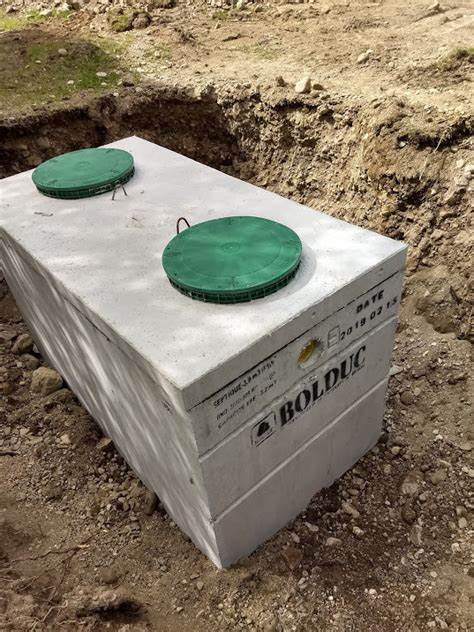
For residential occupancies, OBC Article 8.2.2.3.(1) requires a minimum tank working capacity equal to the greater of 3,600 L and 2Q. For non-residential occupancies, use the greater of 3,600 L and 3Q. Working capacity is operating liquid capacity and excludes a pump or siphon compartment. At least two compartments are required: the first must be at least the greater of 2,400 L and 1.3Q, and each subsequent compartment at least 50% of the first. Verify the manufacturer’s working capacities and the complete OBC tank requirements.
Separation Distances and Environmental Safety
Clearances depend on the sewage-system class, component and site. For a Class 4 treatment unit, Table 8.2.1.6.-A gives a 15 m minimum to a well and listed surface-water features. For distribution piping or leaching chambers, Table 8.2.1.6.-B gives 15 m to a well with at least 6 m of watertight casing, and 30 m to other wells. These are not interchangeable tank and bed setbacks. Apply the full OBC clearance provisions, including required increases for fast-percolating soils and raised beds, plus any applicable site-specific approvals.
Permit Application and Drawings
Permit submissions need a site plan, design-flow and sizing calculations, soil and groundwater information, and details of the proposed system. Show buildings, property lines, wells and water features on or near the lot where they affect the design. Confirm the required test-pit information and application checklist with King Township before submitting.
System Design and Components
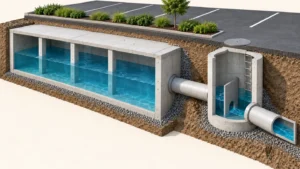
Typical systems include a dual‑chamber tank and a gravel leaching bed constructed with perforated pipes and filter fabric, allowing effluent to infiltrate soil. The tank handles primary treatment, while the leaching bed provides biological, chemical, and physical filtration in the soil. Well‑maintained systems depend on keeping solids contained and avoiding clogging.
Maintenance and Operational Best Practices
Ongoing maintenance is essential for long‑term performance. Homeowners must avoid flushing non‑biodegradable items, grease, chemicals, or excess water‑softener discharge into the system. Installation of an effluent filter and regular pump‑outs help prevent clogging of the drain field. Improper use and neglect may damage the system and harm the environment.
Environmental Impacts
A properly designed and maintained septic system protects groundwater and nearby waterways. Failing systems may contribute to nutrient runoff, pathogen contamination, and greenhouse gas emissions such as methane. Prioritizing responsible design and upkeep enhances public health and preserves local ecosystems.
Septic System Design by Elmid Design Inc.
Elmid Design Inc. will provide the septic system design for your project, with the scope confirmed in an engineering proposal. Our services focus on reviewing site information, preparing design drawings, and supporting permit applications.
Alternative Treatment Options for Challenging Sites
Homes in Schomberg may sit on poorly draining soils, steep terrain, or compact lots and still need reliable septic solutions. In such cases an advanced treatment system often becomes the smarter choice because it handles wastewater more effectively before the soil absorbs it. Aerobic treatment units inject air to foster bacteria that break down waste efficiently and suit sites with high water tables. Biofilter technologies like peat filters pass septic effluent through media where microbes treat it naturally without electricity. Sand mounds lift and distribute wastewater through fresh sand layers above ground to overcome impermeable soil. Even constructed wetlands mimic nature to filter effluent through plants and gravel. Each of these alternatives serves properties where traditional leaching beds fail because they offer treatment that occurs ahead of soil dispersal and often take up less space or adapt more flexibly.
Cost Considerations of Advanced Systems
Homeowners should expect advanced systems to cost more than conventional ones because they integrate additional treatment steps and mechanical components. In Ontario conventional in‑ground gravity systems for a three‑ or four‑bedroom home typically run from eighteen thousand to thirty‑five thousand dollars, depending on local soil and topography. Advanced treatment systems may range from twenty‑five thousand up to fifty thousand dollars or more, particularly when more rigorous design, maintenance, and permit requirements come into play. Despite higher upfront cost they can become economical compared to conventional systems built on difficult sites because they require a smaller footprint or avoid expensive raised beds. It is essential to weigh lifecycle costs and ongoing maintenance against site suitability and environmental benefits.
Permit, Design, and Site Evaluation Costs
Septic-system design and installation must follow the qualifications and approval requirements applicable in Ontario. Engage a professional engineer or an appropriately qualified and registered sewage-system designer for the design scope. Confirm any exemption and installer requirements with the principal authority. Elmid Design Inc. provides project-specific proposals for septic engineering, design and permit support; fees depend on site information and the agreed scope.
Comparison of Common Alternative System Types
Chamber septic systems use plastic chambers instead of gravel and offer similar treatment capacity in a compact layout and at modest cost but suit only moderate soil conditions. Sand filters send effluent through sand layers to treat it before dispersal and cost between seven thousand and eighteen thousand dollars. Drip distribution systems use tubes and pumps to dose effluent appropriately on sloped or constrained sites and range from eight thousand to eighteen thousand dollars. Sand mounds elevate the leaching field when soil depth is inadequate and cost ten thousand to twenty thousand dollars. Built wetland systems mimic natural marshes to treat wastewater while offering visual appeal, with installation costs typically between five thousand and twelve thousand dollars. Evapotranspiration beds rely on evaporation and transpiration to dispose of effluent above ground and cost from ten thousand to fifteen thousand dollars.
Environmental and Sustainability Benefits
Choosing an advanced septic solution in Schomberg supports environmental protection and sustainability goals. Treatments like aerobic units, biofilters, or constructed wetlands reduce pathogens and nutrient loads in discharged effluent, helping preserve local groundwater and nearby water bodies, including those feeding Lake Simcoe. Improvements to nutrient removal can also mitigate algal blooms and protect aquatic ecosystems. Treatments that avoid deep soil dispersal and generate cleaner effluent help reduce the system’s ecological footprint. Long‑term benefits include reduced contamination risks and alignment with environmental regulations and climate‑aware community standards.
Maintenance Imperatives for Advanced Systems
Advanced systems deliver higher performance but depend on regular upkeep to maintain function and protect Schomberg’s environment. Aerobic units require attention to aeration components and may need electrical service checks. Biofilters like peat media demand periodic replacement or renewal. Systems with mechanical parts such as pumps or controls need inspections to prevent failures. Wetland and drip systems need monitoring to manage vegetation or flow distribution properly. Budgeting for maintenance safeguards system longevity and avoids costly failures, reinforcing the importance of hiring professionals who know Ontario’s Code requirements and environmental protocols.
Common Inspection Triggers for Schomberg Properties
King Township administers a Septic Maintenance Inspection Program for designated properties. Its Lake Simcoe watershed criterion covers systems within 100 m of specified rivers, streams, lakes or ponds that continuously flow into the lake in an average year. Systems wholly or partly within the mandatory maintenance area require inspection every five years. The Township sends identified properties a notice with the required inspection year and a tentative appointment. Being near any water body does not, by itself, establish that a particular Schomberg property is in the program; confirm inclusion with the Township.
The Role of Licensed Designers in Septic Planning
Septic design in Schomberg demands more than simple drawings—it requires knowledge of soil science, hydraulics, building codes, and environmental standards. Licensed professionals such as the engineers at Elmid Design Inc. provide accurate soil analysis, calculate daily flow precisely, and develop solutions that meet both Ontario Building Code and local bylaws. These professionals help homeowners navigate the permit process, collaborate with inspectors, and select the right system for the site. A well‑qualified designer also ensures future maintenance is easy and affordable by planning with accessibility and longevity in mind. Engaging a licensed designer strengthens your position during inspections or property sales.
Mistakes to Avoid When Designing Septic Systems
Many septic failures begin with avoidable design errors made during the planning stage. Oversizing or under sizing the tank based on inaccurate daily flow estimates causes system imbalance. Ignoring percolation rates leads to poor absorption and eventual clogging. Poorly planned leaching bed layouts near driveways or trees create access and root infiltration issues. Homeowners who bypass licensed professionals risk setbacks, denied permits, and expensive future modifications. Choosing unapproved materials or installing systems without respecting clearance zones jeopardizes environmental compliance and resale value.
Upgrading or Replacing Aging Systems
Homeowners in Schomberg with septic systems over twenty years old may face replacement to meet current codes or restore functionality. Upgrades may be necessary when new construction or additional bedrooms increase household flow. Signs like odours, wet lawns, or slow drains indicate that replacement could be imminent. Retrofitting older tanks with effluent filters, risers, or baffles helps extend system life while improving performance. In other cases, a full redesign may be the only option, especially if site conditions have changed due to tree growth or construction nearby. Modern replacements deliver better environmental performance and simplify future maintenance obligations.
How Septic Systems Impact Real Estate Transactions
During property sales in Schomberg, the septic system plays a significant role in valuation and approval. Buyers often request septic inspections before closing, and banks may require condition reports to approve financing. Systems that lack permits, documentation, or inspection records can derail deals or lower offers. Real estate agents and legal professionals often recommend providing full service records and the original design file. Homeowners who invested in licensed design from firms like Elmid Design Inc. gain a competitive advantage by demonstrating compliance and system reliability. Transparency and proper documentation reduce buyer hesitation and streamline the closing process.
FAQs
How do I choose between a conventional and advanced system in Schomberg
The choice depends on soil percolation, lot size, slope, and proximity to water bodies. Sites with sandy soils and enough space suit conventional systems. Challenging sites with clay or shallow soils need advanced systems like mounds or aerobic units. A licensed designer evaluates your property to make the best recommendation.
What happens if I install a system without a permit in Schomberg
Installing a septic system without a valid permit violates Ontario law and may lead to legal penalties, forced removal, or inability to sell the property. Municipal inspectors can issue orders for corrective work. Permits protect homeowners by ensuring the system meets safety and environmental standards.
How does Elmid Design Inc. support septic projects in Schomberg
Elmid Design Inc. holds a Certificate of Authorization from Professional Engineers Ontario and offers septic design, site evaluation, and permit application services. They use detailed calculations, AutoCAD plans, and compliance reviews to ensure each project aligns with Ontario Building Code and local requirements.
Can trees affect septic systems
Yes, tree roots may damage leaching pipes or crack tanks. Fast‑growing trees planted too close to septic fields risk root intrusion. It’s essential to plan landscape features with help from your designer who considers long‑term root impact during layout.
Are there grants or rebates for upgrading septic systems in Schomberg
Some conservation authorities and municipal governments offer rebates or incentives for upgrading to environmentally friendly systems near vulnerable water bodies. Eligibility depends on location, income level, and system type. Contact King Township or local conservation offices to check current programs.

Elmid Design Inc. Septic Design and Permit Support in Schomberg
Elmid Design Inc. is a professional engineering and design consulting firm serving Schomberg and surrounding areas. Elmid Design Inc. holds a Certificate of Authorization from Professional Engineers Ontario (PEO). Our septic system design services include reviewing site information, preparing engineering drawings, and supporting permit applications. Contact Elmid Design Inc. to request a septic design proposal and discuss the information needed for your property.
Geographic Locations That We Service:
Our Licensed Professional Engineers specializing in Engineered Site Grading Plans offer the best-engineered site grading plan, lot grading and erosion plan, and drainage plan to obtain site plan approval and building permits in Ontario, including a wide range of municipalities. Each area boasts unique features and requirements, making our tailored approach essential for success.
Toronto and Surrounding Areas
In the vibrant heart of Ontario, we service Toronto (City of Toronto) and surrounding areas. Additionally, we cover Oshawa (City of Oshawa), Pickering (City of Pickering), and Clarington (Municipality of Clarington). Furthermore, our expertise extends to Ajax (Town of Ajax), Whitby (Town of Whitby), Brock (Township of Brock), Scugog (Township of Scugog), and Uxbridge (Township of Uxbridge).
Halton Region
Moving to the Halton Region, our services encompass Burlington (City of Burlington) and Halton Hills (Town of Halton Hills). Also included are Milton (Town of Milton) and Oakville (Town of Oakville).
Peel Region
In the Peel Region, we provide services in Brampton (City of Brampton), Mississauga (City of Mississauga), and Caledon (Town of Caledon).
York Region
Our services in the York Region cover Vaughan (City of Vaughan), Aurora (Town of Aurora), and East Gwillimbury (Town of East Gwillimbury). We also cater to Georgina (Town of Georgina), Markham (City of Markham), Newmarket (Town of Newmarket), Richmond Hill (City of Richmond Hill), Whitchurch-Stouffville (Town of Whitchurch-Stouffville), King (Township of King), and Bradford-West Gwillimbury (Town of Bradford-West Gwillimbury). Each municipality here offers a distinct setting, requiring our specialized approach.
Other Southern Ontario Cities and Towns
We also serve many other cities and towns in Southern Ontario. These include Hamilton (City of Hamilton), St. Catharines (City of St. Catharines), Niagara on the Lake (Town of Niagara on the Lake), Brant (County of Brant), Cambridge (City of Cambridge), Kitchener (City of Kitchener), Waterloo (City of Waterloo), and Woodstock (City of Woodstock). Furthermore, we operate in Guelph (City of Guelph), Centre Wellington (Township of Centre Wellington), Shelburne (Town of Shelburne), Orangeville (Town of Orangeville), New Tecumseth (Town of New Tecumseth), Essa (Town of Essa), Collingwood (Town of Collingwood), Wasaga Beach (Town of Wasaga Beach), Barrie (City of Barrie), Midland (Town of Midland), Orillia (City of Orillia), Ramara (Town of Ramara), Minden Hills (Town of Minden Hills), North Kawartha (Town of North Kawartha), Kawartha Lakes (City of Kawartha Lakes), Peterborough (City of Peterborough), Selwyn (Town of Selwyn), and Brighton (Municipality of Brighton).