

A smooth grading plan submission Oakville process supports safe drainage, strong construction, and fast permit results for homeowners and builders. Many property owners start projects without understanding how grading affects soil, foundations, and landscaping, yet clear engineering guidance helps them avoid costly delays. Accurate submissions include drawings that show elevations, slopes, swales, and drainage patterns that protect structures and improve long-term performance. Town requirements also demand engineered plans that follow strict grading standards to keep neighborhoods safe. This article explains the submission steps, design expectations, soil and climate considerations, and the benefits of working with Elmid Design Inc, a trusted firm authorized by Professional Engineers Ontario and known for reliable grading design across Oakville.
Why Grading Plan Submission Oakville Matters
Submitting a complete grading plan ensures that every project meets safety and drainage standards. Oakville uses strict rules to control runoff and protect both private and public spaces. Accurate submissions reduce the chance of water reaching foundations or neighboring properties. Proper grading also prevents erosion that damages soil and landscaping. Homeowners avoid permit delays when their submissions remain complete. Engineers guide owners through the steps and explain which details the town requires. Each submission supports safer construction practices and long-term property stability.
How the Grading Plan Submission Oakville Process Works
The submission process includes several stages that keep projects organized. Engineers first prepare clear drawings showing slopes, swales, elevations, and drainage routes. Homeowners then include these drawings in their permit application. Reviewers study each drawing to confirm compliance. Grading plan submission Oakville becomes smoother when plans follow format guidelines. Engineers answer reviewer questions and provide updates when needed. Owners gain confidence as each stage moves forward. Good communication ensures steady progress toward approval.
Information Needed for Grading Plan Submission Oakville
A strong submission includes survey data, grading notes, drainage routes, driveway elevations, and swale details. Engineers collect this information during early site visits. Survey points reveal how the land sits, while soil details show how water behaves. Grading plan submission Oakville requires complete and accurate information to avoid delays. Homeowners benefit because organized submissions reduce confusion. Clear information also helps contractors follow the design during construction. Strong documentation improves approval time and ensures better project planning.
Role of a Professional Engineer in the Submission Process
Professional engineers prepare the drawings needed for permit review. Their training helps them match slopes, elevations, and drainage routes to Oakville’s grading standards. A grading plan submission Oakville must include engineered details that reviewers trust. Many owners choose Elmid Design Inc because skilled engineers improve accuracy and prevent costly revisions. Engineers explain complex details in simple terms so homeowners understand each requirement. Their involvement supports safe grading and reliable submissions.
Survey Data Importance for Grading Plan Submission
Survey information forms the base of every grading design. Elevation points show which areas sit higher or lower. Engineers use these details to shape safe drainage paths. Grading plan submission Oakville demands survey results to confirm accuracy. Homeowners rely on this data to understand how the yard will change. Survey precision also reduces review comments from the town. Good survey work provides engineers with solid information for designing stable slopes and swales. Accurate measurements strengthen the entire submission.
Oakville Grading Rules for Submission Requirements
Oakville uses clear grading regulations to keep drainage predictable. These rules protect basements, walkways, and neighboring lots. Grading plan submission Oakville must follow driveway slope limits, swale depth requirements, and property line elevations. Engineers understand these rules and apply them consistently. Homeowners save time because correct submissions avoid rejections. Oakville reviewers check each drawing against these standards. Strong engineering helps each submission pass review faster and with fewer modifications.
Drainage Path Design for Successful Submission
Drainage shapes how water leaves the property during storms. Engineers create routes that move runoff toward safe outlets. Grading plan submission Oakville includes these drainage paths to show how the lot will perform. Proper routes prevent pooling and soil erosion. Homeowners benefit because safer drainage protects landscaping. Engineers choose slopes that match soil conditions and climate patterns. Strong drainage design increases approval success. Safe water movement supports long-term yard performance.
Soil Conditions and How They Affect Submission
Soil type influences slope strength and drainage behavior. Clay soil holds water longer and requires stronger slopes. Sandy soil drains quickly and needs adjusted elevations. Engineers evaluate soil before designing the grading layout. Grading plan submission Oakville reflects these findings to satisfy reviewers. Homeowners gain more durable results when soil conditions guide design choices. Soil awareness reduces long-term risks. Good submissions always show how soil affects the grading plan.
Elevation Details Required for Grading Plan Submission Oakville
Elevation points form a major part of the grading drawing. Engineers mark precise heights for driveways, walkways, swales, and foundation edges. Oakville reviewers study these values carefully. Grading plan submission Oakville depends on clear elevation notes to confirm drainage safety. Homeowners understand the changes more easily when elevations appear clearly on the drawing. Accurate elevation mapping also guides contractors during construction. Correct elevations reduce errors and support efficient building work.
Driveway Grading Details for Submission
Driveways must slope away from structures to prevent flooding. Engineers design driveway grades that push water toward safe outlets. Grading plan submission Oakville includes these driveway elevations to show compliance. Owners benefit because proper driveway grading improves safety. Engineers consider driveway length and surface material before choosing slopes. Strong driveway design reduces ice buildup. Driveway grading forms a key part of any complete submission because it protects garages and walkways.
Swale and Channel Requirements in Submissions
Swales guide water across narrow areas safely. Engineers design these channels to move runoff between lots without causing harm. Grading plan submission Oakville must show swale depth, slope, and direction. Homeowners rely on swales to prevent pooling. Good swale design protects both the property and nearby homes. Engineers evaluate yard layout to place swales correctly. Strong swale planning improves soil health and reduces erosion. Reviewers check swale details to confirm compliance.
Rear Yard Grading Considerations for Submission
Rear yards often collect water after storms. Engineers design slopes that push water away from structures. Grading plan submission Oakville includes these rear yard grades to protect exits, patios, and basement walls. Homeowners enjoy drier outdoor spaces with proper rear yard design. Engineers balance usability with safe drainage. Rear yard grading reduces soil loss and improves yard strength. Good design supports long-term drainage function.
Front Yard Grading Requirements in Oakville
Front yards influence curb appeal and water movement. Engineers create slopes that guide water toward the street. Grading plan submission Oakville must show clear front yard elevations. Homeowners see improved safety when entryways drain correctly. Strong front yard grading also supports landscaping. Engineers consider walkway placement and soil conditions. Front yard grading forms a major part of the submission because it affects both appearance and drainage.
Side Yard Elevations Included in Submissions
Side yards channel water between properties. Engineers design controlled slopes that prevent water from crossing lot lines. Grading plan submission Oakville requires side yard grades that follow drainage rules. Homeowners avoid disputes when water stays within proper routes. Good side yard grading protects foundations and fences. Engineers use survey data to refine these slopes. Strong side yard design creates smooth and predictable water movement.
Permit Preparation Using Grading Plan Submissions
Permit preparation becomes easier with clear grading documentation. Engineers prepare drawings that follow Oakville’s rules closely. Grading plan submission Oakville supports fast review because accurate drawings reduce questions. Homeowners experience fewer delays when submissions remain complete. Engineers guide owners through each step. Good preparation improves approval success. Strong submissions also simplify communication between owners, builders, and reviewers.
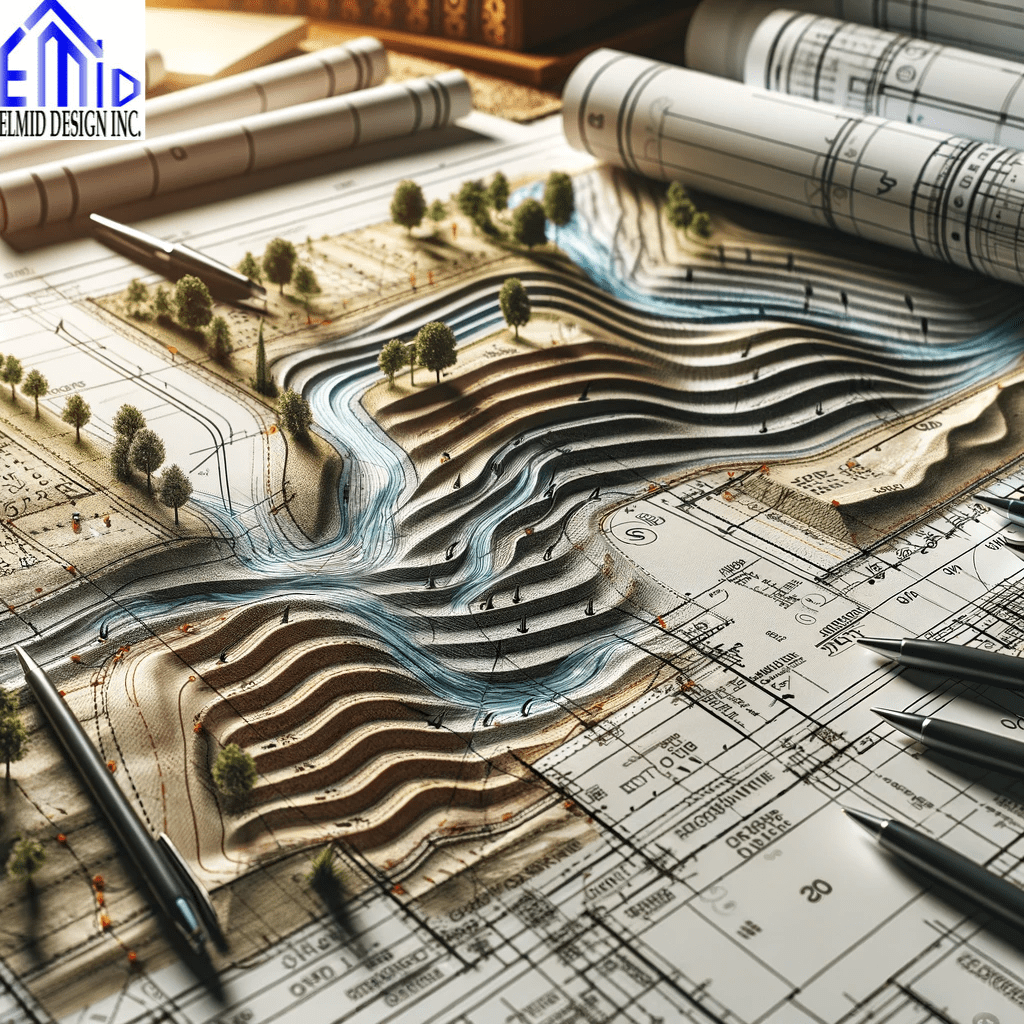
Stormwater Factors That Influence Grading Plan Submission Oakville
Stormwater behavior affects every grading decision because runoff moves quickly across soil during heavy rain. Engineers study rainfall intensity before designing slopes that control water flow. Moreover, each grading plan submission Oakville must show drainage routes that handle strong storms safely. Homeowners gain reliable drainage when designs keep water away from foundations. Additionally, clear stormwater planning reduces soil erosion and protects landscaping. Proper runoff control also helps neighboring properties remain safe. Stormwater-focused design strengthens the quality of the entire submission.
Winter Conditions Considered During Grading Plan Submission
Winter weather creates major drainage challenges in Oakville. Freeze–thaw cycles shift soil and create small elevation changes that redirect water. Engineers plan slopes that manage meltwater safely. Additionally, snowmelt travels quickly during warm periods and tests weak drainage routes. A grading plan submission Oakville must reflect winter performance to satisfy safety expectations. Homeowners enjoy safer walkways and reduced ice buildup when winter grading works correctly. Strong winter planning also protects foundations by limiting moisture around the structure. Winter analysis helps create stable grading throughout the year.
Climate Trends Affecting Grading Plan Submission Oakville
Climate patterns continue to shift and create stronger storms that produce higher runoff volumes. Engineers review climate data before finalizing slope design. Consequently, each grading plan submission Oakville must demonstrate resilience to changing weather conditions. Homeowners benefit from climate-ready plans because improved grading supports long-term soil stability. Additionally, climate planning reduces the need for future redesigns. Strong designs anticipate increased rainfall and guide water through safe outlets. Climate awareness strengthens the durability of engineered grading.
Driveway Design Within Grading Plan Submission Oakville
Driveway surfaces influence how water leaves the lot after rainfall. Engineers shape driveway slopes to guide water toward the street. Additionally, driveway grading protects garages from flooding during storms. A grading plan submission Oakville must include driveway elevations that satisfy town rules. Homeowners appreciate smooth and dry surfaces because proper grading reduces ice formation during winter. Good driveway design also prevents erosion near paved areas. Driveway planning supports both safety and long-term drainage performance.
Walkway and Entry Area Details Needed for Submission
Walkways affect drainage near entrances and must slope away from doors to keep water out. Engineers design walkway elevations that prevent moisture from collecting near building walls. Furthermore, each grading plan submission Oakville must include walkway details to avoid reviewer concerns. Homeowners enjoy safer access paths when slopes reduce slipping risks. Additionally, walkway grading protects landscaping around the entrance. Good entry-area design improves safety and supports the overall performance of the grading plan.
Rear Yard Design Considerations in Submission Requirements
Rear yards often collect runoff because they sit lower than front landscapes. Engineers form slopes that move water toward safe drainage routes. A grading plan submission Oakville must include rear yard elevations that prevent water from reaching patios or basement walls. Homeowners appreciate dry outdoor areas that remain usable after storms. Additionally, strong rear yard grading reduces soil erosion and improves lawn health. Rear yard planning strengthens long-term drainage reliability.
Side Yard Elevations Evaluated During Grading Plan Submission
Side yards control how water flows between neighboring properties. Engineers design side yard slopes that guide runoff toward swales or approved outlets. Additionally, a grading plan submission Oakville must include side yard grades that follow local drainage rules. Homeowners avoid disputes when water stays within the correct boundaries. Strong side yard grading also protects fences and walkways. Proper elevation design ensures predictable water movement during storms.
Swale Requirements for a Successful Grading Plan Submission Oakville
Swales act as shallow channels that carry water safely across the property. Engineers choose swale depth and slope based on soil conditions and drainage goals. Additionally, swales protect homes from pooling water during major storms. A grading plan submission Oakville must include swale locations and elevations to satisfy review standards. Homeowners gain reliable protection because swales prevent water from crossing lot lines. Good swale design strengthens the performance of the entire grading layout.
Foundation Protection Expectations in Grading Plan Submissions
Foundations require consistent drainage to stay dry and strong. Engineers design slopes that direct runoff away from basement walls. Furthermore, a grading plan submission Oakville must highlight foundation elevations to prove safe water movement. Homeowners enjoy reduced moisture risks when slopes work correctly. Additionally, foundation-focused grading helps soil remain stable during heavy storms. Strong protection improves building longevity and overall property safety.
Landscaping Integration for Oakville Grading Plan Submission
Landscaping can change how water behaves across the property. Engineers consider plant beds, patios, and retaining walls when shaping slopes. A grading plan submission Oakville must show how landscaping interacts with drainage routes. Homeowners gain healthier outdoor spaces when grading supports soil stability. Additionally, coordinated design prevents water from damaging plants or hard surfaces. Good landscaping integration strengthens both appearance and performance.
Construction Planning Supported by Grading Plan Submission Oakville
Construction teams rely on clear grading drawings to complete site work accurately. Engineers review grading steps with builders to prevent mistakes. Additionally, each grading plan submission Oakville provides the information contractors use to shape slopes and install drainage features. Homeowners feel more confident when construction follows clear engineering direction. Good planning also reduces costly adjustments during building. Construction success depends on strong grading preparation.
Value of Professional Engineering in Grading Plan Submission
Professional engineers improve the accuracy and reliability of grading designs. Many property owners choose Elmid Design Inc because the firm holds authorization from Professional Engineers Ontario and provides strong technical expertise. Additionally, engineered submissions move through review faster because they meet Oakville standards. Homeowners gain safer grading layouts and better drainage performance. Skilled engineering adds long-term value to every project.
Climate Effects Considered in Grading Plan Submission Oakville
Climate conditions influence how runoff behaves during storms. Strong rainfall pushes water quickly across soil, and moreover, shifting weather patterns demand stronger drainage planning. Engineers study climate data to design slopes that resist sudden downpours. A grading plan submission Oakville must reflect these climate needs to satisfy reviewers. Homeowners gain safer yards because climate-responsive grading reduces erosion and improves drainage strength. Additionally, climate-based planning enhances long-term performance and helps properties remain resilient.
Seasonal Performance and Its Impact on Submission
Seasonal changes alter how water moves across the yard. Spring meltwater reaches low areas quickly, while summer storms create heavy surface runoff. Engineers evaluate these conditions before finalizing slope design. A grading plan submission Oakville must show how grading functions through every season. Homeowners enjoy predictable drainage because elevations support year-round performance. Additionally, seasonal analysis prevents soil shifting and protects landscaping. Seasonal planning adds durability to every grading layout.
Elevation Refinements Included in Grading Plan Submission
Elevation precision controls the direction of runoff and protects property features. Small elevation differences change drainage routes significantly. Engineers refine elevation points to ensure water moves toward safe outlets. A grading plan submission Oakville must include accurate elevations for approval. Homeowners appreciate clear elevation mapping because it explains how grading changes the yard. Additionally, proper elevation design strengthens soil stability and improves construction accuracy. Elevation refinement supports consistent drainage function.
Drainage Route Design Strengthens the Submission
Drainage routes determine how water travels during storms. Engineers design channels that prevent water from reaching structures or neighboring properties. A grading plan submission Oakville must outline these drainage paths clearly. Homeowners gain confidence when routes move water safely. Additionally, drainage planning protects landscaping and reduces long-term erosion. Good route design enhances the submission and increases approval success. Strong drainage routes improve property performance during extreme weather.
Retaining Wall Coordination in Submission Planning
Retaining walls influence water pressure and soil behavior. Engineers review wall height, soil type, and nearby slopes before designing grades. A grading plan submission Oakville must include these elevation changes to show safe performance. Homeowners benefit from stable retaining structures because proper coordination prevents washouts. Additionally, strong wall planning improves drainage efficiency and protects nearby surfaces. Retaining wall integration supports long-term grading reliability.
Foundation Protections Included in Grading Plan Submission Oakville
Foundations remain vulnerable to moisture when slopes fail. Engineers design protective grades that move water away from walls. A grading plan submission Oakville must highlight foundation elevations to satisfy review standards. Homeowners appreciate reduced moisture risk because safe grading prevents long-term foundation issues. Additionally, strong foundation design supports structural stability during severe storms. Foundation-based planning strengthens the entire submission.
Landscaping Integration Supports Submission Strength
Landscaping features influence drainage patterns across the yard. Engineers study patio edges, garden beds, and walkways before finalizing slopes. A grading plan submission Oakville must show how landscaping interacts with drainage routes. Homeowners gain healthier landscapes because grading supports soil stability. Additionally, integrated planning prevents water from damaging plants and hard surfaces. Landscaping coordination improves aesthetic quality and functional performance.
Construction Planning Following Submission Approval
Construction crews follow engineered grading drawings after permit approval. Engineers guide contractors through shape adjustments and slope requirements. A grading plan submission Oakville provides clear instructions that prevent costly mistakes. Homeowners observe smoother progress because construction follows a predictable plan. Additionally, engineering oversight solves unexpected issues quickly. Construction planning strengthens the final grade and supports long-term drainage success.
Value of Professional Support During Grading Plan Submission Oakville
Professional engineers improve accuracy, drainage performance, and approval speed. Many owners choose Elmid Design Inc because the firm holds authorization from Professional Engineers Ontario and offers dependable grading expertise. Homeowners gain strong submissions because engineering quality reduces review revisions. Additionally, professional guidance saves time and improves project safety. Engineering support adds lasting value to every submission.
FAQ for Grading Plan Submission Oakville
What is grading plan submission Oakville?
Grading plan submission Oakville is the process of providing engineered drawings that show slopes, elevations, and drainage routes for review before construction begins.
Why do I need a grading plan submission in Oakville?
You need a grading plan submission Oakville to meet drainage rules, protect your property, and ensure your project receives permit approval.
Who prepares grading plan submissions in Oakville?
Licensed engineers prepare grading plan submissions, and many homeowners choose Elmid Design Inc because the firm provides accurate, code-compliant designs supported by PEO authorization.
How does grading plan submission help drainage?
Grading plan submission Oakville includes elevation and slope details that move water safely away from structures and prevent pooling.
Does a grading plan submission speed up permits?
A complete grading plan submission Oakville speeds approval because reviewers receive accurate drawings that match local standards, which reduces revision requests.

Engineering Expertise Provided by Elmid Design Inc
Elmid Design Inc delivers precise grading plans, engineered drainage solutions, and detailed site design supported by authorization from Professional Engineers Ontario. The firm offers clear guidance, accurate documentation, and dependable engineering oversight for residential and commercial projects across Oakville. Clients benefit from strong technical knowledge, consistent communication, and solutions that improve safety, support permits, and enhance long-term property performance.
Geographic Locations That We Service:
Our Licensed Professional Engineers specializing in Engineered Site Grading Plans offer the best-engineered site grading plan, lot grading and erosion plan, and drainage plan to obtain site plan approval and building permits in Ontario, including a wide range of municipalities. Each area boasts unique features and requirements, making our tailored approach essential for success.
Toronto and Surrounding Areas
In the vibrant heart of Ontario, we service Toronto (City of Toronto) and surrounding areas. Additionally, we cover Oshawa (City of Oshawa), Pickering (City of Pickering), and Clarington (Municipality of Clarington). Furthermore, our expertise extends to Ajax (Town of Ajax), Whitby (Town of Whitby), Brock (Township of Brock), Scugog (Township of Scugog and Uxbridge (Township of Uxbridge).
Halton Region
Moving to the Halton Region, our services encompass Burlington (City of Burlington) and Halton Hills (Town of Halton Hills). Also included are Milton (Town of Milton) and Oakville (Town of Oakville).
Peel Region
In the Peel Region, we provide services in Brampton (City of Brampton), Mississauga (City of Mississauga), and Caledon (Town of Caledon).
York Region
Our services in the York Region cover Vaughan (City of Vaughan), Aurora (Town of Aurora), and East Gwillimbury (Town of East Gwillimbury). We also cater to Georgina (Town of Georgina), Markham (City of Markham), Newmarket (Town of Newmarket), Richmond Hill (City of Richmond Hill), Whitchurch-Stouffville (Town of Whitchurch-Stouffville), King (Township of King), and Bradford-West Gwillimbury (Town of Bradford-West Gwillimbury). Each municipality here offers a distinct setting, requiring our specialized approach.
Other Southern Ontario Cities and Towns
We also serve many other cities and towns in Southern Ontario. These include Hamilton (City of Hamilton), St. Catharines (City of St. Catharines), Niagara on the Lake (Town of Niagara on the Lake), Brant (County of Brant), Cambridge (City of Cambridge), Kitchener (City of Kitchener), Waterloo (City of Waterloo), and Woodstock (City of Woodstock). Furthermore, we operate in Guelph (City of Guelph), Centre Wellington (Township of Centre Wellington), Shelburne (Town of Shelburne), Orangeville (Town of Orangeville), New Tecumseth (Town of New Tecumseth), Essa (Town of Essa), Collingwood (Town of Collingwood), Wasaga Beach (Town of Wasaga Beach), Barrie (City of Barrie), Midland (Town of Midland), Orillia (City of Orillia), Ramara (Town of Ramara), Minden Hills (Town of Minden Hills), North Kawartha (Town of North Kawartha), Kawartha Lakes (City of Kawartha Lakes), Peterborough (City of Peterborough), Selwyn (Town of Selwyn), and Brighton (Municipality of Brighton).