A professional grading engineer in King City develops a site grading plan that coordinates elevations and drainage for a proposed house, addition or drainage change.
Discuss your grading project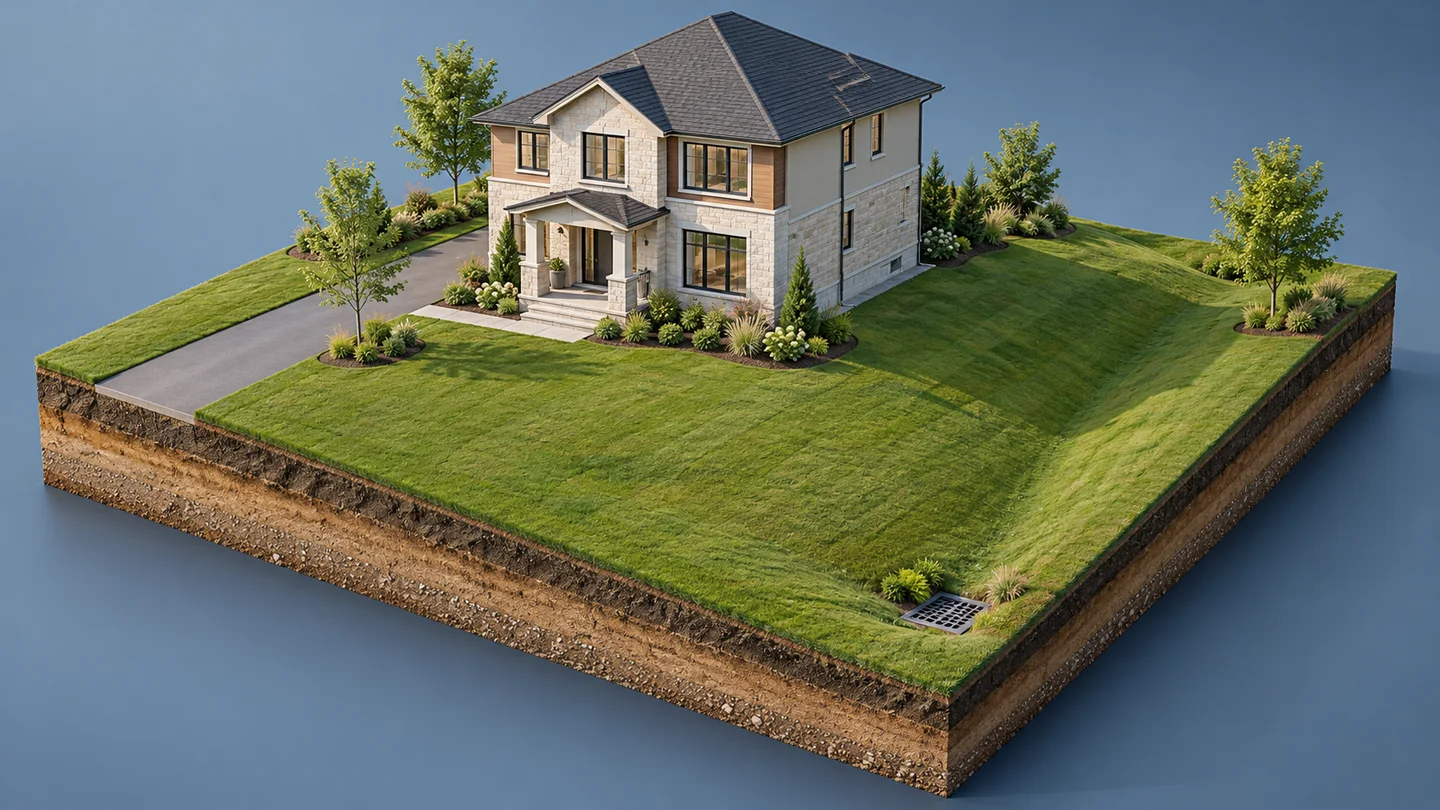
Grading drawings, drainage design and construction reviews need a coordinated scope. The work begins with reliable site information and continues through the agreed review and construction stages. Before you request a quote, define the project, identify the approvals that may apply, and ask who will review the finished work.
King City is within the Township of King. Its village lots, estate properties and developing neighbourhoods can present different drainage constraints. A design that suits one property may be unsuitable next door. This guide explains how to select a grading engineer, compare service scopes and prepare for the decisions that follow. For engineering and design support, Elmid Design Inc. can review your proposal and identify the drawings and coordination your project needs.
When should you hire a grading engineer in King City?
Bring the grading engineer into the project while the layout can still change. A new house, substantial addition, walkout, driveway revision or major change in ground levels can affect several systems at once. The front entrance must meet the driveway. The rear yard needs an appropriate drainage route. Building openings must relate sensibly to nearby ground. Early coordination helps the team resolve these relationships before drawings become difficult to revise.
An existing drainage problem also deserves investigation before a contractor starts moving soil. Water collecting after rain might reflect a blocked route, settlement, runoff from elsewhere or several conditions together. Photographs help explain the symptoms, but they do not establish levels or identify every cause. A grading engineer can define what information is needed and whether other specialists should participate.
You do not need a fully developed design to make an initial enquiry. Start with the address, a clear description of the proposed work and any existing drawings. Explain whether you are planning an improvement, responding to municipal comments or trying to close an existing permit. Those starting points lead to different services. They also help prevent a proposal for design-only work from being mistaken for a complete design-and-certification package.
Recognize changes that affect more than your yard
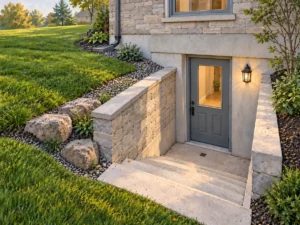
A raised patio can interrupt a side-yard swale. A wider driveway can change runoff and reduce available planting area. A new basement entrance creates a low point that needs careful drainage coordination. Meanwhile, a retaining wall can affect nearby ground and require separate structural or geotechnical input. The important question is not simply whether the finished landscape looks level. It is where water will travel and how the new work fits the site.
Ask for advice before setting a finished floor elevation or placing a large fill order. These decisions can lock the team into an awkward arrangement. By contrast, discussing alternatives early may reveal a more practical building position, driveway profile or yard layout. The engineer should explain the constraints and trade-offs without promising that a particular scheme will receive approval.
What a King City grading engineer does, and what others do
Engineering design
The grading engineer develops the proposed relationship between ground levels, buildings and drainage routes. Depending on the assignment, deliverables can include grading drawings, drainage details, erosion-control information and responses to technical review comments. The proposal should identify the actual documents, the assumptions behind them and any services that another professional must provide.
Survey inputs
A survey supplies measured site information; a grading design uses that information to propose changes. A boundary sketch alone may lack the elevations needed for design. Equally, a detailed drawing does not replace reliable boundary or easement information. Ask the engineer what survey coverage and records are appropriate before commissioning additional work. This can reduce the risk of paying for information that still leaves important gaps.
Construction
The contractor carries out the physical work. The contractor’s approach, equipment and construction responsibilities differ from the engineer’s design role. Periodic engineering review also differs from continuous supervision. Your agreement should describe the expected site visits, what they cover and how the team will communicate concerns. Do not assume that hiring an engineer automatically includes managing every construction activity.
Qualifications to check in a King City grading engineer
Ask who will take professional responsibility for the engineering work and whether the proposed team has relevant grading and drainage experience. Check individual licensing and the firm’s authorization through appropriate official sources. A professional seal is one part of accountable engineering work, not a substitute for a defined scope, sound inputs or documented review.
King’s January 2026 Design Manual identifies several qualified professional categories for relevant plan submissions. Its requirements for stormwater reports and briefs are more specific. Therefore, avoid assuming that every drawing requires the same discipline. Ask the Township and your designer which qualifications apply to the actual submission. The current requirements are linked from King’s Design Criteria page.
What to send your grading engineer in King City
Give the grading engineer a concise picture of the property and your objective. Include drawings you already have, but describe their age and purpose. An old survey can still provide useful context, even when the designer needs updated measurements. Similarly, a previous approved plan can reveal the intended drainage arrangement without proving that today’s ground matches it.
Useful starting information includes:
- The property address and a short description of the proposed work.
- Available survey information and architectural or site-layout drawings.
- Previous grading plans, permits, engineering comments or approval conditions.
- Known easements, shared drainage features and servicing information.
- Photographs showing the concern and its location during or after rainfall.
- Your anticipated construction sequence and any known submission deadline.
For an existing water problem, record when it happens and how long it lasts. Note whether the problem began after a particular change. Keep observations factual: identify the location and water movement rather than assigning blame to a neighbour. The engineer can then decide what investigation is appropriate. Avoid entering neighbouring land or changing a shared drainage feature without the necessary permission.
Survey coverage for your King City grading engineer
Discuss the required survey with the designer before treating a quotation as final. Coverage may need to show relevant buildings, entrances, roads, drainage features and surrounding levels. The appropriate extent depends on the proposal and site context. A design team may also need records of services, easements or previously approved drainage arrangements.
Ask which documents you will supply and which the firm will obtain. Identify any third-party costs separately. Also ask what happens if later information conflicts with an early assumption. A clear proposal can explain when additional survey, soil information or another specialist’s work would be necessary. This gives you a more useful budget than a low headline price based on incomplete inputs.
How a King City grading engineer coordinates the design
A grading plan should work with the project as a whole. The engineer reviews how the proposed building meets the ground, where runoff can travel, and how the design relates to neighbouring boundaries. The drawing should communicate those relationships clearly enough for review and construction coordination. Attractive landscaping can then develop around the engineering constraints rather than obscure them.
The first design conversation often concerns levels. Architectural drawings may show a finished floor, garage slab or basement entrance, while site drawings show the ground and road. These levels need a common reference and a consistent design. If one discipline changes an elevation, the others need to know. Otherwise, individually reasonable drawings can describe an arrangement that does not fit together.
Building entrances, driveways and low points
Driveways need a workable connection between the road and the building. Their slopes, drainage routes and transitions interact with doors, sidewalks and nearby land. Similarly, a walkout or sunken entrance introduces a low point beside the building. Its protection requires coordinated detailing rather than a general instruction to slope the yard away.
Ask the grading engineer how these interfaces will appear in the drawings. Where a level relationship is difficult to understand in plan, a section or detail may help. Confirm which consultant designs any structural retaining element or other specialist component. Keeping responsibility clear is particularly important where water, retaining structures and building openings meet.
How to read grading drawings
Ask the designer to walk you through the drawing before submission. Identify the existing and proposed levels, the reference used for elevations and the symbols that show water movement. Locate the building entrances, property boundaries and drainage features that matter to your project. This discussion can reveal a mismatch between the owner’s intended outdoor use and the arrangement shown on the plan.
Check that the drawing set describes the same proposal as the architectural plans. A garage, stair or patio shown in a different position can create unnecessary review questions. The engineer should coordinate technical revisions, while the owner confirms that the proposed layout still meets the project brief. Do not change a level yourself because the drawing appears to have spare room.
Keep explanatory notes with the drawings rather than relying on recollection. Where an item depends on later information or another consultant, ask how that dependency will be resolved. Also confirm which documents the contractor will receive and whether a revised issue replaces the whole set or only certain sheets. Clear document control helps everyone identify the design that is actually intended for construction.
Boundaries, swales and a suitable outlet
Water needs a continuous route, not just an arrow at one corner of a plan. The engineer considers where runoff originates, how it crosses the property and what receives it. That route must account for neighbouring grades and any relevant easements. A drawing should not assume that a neighbour’s property or an unverified connection is available as an outlet.
King’s Backyard Works guidance emphasizes keeping swales and catchbasins unobstructed. Before changing a fence line, garden bed or patio, check whether the area carries water. A small obstruction at a critical low point can matter more than a large change elsewhere. Keep the drainage arrangement visible in the landscape plan so later improvements do not inadvertently compromise it.
How a King City grading engineer coordinates stormwater design
Grading establishes levels and surface routes. Stormwater work addresses related questions about runoff and the measures needed for the development. Depending on the proposal, these questions can involve storage, infiltration, treatment or other features. A simple grading drawing should not be assumed to resolve every stormwater requirement.
Ask whether the proposed scope includes the required stormwater information and who will provide supporting investigations. An infiltration concept, for example, needs suitable site evidence rather than an assumption that water will soak away. Coordinate the space required for any proposed drainage feature before the building and outdoor layout become fixed. The design team should also consider access for maintenance.
Confirm the review route before submitting
Your grading engineer should help identify the engineering submission path, while recognizing that the Township decides what it requires. King’s Development Engineering Approval page states that an approved Zoning Certificate and associated drawings precede the engineering submission. Confirm the current checklist for your project rather than sending a generic package assembled for another municipality.
The same page distinguishes different project situations and identifies additional stormwater information for relevant village-boundary sites. It also explains that infiltration proposals need appropriate groundwater and infiltration information. These requirements make early coordination valuable. Ask the designer to identify missing dependencies before you plan around a submission date.
Site alteration and fill work can involve a separate review. King’s Site Alteration and Fill Permits page explains the current process. A permit may be required unless an exemption applies. Engineering drawings are not permission to start moving soil, and one approval does not replace another applicable authorization. Check the actual work and property before ordering materials or booking equipment.
Conservation and other property-specific checks
Check conservation and planning requirements for the actual property and work. King’s Applicable Law and Other Building Resources identifies authorities to consult. For pool applications specifically, the Backyard Works guidance says Oak Ridges Moraine properties may require a Site Plan Development application. It also calls for the applicable conservation permit, or written confirmation that one is not required, where a regulated area is involved. These pool-specific notes are not a universal checklist for every grading project. Confirm the relevant route with the Township and applicable authority.
Other locations can require coordination with a road authority. King’s Applicable Law and Other Building Resources identifies York Region and the Ministry of Transportation among possible contacts. Give the design team the actual address so it can identify relevant checks. Keep written responses with the project records rather than relying on a verbal assumption that another consultant has handled them.
Compare proposals from a King City grading engineer
Two proposals can use the same phrase, “grading plan,” while covering different services. Read the deliverables and exclusions before comparing the total. One may include only an initial drawing. Another may include design coordination, a defined allowance for review responses and specified site visits. Neither description should leave you guessing about what happens after the first submission.
Ask how the firm will manage changes to your design. A municipal clarification differs from a new building footprint or a revised driveway requested by the owner. The proposal should explain those distinctions, including how additional work is authorized. This protects the owner from surprise assumptions and gives the engineer a clear basis for the assignment.
Questions to ask a grading engineer in King City
Use a short discussion to confirm the practical details:
- What drawings and reports are included, and what must others provide?
- Who coordinates architectural elevations and related design changes?
- What municipal-response work is included in the fee?
- Which construction stages need engineering review or advance notice?
- What evidence and documents are needed for the agreed completion services?
- How are scope changes, extra visits and third-party costs handled?
Keep the answers with the signed scope. Ask for clarification when a term is unclear, especially “inspection,” “certification” or “as-built.” These words can describe different deliverables. A defined assignment is more useful than an assurance that the firm will “take care of everything.” It also helps your contractor understand when to contact the engineer.
Ask how design decisions will be explained
A useful engineering discussion makes the important choices understandable. Ask the designer to explain where runoff travels, which existing features constrain the proposal and what information remains uncertain. You should be able to identify the main drainage route on the drawing. That does not turn the owner into the designer; it helps the owner recognize when a later change needs professional input.
When there are alternatives, compare the full implications. A solution that reduces visible grading might require a structural element, additional maintenance or more coordination. Another approach may occupy space you hoped to use differently. Ask what each option depends on and which responsibilities follow from it. Avoid choosing a design based only on the smallest apparent change in the yard.
Request a clear explanation of assumptions, too. If a proposed outlet, existing service or ground condition remains unconfirmed, understand how the team will resolve it. An unresolved assumption should not quietly become a construction instruction. Agreeing on the next investigation or decision makes the remaining work visible and helps you plan the project sensibly.
Fees and timing depend on the actual project
Design effort depends on the site, information quality and coordination required. A constrained infill lot can raise different issues from an estate property with private services. Missing records, unresolved layouts or substantial review changes can add work. Request a project-specific proposal rather than assuming a published price applies to your property.
Separate engineering fees from survey costs, municipal charges, specialist investigations and construction costs. King’s approval page links its current review and inspection fees, which can change. For timing, distinguish the engineer’s preparation schedule from municipal review and construction availability. Ask what inputs must arrive before design can start, and what events could change the expected programme.
Manage review comments and drawing revisions
Keep one current drawing set for the project. When the architect changes a floor level or the owner moves a driveway, tell the grading engineer before the change reaches site. Ask whether the alteration affects drainage, another consultant’s design or the approved submission. Even a modest revision can create a conflict if the team works from different versions.
During municipal review, a comment-response record can make the process easier to follow. Each response should explain what changed or why the submitted approach remains appropriate. The revised drawing should identify the relevant revision so reviewers and contractors can locate it. The aim is a clear technical record, not simply a new PDF with a later date.
Before construction, confirm which drawings are approved and whether conditions remain outstanding. Do not treat a submitted plan or an informal discussion as approval. Give the contractor the current documents and explain who can authorize design changes. Keep superseded sets separate so nobody accidentally builds from an earlier version.
Plan construction reviews with your King City grading engineer
Agree on construction-stage engineering services before the contractor mobilizes. Section M9 of King’s January 2026 Design Manual addresses residential infill development. It requires inspections and signed, sealed certification by the original qualified designer at the applicable stages below. Confirm how these requirements apply to your residential infill proposal; do not treat them as an identical inspection package for every landscaping or grading assignment.
This matters because some features become difficult to review once covered. A late request for a completion letter may not supply the evidence the professional needs. Ask what records, measurements and site observations are required, and who will arrange them. If the schedule changes, notify the engineer before the relevant work disappears below soil, pavement or landscaping.
Residential infill inspection checkpoints
- Before site disturbance: the original qualified designer inspects and certifies the erosion and sediment control measures and tree protection. Arrange the required installation, notification and review before disturbing the site.
- Before final grading and restoration: where low-impact development or stormwater management infrastructure is included, the designer inspects and certifies those works. Plan the review while the relevant infrastructure remains accessible.
- After construction and stabilization: the designer inspects and certifies the infrastructure, grading and drainage. Confirm the records and any corrections needed for the completion submission.
Agree on advance notice, safe access and the records needed at each applicable stage. Give the contractor the approved drawing set and keep outstanding conditions visible. If unexpected ground conditions or a proposed change affect the design, contact the engineer before building a different solution. A scheduled final visit is not permission to skip earlier required reviews.
Periodic review does not mean that an engineer sees every construction activity. The contractor remains responsible for carrying out the work within its own scope. Likewise, the owner should not assume that a final visit can verify concealed work. Agreeing on the sequence early helps everyone understand what evidence the designer can reasonably rely on.
In an unassumed development, additional coordination with the subdivision engineer may apply. Confirm who controls the approved grading arrangement and how proposed changes must be reviewed. An individual lot design needs to fit that wider system. Keep the relevant acceptance correspondence with the other project records.
How Elmid Design Inc. can help
Elmid Design Inc. prepares site grading and drainage drawings for King City projects, with the design coordinated around the proposed building, existing site information and applicable review requirements. The assignment can identify the required drawing details, related engineering inputs and response work. Where construction-stage review or certification is needed, those services should form an explicit part of the agreed scope.
Provide your address, available survey, proposed site layout and any municipal comments to begin the discussion. The team can then establish what information is missing and which engineering deliverables are appropriate. Elmid Design Inc. provides design and engineering services; construction, excavation and landscape installation remain separate contractor activities. This distinction helps owners plan both professional services and site work realistically.
Grading examples from Elmid Design Inc.’s portfolio
The following examples show documented grading-related work in Aurora and Richmond Hill. They are not King City projects, and their scope does not establish the requirements for your property.
Aurora development. Elmid Design Inc. prepared grading and servicing drawings and a stormwater management report for a proposed development. This example shows how site elevations, servicing and stormwater documentation can form part of one engineering assignment.
Richmond Hill residential development. Elmid Design Inc. prepared building, structural, mechanical, grading and servicing documentation for a proposed semi-detached residential development. The package included a coordinated site grading and servicing plan alongside the building-design work.
See these entries in Elmid Design Inc.’s sample project portfolio. These examples describe design deliverables, not claims of permit approval or completed construction.
Illustrative design scenario: a house addition and rear patio
Consider an owner proposing a rear addition and a larger patio on an established King City lot. The existing side yard carries water toward a drainage route. The owner wants a level outdoor surface, while the architectural layout introduces a new rear door. The design task is to coordinate those goals without assuming the existing drainage path can simply disappear.
First, the team reviews survey information and the proposed building levels. It then tests how the patio, door and side yard can relate to each other. If the arrangement needs a retaining element or another specialist detail, responsibility is assigned clearly. The engineer also identifies information needed to confirm the outlet and any applicable approval route.
The construction discussion follows the design. The contractor receives the coordinated drawings, and the owner confirms the required notification stages. Any change to patio levels returns to the designer for review before construction proceeds. This conceptual scenario illustrates coordination decisions; actual dimensions, slopes and drainage measures require a property-specific design.
After completion: protect the drainage arrangement
Keep the final drawings and completion records where you can find them. They can help explain the intended drainage route when you plan later landscaping or maintenance. Before adding a shed, fence footing, raised garden or new paving, check whether the work could obstruct runoff. Small improvements should still respect the wider site arrangement.
Maintain visible drainage features and investigate changes promptly. Leaves, sediment, settlement or later construction can alter how water moves. Photographs taken during rainfall can help explain a new concern to the appropriate professional. If you find a problem, seek advice before redirecting water elsewhere or altering shared infrastructure. A completed engineering assignment does not remove the need for ongoing property maintenance.
Frequently asked questions
Do I need a grading engineer for every King City landscaping project?
The need depends on the work, site conditions and approval route. Drainage alterations deserve particular attention. Ask the Township what applies, then retain a qualified designer. Do not assume all landscaping is exempt or that every project needs an identical engineering package.
Can a grading engineer use my existing survey?
Possibly. The engineer must assess its coverage, age and suitability. An older survey may lack current elevations or recent site changes. Send what you have before commissioning replacements. The designer can identify the additional information needed for reliable grading work.
Does a grading plan include stormwater calculations?
Not necessarily. The scope should state which drainage calculations, reports or briefs are included. Ask about supporting site investigations and the requirements that apply to your property. A drawing title alone does not establish that every stormwater requirement has been addressed.
Can the contractor change the approved levels on site?
Changes should return to the designer for review before implementation. The engineer can assess the consequences and whether revised approval is needed. A contractor’s practical suggestion may be useful, but it should not become an undocumented departure from the coordinated design.
Can I arrange certification only after construction finishes?
Contact the responsible designer before construction. Required observations may occur at intermediate stages, and covered work can limit later verification. Explain any work already completed so the professional can assess the available evidence and the next steps without promising a retrospective sign-off.
Does Elmid Design Inc. carry out the excavation?
Elmid Design Inc. provides engineering and design consulting, including grading and drainage drawings within the agreed assignment. Contractors undertake excavation and construction. Confirm the professional-service scope, construction responsibilities and required review stages before work begins.
Current official guidance
Consult King’s Development Engineering Approval information, Design Criteria, the 2026 Design Manual’s residential infill inspection requirements, Backyard Works guidance and Site Alteration and Fill Permits. Requirements depend on the property and proposed activity. Use the current official documents and project-specific direction when preparing an application.
Geographic Locations That We Service:
Our Licensed Professional Engineers specializing in Engineered Site Grading Plans provide professional engineering and design services for site grading plans, lot grading, erosion and sediment control plans, and drainage plans to support applicable site plan approval and building permit applications in Ontario.
We provide engineering services across a wide range of municipalities, each with its own requirements and review processes.
Toronto and Surrounding Areas
We provide engineering services in Toronto and provide grading engineering resources through our Toronto grading plan page.
Our service area also includes Oshawa, Pickering with our Pickering grading plan resources, and Clarington.
We also provide engineering services in Ajax through our Ajax grading plan resources, Whitby, Brock, Scugog, and Uxbridge, including our Uxbridge grading plan resources.
Halton Region
Within Halton Region, we provide engineering services in Burlington, including projects requiring Burlington grading plans.
We also provide engineering services in Halton Hills, supported by our Halton Hills grading plan resources.
Our service area also includes Milton and Oakville, including our Oakville grading plan resources.
Peel Region
Within Peel Region, we provide engineering services in Brampton, including projects requiring Brampton grading plans.
We also provide engineering services in Mississauga through our Mississauga grading plan resources and Caledon through our Caledon grading plan resources.
York Region
Within York Region, we provide engineering services in Vaughan and provide information about Vaughan grading plans.
We also provide engineering services in Aurora through our Aurora grading plan resources and East Gwillimbury through our East Gwillimbury grading plan resources.
Additional service areas include Georgina with our Georgina grading plan resources, Markham with our Markham grading plan resources, and Newmarket with our Newmarket grading plan resources.
We also provide engineering services in Richmond Hill with our Richmond Hill grading plan resources, Whitchurch-Stouffville through our Whitchurch-Stouffville grading plan resources, and King through our King grading plan resources.
Our service area also includes Bradford West Gwillimbury.
Other Southern Ontario Cities and Towns
We provide engineering services in many additional Southern Ontario communities, including Hamilton, St. Catharines, Niagara-on-the-Lake, Brant, Cambridge, Kitchener, Waterloo, and Woodstock.
We also provide engineering services in Guelph, Centre Wellington, Shelburne, Orangeville, New Tecumseth, Essa, Collingwood, Wasaga Beach, and Barrie, including our Barrie grading plan resources.
Additional service areas include Midland, Orillia with our Orillia grading plan resources, Ramara, Minden Hills, North Kawartha, Kawartha Lakes, Peterborough, Selwyn, and Brighton.