Plan the drainage before the ground changes
A lot grading plan in Markham shows how proposed ground levels will direct surface water around a property. Elmid Design Inc. prepares grading and drainage drawings that coordinate the building, neighbouring grades and an appropriate outlet.
Key Takeaways
- A useful plan connects surveyed conditions, proposed elevations and a continuous drainage route.
- Markham’s residential infill process is project-specific. Confirm eligibility before assuming the same application applies to every property.
- Grading, servicing, stormwater management and building drawings must agree wherever their scopes overlap.
- A drawing acceptance is not the same as completed construction or final grading certification.
What a lot grading plan in Markham needs to explain
A lot grading plan is a coordinated description of the finished ground surface. It shows the relationship between the house, yard, driveway, drainage features and surrounding land. The purpose is not simply to add elevation numbers to a site plan.
Instead, the drawing should explain where water goes and how the proposed work fits existing conditions. It also helps identify conflicts before excavation or landscaping changes make them harder to resolve. A larger building footprint, for example, can leave less room for a side-yard drainage route.
For an owner, the most useful question is straightforward: can someone follow the intended drainage path from the building to its outlet? The answer should come from coordinated elevations, slopes, arrows and details rather than an isolated note saying “drain away.”
Existing and proposed grades on a Markham grading plan
Existing elevations describe the surveyed site. Proposed elevations describe the design. Both matter because an attractive proposed yard still has to connect to the surrounding ground without creating an unresolved step or drainage obstruction.
A plan therefore needs a clear distinction between measured information and design information. A legend, consistent notation and an identified elevation reference help readers interpret the drawing. Where the connection is difficult to understand in plan view, a section can explain the vertical relationship.
Do not assume that an older plan describes the property today. A resurfaced driveway, new patio, retaining wall or neighbouring addition may have changed important levels. Identifying those changes early helps the designer decide what additional survey information is needed.
A Markham grading plan reviews more than the building footprint
A house occupies only part of its drainage setting. Water can approach from another area, pass along a property boundary or collect near a low opening. Roads, sidewalks, ditches and neighbouring yards may influence the design even when the proposed work stays on one lot.
Markham’s engineering criteria identify positive drainage and avoiding adverse effects on adjacent properties as core objectives. They also direct designers to consider applicable municipal standards and other approval authorities. See the City’s Engineering Design Criteria, Section A.
In practical terms, the drawing should not stop its reasoning at the fence. However, reviewing surrounding conditions does not authorize entry, grading or drainage work on someone else’s land.
Separate an observed drainage problem from its cause
If the property already has ponding or unexpected runoff, describe the problem before selecting a solution. Note where the water appears, when it occurs and which recent changes might be relevant. Photos taken from a safe, accessible location can help explain the pattern to the designer.
However, a photograph cannot establish the full drainage path or confirm an underground connection. Water visible near a wall may have more than one possible source. The investigation should distinguish surface runoff from other building or servicing concerns instead of assuming that regrading alone will resolve everything.
Share previous grading drawings and any relevant correspondence alongside the observations. These records may explain the intended drainage arrangement, while current survey information shows whether the physical conditions still match it. Neither should be interpreted in isolation.
Also identify the extent of the requested assignment. Preparing a plan for a proposed addition differs from investigating an existing drainage dispute. The latter may require a separate scope, additional records and careful assessment of responsibility. A new drawing should not make unsupported conclusions about a neighbour’s work or promise a particular dispute outcome.
This early distinction keeps the engineering question clear. The team can then identify which observations, measurements and records are necessary before proposing changes to the property.
- Ground levelsUnderstand the existing surface.
- Building edgesCoordinate openings and foundations.
- Drainage routeShow a continuous path.
- OutletConfirm where the route can discharge.
This is a conceptual sequence, not a prescribed grading solution. The property’s survey and applicable requirements determine the design.
Confirm the Markham grading plan approval route
Start by confirming the application that fits the proposed work. The City calls its residential process Residential Infill Grading and Servicing, or RGS. Older material may use RIGS for the same general subject.
The City lists new detached infill construction involving grading or servicing, qualifying residential additions, service connections and revisions to accepted applications. Its current eligibility guidance excludes non-residential lots, developments above 10 units and certain smaller additions. Unresolved severance, minor-variance or heritage applications can also prevent an RGS application from starting. The addition threshold relates to ground-surface impact, not simply total floor area. Check the current RGS application process for the applicable category.
RGS, site alteration and building permits are not interchangeable
Grading acceptance addresses a specific part of a project. It does not replace zoning review, building-permit requirements or another authority’s permission. Conversely, a modest building project can still raise drainage questions that deserve an early review.
The City’s Site Alteration Permit guidance covers activities such as changing land grades, adding fill and removing topsoil. Its residential route must be read with the RGS package’s exemption conditions. Ask the City to confirm the route where those conditions are not met.
This distinction matters when comparing proposals. A grading drawing, a servicing design and a site-alteration submission may overlap, but they are not automatically the same assignment.
Identify other approvals before treating the layout as fixed
Some properties need input about trees, heritage, easements, regional roads or regulated natural features. These constraints can affect where the building, driveway, drainage route or services can go. They should inform the drawing rather than appear as last-minute annotations.
For example, a proposed service trench might conflict with tree protection. A grading solution might rely on land within an easement. Flagging these issues early allows the owner and design team to ask the appropriate authority a focused question.
Do not assume that every Markham property requires TRCA clearance. The City’s RGS submission guidance makes supporting documents dependent on the application and relevant checklist items.
Information for a reliable grading plan in Markham
Good design starts with dependable inputs. Share the records you have before ordering replacements, but expect the designer to assess whether they are suitable. A document can be useful background without being sufficient for the final submission.
The original survey, concept drawings and municipal comments can reveal important constraints. However, conflicting dates or elevation references must be reconciled. The designer should know which architectural revision represents the intended project and which records reflect existing conditions.
Survey information for a Markham lot grading plan
A boundary survey identifies property limits; topographic information adds the levels and physical features used for drainage design. Depending on the assignment, the relevant information may include buildings, hard surfaces, trees, drainage features and nearby ground levels.
Markham’s RGS information package specifies survey, datum, drawing and certification requirements. It also identifies information beyond the lot itself. Confirm the applicable checklist and survey currency before arranging the work.
Aerial mapping or a phone photograph can help explain a concern. It cannot replace the measured elevations needed to establish slopes. Similarly, the designer should not treat an unverified fence line as a surveyed legal boundary.
Coordinate building levels with the Markham grading plan
Provide the proposed building footprint and the relevant floor, foundation, garage and entrance information. The grading designer needs to understand where outside ground meets the building and where lower openings need particular attention.
These levels should agree across the architectural and civil drawings. If one drawing changes a garage slab while another keeps the previous driveway profile, the package can become internally inconsistent. Resolving that conflict on paper is preferable to discovering it during construction.
Also identify proposed steps, window wells, walkouts, porches and accessory structures. Even a small feature can occupy the space intended for drainage. The design team can then coordinate the building edge and the yard instead of treating them as separate problems.
Existing services, utility records and project limits
Surface drainage and underground services are different systems, but their designs interact. A proposed connection may affect a driveway, foundation or protected tree. Meanwhile, a building elevation change may affect the feasibility of a gravity connection.
Existing records help identify what is known and what needs verification. A line shown on an old drawing does not establish its current condition or prove that it can serve the proposed development. Where further investigation is required, agree on responsibility before relying on an assumption.
Service sizes, offsets and connection details must follow the actual design and applicable standards. There is no useful substitute in a general article for checking the particular service, property and authority. Elmid Design Inc.’s Markham site servicing guide explains the related design scope.
A practical starting package
- Property: address, available survey and known easements.
- Proposal: current building layout and a short description of the work.
- Drainage: photos and the location of any observed ponding or runoff concern.
- Records: previous approvals, relevant service information and municipal comments.
- Scope: whether you need design, submission coordination, revisions or later field-review services.
Missing records are a reason to define the next information-gathering step, not to guess the site conditions.
How a Markham lot grading plan coordinates drainage details
After the inputs are established, the designer develops a coherent surface. Individual spot elevations should support a continuous drainage strategy. A low point needs somewhere to discharge, and a high point should fit the intended division of runoff.
Drawings should also distinguish between the final ground surface and temporary construction conditions. A finished lawn may drain well, while an unfinished excavation or stockpile can interrupt that same route. Both stages deserve appropriate attention.
Reading elevations, arrows and cross-sections together
Spot elevations identify levels at particular points. Slope labels describe the change in height over a horizontal distance. Drainage arrows indicate the intended direction of flow. Read these elements together: an arrow should agree with the levels that support it.
A cross-section adds another view. It can show the relationship between a foundation, a side-yard swale and retained ground near the boundary. That is particularly helpful where several lines overlap in plan view or the available space is narrow.
Ask the designer to explain unfamiliar abbreviations and the distinction between existing and proposed information. Also check the drawing date and revision. A construction discussion based on a superseded sheet can miss a change that already appears in the current package.
For an owner reviewing a concept, start at an accessible building entrance and follow the surrounding surface toward the intended outlet. Then consider a second route from the rear yard. This simple reading exercise can reveal questions to ask, but it does not replace technical review of the design.
Swales, outlets and neighbouring property levels
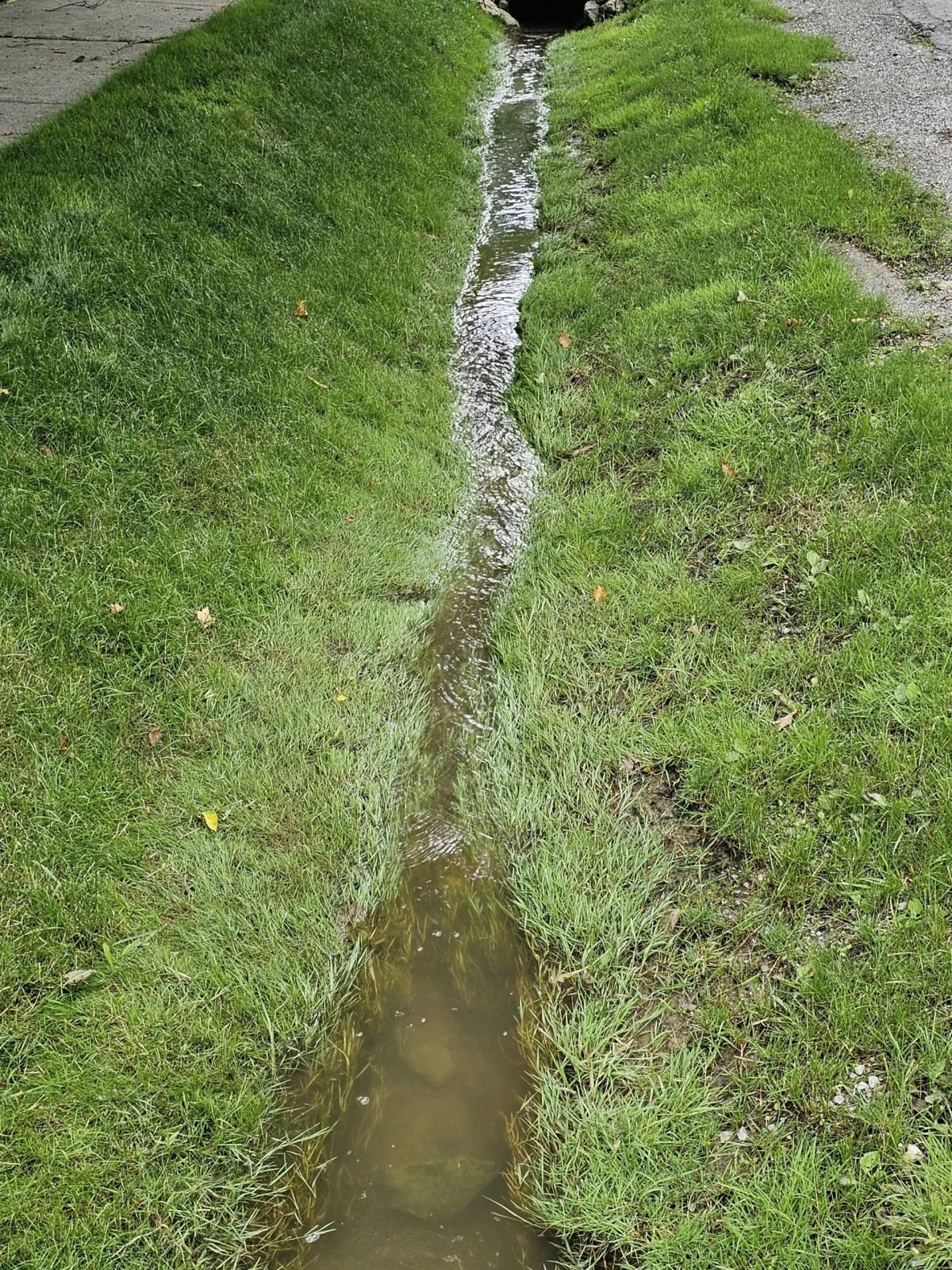
A swale is a shaped surface channel that guides runoff. Its usefulness depends on its full profile, including the side slopes, longitudinal fall and connection to an outlet. Showing an arrow without confirming the elevations does not establish a functioning swale.
The available width matters as well. A narrow space between a house and property boundary can contain competing demands: drainage, access, landscaping and other features. A cross-section helps show whether the proposed arrangement fits.
Markham’s published lot grading criteria, Section F address infill grading, adjacent grades and drainage features. Obtain the current applicable version through the City’s engineering criteria portal when developing a submission.
A neighbour’s lower yard is not, by itself, an acceptable outlet. Likewise, a visible roadside feature should not be assumed to accept a new connection. The destination and relevant permissions need to be established.
Driveways, entrances and retaining features
Driveway grading connects the garage or parking surface with the road frontage. The designer must consider the whole transition rather than selecting the garage elevation in isolation. Existing sidewalk and curb conditions can limit what is practical.
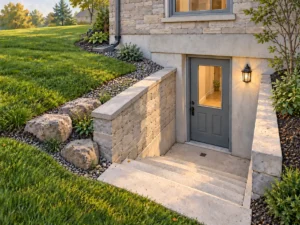
Basement entrances and other low openings need deliberate coordination with nearby ground and drainage features. The drawing should make the proposed levels understandable. It should not rely on a general note to solve a conflict between a landing and an adjacent runoff route.
Retaining features can help address elevation differences, but they introduce separate questions about structure, drainage, property limits and approvals. They are not an automatic way to make an otherwise unsuitable grading proposal acceptable.
Trees, landscaping and space for drainage
Landscaping should work with the drainage design, not overwrite it. Raised planting beds, edging, fences and patios can intercept or redirect water if their finished levels differ from the accepted drawing.
Discuss these features before the grading layout is finalized. Where tree protection applies, coordinate the proposed work with the relevant arborist information and approved protection measures. A line on the drawing is not a substitute for checking the physical space needed.
After construction, maintenance matters too. Owners should keep intended drainage paths recognizable and avoid filling them without a design review. If runoff behaviour changes, investigate the cause before adding a drain or reshaping the yard.
When a Markham grading plan needs related engineering
Some properties can be explained with a relatively straightforward grading design. Others need additional analysis or specialist input. The purpose of scoping is to identify that difference before promising a drawing package or a completion date.
Stormwater management and infiltration proposals
A grading plan describes the surface and drainage layout. A stormwater management assessment can examine runoff control and the performance of proposed measures. Neither document should contradict the other.
Markham’s RGS checklist identifies circumstances that trigger a stormwater management brief, including certain subsurface drainage proposals and constrained surface-drainage arrangements. Read the conditions in the RGS information package, rather than assuming every project needs the same report.
For an infiltration concept, the engineering questions extend beyond available yard space. The design needs appropriate information about site conditions, setbacks, performance and maintenance. The drawing must also explain what happens when the intended system cannot accept more runoff.
Erosion control and properties with private servicing
Temporary erosion and sediment controls address the construction stage. Their layout should account for disturbed areas and runoff paths, while keeping the finished grading strategy clear. The party carrying out the works must understand the accepted controls and relevant inspection requirements.
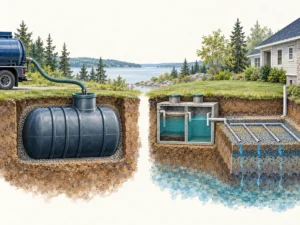
Private servicing requires its own coordination where it exists. For a property with an on-site sewage system, confirm how proposed grading and building work relate to the existing or proposed system. Do not assume that a municipal-service solution applies to every Markham address.
The City’s building-permit guide includes on-site sewage information for privately serviced properties. Any separate septic design or investigation should be defined explicitly in the project scope.
Preparing a Markham grading plan submission
Submission preparation is a coordination task as well as a drawing task. Assign responsibility for gathering documents, managing the application and responding to questions. The owner, designer and other specialists should know which version of each drawing belongs in the package.
The City administers RGS through ePLAN. Its published process includes prescreening, detailed review and formal comments. Acceptance of an upload is not the same as acceptance of the design. See the ePLAN information and application guides.
- Confirm the submission scope. Resolve the application category and identify outstanding decisions or supporting records.
- Coordinate the drawings. Check that the site layout, building levels, drainage and servicing information describe the same proposal.
- Check the package. Review the applicable checklist, drawing format, supporting documents and submission instructions.
- Track the response. Keep municipal comments, revised drawings and the response record together so changes remain understandable.
Review comments and design changes
A response should explain how each relevant comment was addressed. Simply uploading a new drawing can make the reviewer search for changes. A clear response record helps connect the comment, design decision and revised sheet.
Changes can cross disciplines. Moving a building corner might alter a drainage route, tree-protection area or service alignment. Therefore, check related drawings whenever the geometry or levels change.
Markham distinguishes a revision to a previously accepted RGS application from a resubmission during an active review. Confirm the appropriate route before changing accepted work. The City also publishes up to 30 days for each review cycle; that is not a guaranteed total approval period. See its RGS process guidance.
Markham grading plan costs and project timing
Engineering fees depend on the actual work. Survey availability, site constraints, drawing coordination, supporting analysis and the review scope all affect the assignment. A simple advertised price range does not explain what is included.
Compare proposals using deliverables and responsibilities. Ask whether they include only the initial design or also submission coordination, responses to comments and later field services. Clarify how owner changes and additional studies will be handled.
Keep professional fees separate from municipal charges, surveys, specialist work and construction costs. The City’s current fee information should govern its charges; an engineering proposal should identify the consultant’s services without presenting those charges as interchangeable.
Timing has similar layers. Information gathering comes before coordinated design. Municipal review follows submission, and construction may involve separate scheduling. Discuss dependencies early instead of treating a drawing completion date as a promise that work can immediately begin.
A useful proposal also explains the assumptions behind its fee. For example, it may rely on a suitable survey being available and the building footprint remaining stable. If either changes, the designer may need to revisit work already completed. Discuss that possibility before comparing two fees as though they cover identical assignments.
Finally, distinguish review support from authority to make owner decisions. The application may raise choices about scope, cost or the proposed layout. Establish who will review those choices and approve changes so the team does not proceed on an assumption about the owner’s priorities.
After construction: compare the work with the Markham grading plan
The design drawing describes the intended result. Post-construction records describe what was built. Differences can arise during excavation, foundation work, driveway installation or landscaping, so they should be identified rather than concealed by a final clean-up.
Markham identifies as-built drawing and grading-certificate requirements within its undertaking-release process. Confirm the current inspection and close-out requirements for the specific application, including which department administers it. The City’s RGS guidance explains the distinction between design acceptance and later completion records.
Agree on any survey, field review and certification scope before the project reaches this stage. Certification requires an appropriate basis; it is not merely a signature added to the original design.
How Elmid Design Inc. Can Help
Elmid Design Inc. prepares lot grading plans in Markham, including proposed elevations, drainage paths and relevant grading details within the agreed assignment. Where needed, the scope can coordinate grading drawings with site servicing information or a stormwater management brief. The proposal should also identify any submission support, responses to comments and later review services.
The following hypothetical design scenarios explain the questions that guide this work. They do not establish a solution for a particular property; surveyed conditions and applicable requirements determine the final design.
Illustrative scenario: a wider replacement house
Assume a proposed house leaves less side-yard space than the existing building. The starting question is whether a continuous drainage route still fits alongside the building and other required features.
The design review would compare surveyed boundary conditions, proposed building levels and available drainage width. A section through the constrained area could reveal a conflict that is difficult to see on the floor plan. The team might then revisit the layout or investigate an appropriate alternative, subject to the applicable review.
Illustrative scenario: an addition beside an existing patio
Assume a rear addition sits next to a patio that the owner wants to retain. The patio’s existing elevation becomes an important input. Matching it without checking the surrounding drainage could create a low area near the new wall.
A coordinated grading plan would examine the building edge, retained surface and proposed outlet together. This helps the owner understand whether retaining the entire patio is compatible with the design or whether its scope needs to change.
Illustrative scenario: a proposed subsurface drainage feature
Assume the concept includes a buried infiltration feature because the surface drainage route appears constrained. The design team first needs to establish whether that concept is suitable and what analysis Markham requires.
The grading drawing would need to agree with the supporting design. It should show how runoff reaches the feature and how the surrounding surface works with it. An attractive location on a sketch does not demonstrate capacity, infiltration performance or approval.
Markham grading plan questions
Is a lot grading plan the same as a site plan?
No. A site plan identifies the arrangement of buildings and other features; a grading plan explains ground levels and drainage. One coordinated drawing may contain both types of information, but a building outline alone does not establish a drainage design.
Does every Markham renovation need an RGS application?
No. The application route depends on the work and the property. Check the City’s eligibility guidance rather than assuming all renovations, additions or landscape changes follow the same process. Other permits or restrictions may still apply even where RGS is not the appropriate route.
Can an existing survey be used for a grading plan?
Possibly, but its scope, accuracy and currency need review. An older boundary survey may not contain the topographic information needed for design. Send the available document first so missing information can be identified before additional survey work is arranged.
Who prepares the engineering design?
The assignment should go to an appropriately qualified professional for its actual scope. Markham’s RGS checklist identifies signing requirements, while supporting engineering reports may have their own requirements. Confirm these for the complete package rather than assuming that every document has an identical professional requirement.
Can a grading plan guarantee that a property will never flood?
No. Grading design addresses defined site conditions and design objectives. Extreme weather, downstream restrictions, blocked drainage routes or later changes can affect performance. A plan should explain its design and relevant limitations, not promise the elimination of every flood risk.
Does Elmid Design Inc. carry out the grading construction?
Elmid Design Inc.’s role is engineering and design consulting. Earthworks, landscaping, service installation and other construction are separate responsibilities. Any field review or certification service should be identified in the agreed engineering scope rather than assumed to include construction.
Official Markham resources
Use the current City documents for the application you are preparing. Requirements can change, and a general guide cannot replace property-specific review.
Geographic Locations That We Service:
Our Licensed Professional Engineers specializing in Engineered Site Grading Plans provide professional engineering and design services for site grading plans, lot grading, erosion and sediment control plans, and drainage plans to support applicable site plan approval and building permit applications in Ontario.
We provide engineering services across a wide range of municipalities, each with its own requirements and review processes.
Toronto and Surrounding Areas
We provide engineering services in Toronto and provide grading engineering resources through our Toronto grading plan page.
Our service area also includes Oshawa, Pickering with our Pickering grading plan resources, and Clarington.
We also provide engineering services in Ajax through our Ajax grading plan resources, Whitby, Brock, Scugog, and Uxbridge, including our Uxbridge grading plan resources.
Halton Region
Within Halton Region, we provide engineering services in Burlington, including projects requiring Burlington grading plans.
We also provide engineering services in Halton Hills, supported by our Halton Hills grading plan resources.
Our service area also includes Milton and Oakville, including our Oakville grading plan resources.
Peel Region
Within Peel Region, we provide engineering services in Brampton, including projects requiring Brampton grading plans.
We also provide engineering services in Mississauga through our Mississauga grading plan resources and Caledon through our Caledon grading plan resources.
York Region
Within York Region, we provide engineering services in Vaughan and provide information about Vaughan grading plans.
We also provide engineering services in Aurora through our Aurora grading plan resources and East Gwillimbury through our East Gwillimbury grading plan resources.
Additional service areas include Georgina with our Georgina grading plan resources, Markham with our Markham engineering resources resources, and Newmarket with our Newmarket grading plan resources.
We also provide engineering services in Richmond Hill with our Richmond Hill grading plan resources, Whitchurch-Stouffville through our Whitchurch-Stouffville grading plan resources, and King through our King grading plan resources.
Our service area also includes Bradford West Gwillimbury.
Other Southern Ontario Cities and Towns
We provide engineering services in many additional Southern Ontario communities, including Hamilton, St. Catharines, Niagara-on-the-Lake, Brant, Cambridge, Kitchener, Waterloo, and Woodstock.
We also provide engineering services in Guelph, Centre Wellington, Shelburne, Orangeville, New Tecumseth, Essa, Collingwood, Wasaga Beach, and Barrie, including our Barrie grading plan resources.
Additional service areas include Midland, Orillia with our Orillia grading plan resources, Ramara, Minden Hills, North Kawartha, Kawartha Lakes, Peterborough, Selwyn, and Brighton.