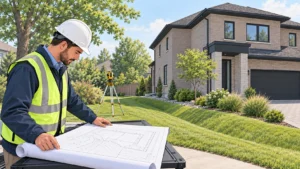
Drainage Grading Burlington helps property owners control runoff before water creates costly problems around buildings and landscapes. Burlington properties vary in slope, soil, age, and surrounding development. Therefore, each site needs a drainage approach based on its actual conditions. Poor grades can send rainfall toward foundations, patios, driveways, and low yard areas. However, properly planned slopes move water toward suitable drainage routes. Professional assessment also considers neighbouring properties and existing site features. As a result, effective grading supports drier yards, stable soil, and stronger long term property performance.
Why Burlington Properties Need Effective Grading
Burlington includes properties with different terrain and development patterns. Some lots have gentle grades, while others contain stronger elevation changes. Older landscapes may also settle and alter original drainage routes. Meanwhile, renovations can introduce hard surfaces that create additional runoff. Proper grading helps these different property types manage water more effectively. Engineers review existing elevations before recommending changes. Consequently, drainage improvements can address the real site conditions rather than relying on a standard solution. Careful planning creates more dependable results.
How Ground Elevations Control Surface Water
Water naturally moves from higher ground toward lower areas. Even small elevation differences can influence runoff during strong rainfall. Buildings, fences, gardens, and pavement can interrupt that natural movement. Therefore, engineers study the entire property before developing grading recommendations. Correct slopes create continuous routes that keep water moving. Poor transitions may instead create pockets where runoff collects. Furthermore, accurate elevations help connect different sections of the property. Understanding ground levels remains essential for reliable surface drainage.
Drainage Grading Burlington Around Foundations
Positive grading near foundations helps move surface water away from exterior walls. Soil settlement can gradually reduce this important slope. Likewise, landscaping may raise nearby ground and change runoff direction. Water can then remain beside the building after storms. Proper grading restores a useful drainage path around the structure. Additionally, downspout discharge should work with surrounding ground elevations. Coordinated drainage reduces repeated moisture buildup beside foundation areas. Drainage Grading Burlington therefore supports practical exterior water control for residential properties.
Recognizing Signs of a Drainage Problem
Visible water patterns often provide useful clues about grading conditions. Puddles that remain after nearby ground dries may indicate a low area. Muddy sections can show where runoff repeatedly collects. Similarly, soil erosion may reveal water moving too quickly across a slope. Homeowners should also notice water travelling toward foundation walls. Uneven settlement beside patios can provide another warning sign. Therefore, observing the property during rainfall can help identify developing concerns. Early assessment allows owners to address problems before they become harder to manage.
Burlington Rainfall Requires Clear Drainage Routes
Strong rainfall can produce significant runoff within a short period. Hard surfaces increase that volume because they allow little water to enter the ground. Therefore, properties need clear drainage routes that remain effective during wet conditions. Proper grading directs runoff away from sensitive areas. Meanwhile, blocked or uneven slopes can cause water to collect unexpectedly. Engineers consider likely surface flow when reviewing drainage concerns. Reliable grading helps properties respond more effectively when rainfall places greater demand on outdoor drainage.
Snowmelt Can Expose Hidden Low Areas
Winter snow stores moisture across roofs, lawns, and paved surfaces. Warmer temperatures can release that water quickly during spring. However, cold soil may absorb moisture slowly during early thaw periods. Surface grades then carry much of the meltwater across the property. Low areas become easier to identify under these conditions. Therefore, homeowners should observe where snowmelt travels and collects. Positive drainage helps move water away from foundations and outdoor features. Spring conditions often provide valuable information about grading performance.
Side Yard Drainage Needs Precise Planning
Side yards often provide narrow routes for water moving between front and rear areas. Limited space can make proper grading more difficult. Air conditioning units, walkways, fences, and downspouts may create additional restrictions. Consequently, small elevation errors can lead to persistent puddles. Engineers can determine suitable slopes within the available space. Furthermore, drainage should avoid sending water toward neighbouring buildings. Careful side yard planning improves runoff while keeping important property features functional.
Backyard Grading Supports Outdoor Living
Backyards often combine lawns, gardens, patios, decks, sheds, and other features. Each improvement can influence how rainfall moves through the property. Poor grading may leave outdoor spaces muddy long after storms. Therefore, drainage planning should connect every major backyard area. Gentle slopes can move water while preserving useful lawn space. Moreover, proper grading helps protect gardens from excessive moisture and erosion. A well drained backyard becomes easier to maintain and enjoy. Effective water control supports both comfort and property protection.
Front Yard Drainage Protects Key Features
Front yards contain several surfaces that need coordinated drainage. Driveways, steps, gardens, walkways, and entrances can all affect runoff direction. Water should move away from the house without collecting beside these features. Therefore, finished grades require careful planning around each surface. Garden beds should preserve drainage routes rather than block them. Additionally, soil elevations should connect smoothly with pavement edges. Good front yard grading improves water control while supporting attractive landscaping. Practical drainage can protect both function and curb appeal.
Driveway Runoff Needs Proper Direction
Driveways create fast runoff because pavement prevents most rainfall from entering the ground. Surface slope determines where this water travels after a storm. Poor drainage may direct runoff toward garages or nearby foundations. Therefore, engineers consider driveway elevations when reviewing property grading. Surrounding soil should continue carrying water away after it leaves the pavement. Furthermore, low areas along driveway edges can create recurring puddles. Coordinated grades help protect pavement, landscaping, and nearby structures.
Walkways Can Interrupt Existing Drainage
New walkways can create small barriers across established surface drainage routes. Raised edges may prevent water from crossing into lower areas. Consequently, runoff can collect beside pavement or nearby landscaping. Proper planning connects walkway elevations with surrounding grades. Engineers can identify suitable transitions before construction begins. Furthermore, surface slopes should keep entrances and walking areas dry whenever possible. Coordinating hardscape and soil elevations improves overall property drainage. Small details often make a significant difference in water movement.
Patio Drainage Requires Connected Grading
Patios change drainage because hard surfaces produce runoff during every rainfall event. Water leaving the patio needs a clear route through surrounding areas. Incorrect grades may trap moisture beside doors, walls, or landscape beds. Therefore, patio elevations should connect with the wider property drainage plan. Proper slopes guide water away without reducing outdoor comfort. Moreover, surrounding soil should not create barriers along pavement edges. Thoughtful grading keeps patios more usable while protecting nearby property features.
Soil Type Affects Drainage Grading Performance
Different soils handle rainfall in different ways. Dense soil may absorb moisture slowly and create more surface runoff. Loose fill can settle and change finished elevations over time. Therefore, engineers consider soil behaviour when planning drainage improvements. Contractors also need suitable material when raising low areas. Proper preparation helps new grades remain stable after construction. However, landscaped sections still need soil that supports healthy vegetation. Balancing drainage, stability, and plant growth creates stronger long term results.
Erosion Can Signal Poor Water Control
Erosion often develops where runoff becomes concentrated across exposed soil. Moving water can remove topsoil and create channels through landscaped areas. Steeper slopes may increase this risk during heavy rainfall. Proper grading distributes runoff through more suitable paths. Consequently, water can move with less damaging force. Vegetation also helps stabilize soil once finished grades become established. However, plants cannot correct an unsuitable drainage route alone. Effective erosion control starts with proper surface water planning.
Mature Landscaping Can Change Drainage
Established trees and gardens can influence surface drainage as landscapes develop over time. Roots may change nearby soil conditions and ground levels. Garden improvements can also add soil that blocks previous runoff paths. Therefore, older properties may experience new drainage concerns despite years of good performance. Engineers can assess current elevations and identify practical corrections. Furthermore, grading changes should protect valuable vegetation whenever possible. Thoughtful planning improves drainage while preserving the character of established landscapes.
Home Additions Need Updated Drainage Plans
A home addition changes the building footprint and reduces available yard space. Existing runoff routes may no longer work after construction. Therefore, grading should become part of the project design from the beginning. Engineers can plan slopes around new foundation walls, entrances, and walkways. Roof drainage also needs suitable discharge locations. Moreover, finished landscaping should support the revised surface flow. Early coordination protects the addition and surrounding property. Updated grading helps new construction work with existing site conditions.
Renovations Can Affect Surface Water Movement
Exterior renovations often change elevations without focusing directly on drainage. New decks, steps, walkways, and landscape features can interrupt existing water routes. Consequently, runoff may begin collecting in previously dry areas. Property owners should review grading before major exterior work begins. Engineers can identify how proposed improvements affect surface flow. Proper planning also helps contractors set suitable finished elevations. Therefore, drainage becomes part of the renovation instead of a later repair. This approach can reduce repeated construction costs.
Why Professional Site Assessment Matters
Moving soil without understanding existing drainage can shift the problem to another location. Professional assessment identifies high points, low areas, runoff routes, and important site features. Engineers also consider foundations, hard surfaces, and nearby properties. Then, they can recommend grading changes based on actual conditions. Accurate assessment reduces unnecessary excavation and guesswork. Furthermore, clear elevation goals help contractors complete the work correctly. Careful planning provides a stronger path toward dependable drainage.
Long Term Value of Drainage Grading Burlington
Effective Drainage Grading Burlington protects more than lawns after heavy rainfall. Proper water control supports foundations, landscaping, pavement, and outdoor living areas. It can also reduce recurring maintenance caused by puddles and erosion. Moreover, stable grades provide a better base for future property improvements. Homeowners gain greater confidence when runoff follows clear and predictable routes. Professional planning can address present concerns while considering future site needs. Therefore, reliable drainage grading remains an important part of long term property care.
Choosing the Right Drainage Grading Burlington Approach
Effective Drainage Grading Burlington starts with choosing improvements that match the actual property conditions. Engineers study elevations, runoff paths, soil, buildings, and existing landscape features. Then, they identify practical ways to improve surface water movement. Some properties need small grading corrections around isolated low areas. Meanwhile, complex sites may need several drainage features working together. Proper planning also considers where water travels after leaving the improved area. Therefore, a site specific approach creates stronger and more dependable drainage performance.
Regrading Low Areas for Better Water Movement
Low areas can develop when soil settles or landscaping changes original ground levels. Regrading reshapes these sections so water can move toward suitable drainage routes. Contractors may add soil to raise depressions or adjust nearby elevations. Next, proper compaction helps maintain the new surface over time. Smooth transitions prevent water from becoming trapped between corrected and existing grades. Furthermore, landscape finishes should preserve the intended slope. Accurate regrading can solve recurring puddles while keeping most of the property unchanged.
Creating Positive Drainage Around Buildings
Positive drainage carries surface water away from buildings through carefully planned ground slopes. Foundation areas often need attention because settlement can change nearby elevations. Engineers review doors, windows, walkways, and other features before adjusting grades. Then, contractors shape the ground to support steady runoff. Roof drainage should also work with these finished slopes. Moreover, water should continue moving after leaving the immediate foundation area. Coordinated grading provides stronger exterior water control and reduces repeated moisture around buildings.
Using Swales Across Landscaped Areas
Swales guide runoff through shallow channels that blend into the surrounding landscape. Their gentle shape allows lawns to remain useful while supporting drainage. Engineers establish suitable elevations so water moves without excessive speed. Proper vegetation can also help protect the soil from erosion. However, settlement may reduce swale performance over time. Therefore, accurate construction and regular maintenance remain important. Well planned swales can connect several drainage areas across a property. This solution provides practical surface water control without deep open channels.
Managing Runoff Along Property Boundaries
Property boundaries require careful drainage planning because grading changes can affect neighbouring land. Raising soil near a fence may redirect runoff unexpectedly. Likewise, blocking an existing drainage route can create standing water on either side. Engineers review surrounding elevations before developing grading changes. Proper design keeps runoff within suitable paths while reducing concentrated flow. Furthermore, landscape work should preserve important drainage routes near boundaries. Responsible grading protects the project property while reducing unnecessary effects on nearby sites.
French Drains Can Support Difficult Sites
Some properties experience water below the surface as well as visible runoff. French drains can collect subsurface moisture and carry it through a prepared drainage path. However, these systems do not replace proper surface grading. Rainfall still needs clear routes away from buildings and outdoor spaces. Engineers assess soil and site conditions before recommending underground drainage. Additionally, collected water needs a suitable outlet. Combining targeted drainage with effective grading can improve performance where surface corrections alone provide limited results.
Catch Basins Manage Concentrated Surface Water
Catch basins collect runoff where property grading directs water toward planned low points. Driveways, patios, and other hard surfaces may benefit from these collection features. However, surrounding elevations must guide water toward the basin opening. Poor slopes can leave standing water beside a working inlet. Regular cleaning also prevents debris from limiting water entry. Moreover, engineers should coordinate basin locations with the wider drainage system. Effective grading and collection features provide stronger stormwater control when they work together.
Roof Runoff Needs Coordinated Ground Slopes
Roofs collect significant amounts of rainfall and direct that water toward gutters and downspouts. Downspouts then release concentrated runoff near ground level. Extensions can move water farther from foundation walls. However, surrounding grades must continue carrying that discharge away. Otherwise, water may simply collect at the extension end. Therefore, engineers consider roof drainage when reviewing property grading. A connected approach reduces repeated saturation and improves overall surface water management.
Retaining Walls Require Drainage Planning
Retaining walls change ground elevations and can interrupt natural surface drainage routes. Water may collect around these structures when nearby slopes lack proper planning. Engineers review wall locations alongside surrounding terrain before recommending grading changes. Surface runoff should move away from areas where unwanted pressure could develop. Additionally, some retaining walls may need separate drainage features. Suitable outlets help manage collected water safely. Coordinating wall drainage with property grading supports stronger landscape and structural performance.
Drainage Grading Around Pools and Decks
Pools and decks can change existing drainage patterns across residential backyards. New hard surfaces increase runoff while construction alters surrounding ground levels. Therefore, engineers should review drainage before final landscape work begins. Proper slopes guide water around recreation areas and away from buildings. Furthermore, deck edges should connect smoothly with nearby grades. Water should not become trapped around walking or seating areas. Coordinated drainage helps outdoor spaces remain comfortable and functional after rainfall.
New Home Grading Creates Early Protection
New construction provides an ideal time to establish reliable property drainage. Engineers develop finished grades around foundations, entrances, driveways, and landscaped areas. Builders use these elevations while shaping the site during construction. Proper coordination helps water follow intended routes after the home reaches completion. Meanwhile, later landscape work should preserve those slopes. Small elevation changes can alter runoff across narrow sections. Therefore, careful grading provides important protection from the beginning of property development.
Drainage Planning for Major Renovations
Major renovations can change the way surface water moves around an existing property. Additions may remove previous drainage routes or create narrow spaces beside buildings. New entrances and walkways can also change local elevations. Therefore, engineers should review drainage during the planning stage. Contractors can then coordinate finished grades with the new construction. Moreover, early design helps avoid expensive landscape changes later. Integrating drainage with renovation work protects both existing and new property features.
Commercial Drainage Grading in Burlington
Commercial properties often generate significant runoff because they contain large roofs and paved areas. Parking lots and walkways also limit natural water absorption. Engineers design surface grades that move runoff away from buildings and busy access areas. Proper drainage can reduce standing water near entrances and parking spaces. Furthermore, grading needs coordination with existing stormwater collection systems. Accurate elevations support safer and more functional commercial sites. Reliable water management also helps protect long term property investments.
Parking Lot Grading Supports Safer Sites
Parking lots need consistent slopes that move rainfall toward suitable drainage points. Low pavement areas can hold water after storms and create maintenance concerns. Engineers coordinate parking grades with catch basins and nearby landscape sections. However, repeated vehicle traffic and settlement may alter elevations over time. Regular inspections can identify developing drainage problems early. Moreover, smooth runoff improves pedestrian conditions around parked vehicles. Accurate grading supports better drainage and longer lasting paved surfaces.
Soil Preparation Supports Stable Drainage Grades
Finished drainage slopes need stable soil to maintain their shape after construction. Loose fill may settle and create new depressions over time. Contractors use suitable soil and compaction methods where stable elevations become important. However, landscape areas still need conditions that support plant growth. Therefore, construction methods should reflect each area’s future use. Proper preparation reduces unwanted settlement while maintaining practical outdoor spaces. Stable ground helps the drainage design continue performing as intended.
Protecting Trees During Grading Improvements
Established trees can limit how much contractors should change nearby ground elevations. Adding excessive soil may affect roots and tree health. Removing soil can also expose important root areas. Therefore, engineers may adjust drainage routes to reduce disturbance around mature vegetation. Landscape specialists can provide additional guidance for sensitive locations. Furthermore, construction equipment should avoid unnecessary traffic near root zones. Careful planning allows drainage improvements while protecting valuable landscape features.
Quality Construction Protects the Grading Design
Engineering plans provide elevation targets, but construction quality determines the final drainage performance. Contractors need to shape and compact soil carefully throughout the project. Small grading errors may create low areas that collect water. Therefore, regular checks can confirm important slopes before landscaping begins. Completed drainage paths should also remain clear during other construction work. Moreover, crews need to protect finished grades from equipment damage. Careful construction helps turn technical plans into dependable water control.
Drainage Grading Burlington and Long Term Maintenance
Drainage Grading Burlington needs occasional maintenance because soil and landscapes naturally change over time. Settlement can create new low areas several years after construction. Plants may also spread across shallow drainage paths. Therefore, owners should watch for puddles or unusual runoff after storms. Small adjustments can often restore drainage before larger problems develop. Furthermore, downspout outlets and collection points need regular attention. Ongoing care helps finished grades continue protecting the property.
Engineering Review Improves Drainage Performance
Professional engineering review connects the planned grading design with actual site conditions during construction. Engineers can compare key elevations with intended runoff routes. Unexpected conditions may require practical design changes before work continues. Therefore, technical guidance helps contractors make informed adjustments. Clear communication also reduces errors around foundations, pavement, and property boundaries. Moreover, accurate review supports consistent drainage across the completed site. Professional oversight strengthens both construction quality and long term water management.
Drainage Grading Burlington Site Review
A successful Drainage Grading Burlington project starts with a detailed review of existing site conditions. Engineers examine elevations, buildings, hard surfaces, landscaping, and current runoff routes. Next, they identify where water collects during storms or snowmelt. Accurate assessment helps separate grading concerns from other drainage problems. Moreover, engineers can focus improvements on areas that need correction. Careful planning reduces unnecessary soil movement and repeated construction. Therefore, a professional site review creates a reliable starting point for drainage improvements.
Elevation Surveys Improve Grading Decisions
Accurate elevation information helps engineers understand how water travels across a property. Survey measurements reveal high points, depressions, and changes between important site features. Small differences can strongly affect drainage around buildings. Therefore, reliable data reduces guesswork during grading design. Engineers can also coordinate elevations with driveways, entrances, and property boundaries. Furthermore, clear measurements give contractors useful construction targets. Better site information supports more accurate drainage solutions and stronger long term results.
Finished Grade Checks Protect Drainage Performance
Finished grades determine whether runoff follows the intended drainage routes after construction. Contractors shape soil according to planned elevations throughout the property. However, soil movement and compaction can slightly change the finished surface. Therefore, important grades may need verification before final landscaping begins. Early checks allow contractors to correct low areas more easily. Moreover, accurate elevations help maintain positive drainage near foundations. Careful verification strengthens confidence in the completed work and reduces future drainage concerns.
Foundation Areas Need Continued Attention
Ground around foundation walls can change after grading because soil naturally settles over time. Landscaping work may also alter important slopes near the building. Therefore, homeowners should observe these areas during heavy rainfall. Water should move away instead of collecting beside exterior walls. Downspouts also need discharge points that support positive surface drainage. Furthermore, new garden beds should avoid raising soil unnecessarily near foundations. Regular attention helps preserve effective exterior water control around the home.
Narrow Side Yards Require Clear Water Routes
Side yards can create drainage challenges because limited space restricts available slopes. Walkways, fences, equipment, and neighbouring buildings may further reduce drainage options. Engineers study these features before recommending grading changes. Then, suitable elevations can guide runoff through the narrow area. Proper planning also reduces the risk of water moving toward nearby foundations. Moreover, drainage paths should remain clear after future landscape changes. Accurate grading helps side yards manage rainfall efficiently despite limited space.
Large Properties Need Connected Drainage Areas
Larger properties may contain several areas that collect and move runoff differently. Higher sections can send significant water toward lower ground during storms. Engineers review how these areas connect before developing grading recommendations. Sometimes, several drainage routes provide better control than one large path. Furthermore, longer slopes may require erosion protection. Coordinated grading helps each part of the property support the overall drainage system. A complete site approach improves water management across complex landscapes.
Seasonal Inspections Reveal Drainage Changes
Drainage conditions can change throughout the year because weather affects soil and surface water differently. Spring snowmelt may reveal depressions that remain hidden during dry periods. Strong summer storms can expose erosion and fast runoff. Meanwhile, autumn debris may block shallow drainage routes. Therefore, property owners should observe water movement during different seasons. Early detection allows smaller corrections before concerns become more serious. Regular inspections help protect finished grades and long term drainage performance.
Swale Maintenance Keeps Water Moving
Swales require clear and stable surfaces to guide runoff efficiently. Soil settlement can create low areas that interrupt continuous water movement. Thick vegetation may also restrict flow through shallow channels. Therefore, owners should inspect swales after major storms and landscape work. Minor grading corrections can restore the intended route when problems appear. Furthermore, early erosion repairs help preserve the channel shape. Regular maintenance keeps swales working as important parts of the drainage system.
Landscaping Should Support Existing Grades
New landscaping should improve appearance without blocking established drainage routes. Added soil can create high areas that redirect runoff unexpectedly. Garden borders may also stop water from crossing shallow slopes. Therefore, property owners should consider drainage before changing landscape elevations. Suitable vegetation can help stabilize soil and reduce erosion. Moreover, careful planting can preserve access to drainage features. Thoughtful landscaping supports both visual appeal and dependable surface water control.
Grading Around Entrances Improves Property Use
Entrances require reliable drainage because residents and visitors use these areas during every season. Poor grades can create puddles near steps, doors, and walkways. Therefore, surrounding surfaces should direct water away from busy access points. Engineers coordinate soil elevations with pavement and building thresholds. Smooth transitions also reduce places where runoff can become trapped. Furthermore, positive drainage helps these areas dry more quickly after storms. Proper grading supports safer and more comfortable property access.
Renovation Planning Should Include Drainage
Exterior renovations can change established water routes even when drainage remains outside the main project scope. New additions, decks, walkways, and patios can alter surface elevations. Therefore, drainage planning should occur before contractors finalize these features. Engineers can coordinate finished grades with the proposed construction. Early planning also protects new investments from repeated water exposure. Moreover, integrated design reduces the need for later landscape corrections. Good renovation planning considers both appearance and water movement.
Protecting Grades During Construction Work
Construction equipment can damage finished grades by creating ruts or compacted low areas. Material storage may also block planned drainage routes during rainfall. Therefore, contractors should protect completed grading while other work continues. Regular site checks can identify damage before final landscaping begins. Furthermore, temporary drainage measures may help control runoff during active construction. Careful site management preserves intended elevations. Protecting finished grades reduces repeated work and supports better drainage results.
Preventing Future Soil Settlement
Soil settlement can slowly reduce drainage performance after construction. Loose material may compress and create depressions that collect water. Proper soil placement helps lower this risk before final grading occurs. Contractors should use suitable compaction methods based on the site’s intended use. However, planting areas still need conditions that support healthy roots. Therefore, construction should balance stability with landscape needs. Careful preparation helps finished grades remain dependable for longer periods.
Long Term Drainage Care for Burlington Properties
Reliable drainage requires occasional attention because landscapes and soil conditions continue changing. Owners should watch for standing water, erosion, and unusual runoff after heavy storms. Downspout discharge areas also need regular checks. Furthermore, drainage inlets should remain clear of leaves and other debris. Small settlement areas deserve early correction before they expand. Consistent maintenance protects the original grading design. Long term care helps properties continue managing rainfall effectively.
Drainage Grading Burlington for Future Improvements
Drainage Grading Burlington should consider future property improvements whenever owners already know their plans. Pools, additions, patios, and landscape projects can change surface runoff. Engineers can account for these future features during current grading design. Therefore, planned drainage routes can remain useful after later construction. Stable elevations also provide a better base for exterior improvements. Moreover, long term planning may reduce repeated excavation. Thoughtful grading supports both present drainage needs and future property development.
Professional Engineering Supports Reliable Grading
Professional engineering provides drainage guidance based on actual site information instead of assumptions. Engineers study elevations, runoff patterns, structures, and landscape features together. This approach helps identify the real cause of recurring water concerns. Furthermore, clear grading plans provide contractors with useful construction direction. Technical review can also address unexpected site conditions during the project. Accurate engineering reduces avoidable errors and supports stronger drainage performance. Professional planning adds long term value to property improvements.
FAQ
What Is Drainage Grading Burlington?
Drainage Grading Burlington involves shaping property elevations so rainfall and snowmelt follow suitable surface routes. Proper grading helps direct water away from buildings, outdoor features, and low yard areas. Engineers assess existing conditions before recommending changes. Furthermore, effective slopes can reduce puddles and erosion. Every property needs drainage planning based on its actual site conditions.
How Do I Know If My Burlington Property Needs Regrading?
Recurring standing water can indicate that existing ground elevations need correction. Runoff moving toward the home may provide another warning sign. Muddy areas and erosion can also reveal poor drainage. Therefore, homeowners should observe their property during strong rainfall. A professional assessment can determine whether regrading addresses the actual problem.
Can Drainage Grading Help Protect My Foundation?
Proper grading can direct surface water away from foundation walls. This movement helps reduce repeated moisture buildup in nearby soil. However, foundation water concerns can have several causes. Therefore, professional assessment helps determine whether grading forms part of the correct solution. Positive exterior drainage remains important for overall property water management.
Can Regrading Fix Standing Water in a Yard?
Regrading can correct standing water when low ground elevations cause the problem. Contractors reshape the surface to create a suitable drainage route. However, compacted soil or blocked drainage features may also contribute. Therefore, identifying the cause should come before construction. Accurate assessment helps property owners choose an effective solution.
Do Swales Work for Residential Drainage?
Swales can provide effective surface drainage through shallow landscaped channels. Proper slopes allow runoff to move without creating deep trenches. Engineers can coordinate swales with buildings, gardens, and property boundaries. Furthermore, vegetation can help stabilize the soil. Regular maintenance keeps the drainage route open and effective.
Can Landscaping Change My Property Drainage?
Landscape changes can affect drainage when they raise or lower existing ground elevations. Garden beds may block surface runoff routes. New walkways can also redirect water toward unwanted areas. Therefore, drainage should remain part of major landscape planning. Careful design keeps new features compatible with existing property slopes.
Should I Check Drainage Before Building a Patio?
Yes, patio construction can change runoff because hard surfaces reduce natural water absorption. Rainfall moves across the finished surface toward surrounding areas. Therefore, patio elevations should connect with suitable yard slopes. Early drainage planning helps prevent puddles near buildings and outdoor gathering spaces. It can also reduce later grading corrections.
Does Snowmelt Affect Drainage Grading?
Snowmelt can expose grading concerns because cold soil may absorb water slowly. Meltwater then travels across the property surface toward lower elevations. Poor slopes may direct this water toward foundations or walkways. Therefore, spring provides a useful time to observe drainage. Positive grades help control seasonal runoff more effectively.
How Often Should I Inspect Property Drainage?
Homeowners should inspect drainage after strong rainfall, spring snowmelt, major landscaping, and exterior renovations. These conditions can reveal changes in water movement. New puddles or erosion deserve prompt attention. Furthermore, natural settlement may alter grades over several years. Regular observation supports early maintenance and better long term performance.
Why Hire an Engineer for Drainage Grading Burlington?
Engineers evaluate property elevations, runoff patterns, buildings, and surrounding conditions before recommending grading improvements. This technical approach helps identify the actual drainage problem. Clear plans also provide contractors with accurate elevation targets. Moreover, professional review reduces the risk of redirecting water toward unsuitable areas. Drainage Grading Burlington benefits from practical design, accurate planning, and professional engineering guidance.

Trusted Drainage Engineering Services in Burlington
Elmid Design Inc. provides professional engineering services for drainage grading, lot grading, site grading, and stormwater management in Burlington. The company holds a Certificate of Authorization from Professional Engineers Ontario, supporting professional accountability and trusted engineering practice. Experienced engineers assess elevations, runoff patterns, and site conditions before developing practical drainage solutions. Elmid Design Inc. focuses on technical accuracy, regulatory requirements, and reliable designs that improve water flow, protect foundations, and support long term property performance.
Geographic Locations That We Service:
Our Licensed Professional Engineers specializing in Engineered Site Grading Plans offer the best-engineered site grading plan, lot grading and erosion plan, and drainage plan to obtain site plan approval and building permits in Ontario, including a wide range of municipalities. Each area boasts unique features and requirements, making our tailored approach essential for success.
Toronto and Surrounding Areas
In the vibrant heart of Ontario, we service Toronto (City of Toronto) and surrounding areas. Additionally, we cover Oshawa (City of Oshawa), Pickering (City of Pickering), and Clarington (Municipality of Clarington). Furthermore, our expertise extends to Ajax (Town of Ajax), Whitby (Town of Whitby), Brock (Township of Brock), Scugog (Township of Scugog and Uxbridge (Township of Uxbridge).
Halton Region
Moving to the Halton Region, our services encompass Burlington (City of Burlington) and Halton Hills (Town of Halton Hills). Also included are Milton (Town of Milton) and Oakville (Town of Oakville).
Peel Region
In the Peel Region, we provide services in Brampton (City of Brampton), Mississauga (City of Mississauga), and Caledon (Town of Caledon).
York Region
Our services in the York Region cover Vaughan (City of Vaughan), Aurora (Town of Aurora), and East Gwillimbury (Town of East Gwillimbury). We also cater to Georgina (Town of Georgina), Markham (City of Markham), Newmarket (Town of Newmarket), Richmond Hill (City of Richmond Hill), Whitchurch-Stouffville (Town of Whitchurch-Stouffville), King (Township of King), and Bradford-West Gwillimbury (Town of Bradford-West Gwillimbury). Each municipality here offers a distinct setting, requiring our specialized approach.
Other Southern Ontario Cities and Towns
We also serve many other cities and towns in Southern Ontario. These include Hamilton (City of Hamilton), St. Catharines (City of St. Catharines), Niagara on the Lake (Town of Niagara on the Lake), Brant (County of Brant), Cambridge (City of Cambridge), Kitchener (City of Kitchener), Waterloo (City of Waterloo), and Woodstock (City of Woodstock). Furthermore, we operate in Guelph (City of Guelph), Centre Wellington (Township of Centre Wellington), Shelburne (Town of Shelburne), Orangeville (Town of Orangeville), New Tecumseth (Town of New Tecumseth), Essa (Town of Essa), Collingwood (Town of Collingwood), Wasaga Beach (Town of Wasaga Beach), Barrie (City of Barrie), Midland (Town of Midland), Orillia (City of Orillia), Ramara (Town of Ramara), Minden Hills (Town of Minden Hills), North Kawartha (Town of North Kawartha), Kawartha Lakes (City of Kawartha Lakes), Peterborough (City of Peterborough), Selwyn (Town of Selwyn), and Brighton (Municipality of Brighton).