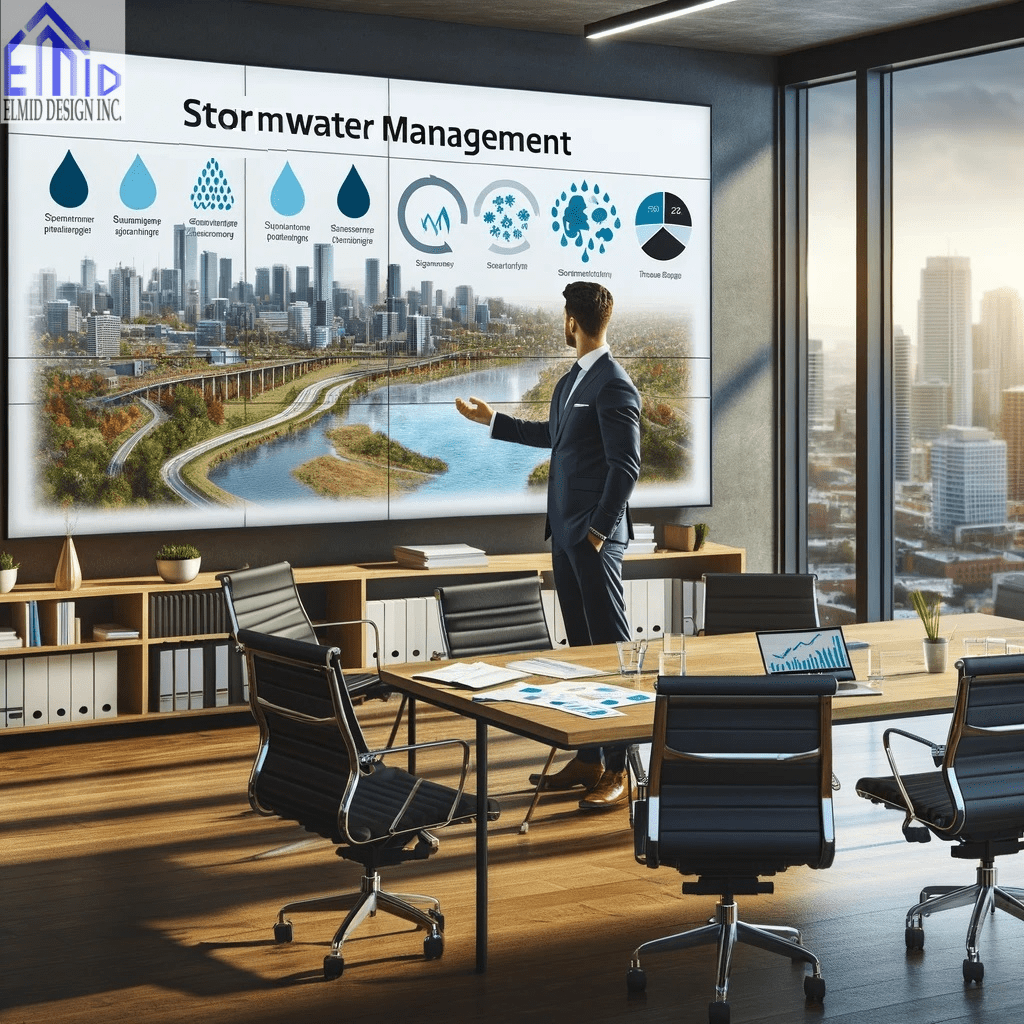
Stormwater management design Markham protects developments by controlling rainwater before it causes flooding, erosion, or infrastructure damage. As Markham continues to expand, new communities, commercial properties, and employment areas create more hard surfaces that increase stormwater runoff. Therefore, every successful development requires a reliable drainage strategy that manages runoff safely and efficiently. Professional engineers evaluate each property before designing practical stormwater solutions that satisfy municipal engineering requirements. Careful planning also improves water quality, protects nearby waterways, and supports sustainable growth. Because every property has unique drainage conditions, customized engineering solutions provide better long-term performance and reduce future maintenance costs.
What Is Stormwater Management Design in Markham?
Stormwater management design Markham involves planning systems that collect, store, treat, and release rainwater in a controlled manner. Engineers first study how water naturally moves across a property before preparing drainage designs. Next, they calculate runoff volumes and identify suitable stormwater management facilities. They also develop solutions that protect nearby properties and public infrastructure during heavy rainfall. As a result, every system controls runoff while improving environmental performance. Careful engineering supports responsible development and creates reliable drainage for residential, commercial, and industrial projects throughout Markham.
Why Stormwater Management Design Matters
Stormwater management design plays a major role in protecting communities from water-related damage. Without proper drainage, rainfall quickly flows across hard surfaces and overloads municipal infrastructure. Consequently, roads, buildings, parking lots, and underground services face higher flood risks. Engineers reduce these problems through well-planned drainage systems that manage runoff efficiently. Furthermore, they improve water quality by reducing pollutants before discharge. Reliable engineering also lowers maintenance costs because properly designed systems perform effectively for many years.
How Urban Growth Changes Natural Drainage
Natural landscapes absorb rainfall through soil, vegetation, and open spaces. However, urban development replaces those areas with pavement, buildings, and other impermeable surfaces. Therefore, stormwater flows rapidly toward drainage systems instead of entering the ground naturally. Increased runoff creates greater pressure on municipal infrastructure and nearby waterways. Engineers analyze these changes before selecting appropriate stormwater management solutions. Practical designs restore part of the natural water cycle while protecting surrounding developments from flooding.
Main Objectives of Stormwater Management Design Markham
Stormwater management design Markham focuses on reducing runoff, improving water quality, controlling erosion, and protecting downstream infrastructure. Engineers temporarily store excess runoff before releasing water at controlled rates. They also remove sediment and pollutants through carefully selected treatment measures. In addition, effective designs encourage infiltration whenever site conditions allow. Every objective supports environmental protection while improving infrastructure performance. Consequently, stormwater management creates safer and more sustainable communities throughout Markham.
Why Markham Needs Effective Stormwater Management
Markham continues to experience rapid residential and commercial growth that increases demand for modern drainage infrastructure. At the same time, stronger storms create larger runoff volumes across developed areas. Therefore, engineers design stormwater systems that perform under challenging weather conditions. Proper drainage protects homes, businesses, transportation networks, and municipal services from water damage. Moreover, efficient stormwater management supports future development while preserving natural water resources. Long-term planning strengthens community resilience and improves infrastructure reliability.
Development Increases Stormwater Runoff
Every construction project changes how rainfall moves across the land. Buildings, roads, and parking lots reduce natural infiltration and increase surface runoff. Consequently, municipal drainage systems receive larger water volumes during storms. Engineers carefully evaluate these changes before preparing drainage solutions. They calculate runoff accurately and provide suitable storage for excess rainfall. Better engineering protects surrounding properties while supporting responsible urban growth across Markham.
Flood Prevention Through Smart Engineering
Flooding creates costly damage for property owners and municipalities. Fortunately, stormwater management design greatly reduces these risks through effective drainage planning. Engineers control runoff by slowing water before it reaches municipal systems. They also design storage facilities that release stormwater gradually. Consequently, downstream infrastructure receives manageable flow during major rainfall events. Reliable engineering protects investments while improving public safety.
Climate Change and Stormwater Management
Climate change continues to increase rainfall intensity across many Ontario communities. Therefore, engineers prepare stormwater management designs that address future weather conditions instead of past rainfall patterns. They evaluate larger storm events while selecting practical drainage solutions. In addition, resilient infrastructure reduces future repair costs and improves long-term reliability. Better planning helps communities respond successfully to changing environmental conditions. Modern engineering creates stronger stormwater systems for future development.
Protecting Streams and Natural Habitats
Stormwater runoff often carries sediment, oil, fertilizer, road salt, and other contaminants into nearby waterways. Engineers reduce these pollutants by incorporating effective treatment systems into every design. They also slow runoff to reduce erosion along stream banks and natural channels. Consequently, healthier waterways support stronger ecosystems and cleaner water resources. Environmental protection remains an important objective throughout every stage of stormwater management design Markham.
Protecting Buildings from Water Damage
Poor drainage often causes foundation damage, pavement failure, and standing water around buildings. Engineers prevent these issues through proper grading and stormwater management planning. They direct runoff toward approved drainage systems while providing enough storage for major storms. As a result, developments experience fewer drainage problems and lower maintenance costs. Reliable engineering protects both property value and long-term infrastructure performance.
Stormwater Management Design Process
Every stormwater management project follows a structured engineering process from planning through final approval. Engineers first collect site information before analyzing drainage conditions and runoff characteristics. Next, they complete technical calculations that support the proposed drainage system. Design drawings illustrate grading, storm sewers, storage facilities, and drainage layouts. Careful engineering reduces construction risks while improving project efficiency. Strong planning also supports faster municipal reviews.
Site Investigation and Existing Conditions
Site investigation provides essential information for successful stormwater management design Markham. Engineers inspect drainage patterns, soil conditions, utilities, topography, and surrounding developments before preparing technical designs. Survey information supplies accurate elevations for grading and drainage calculations. Reliable field data improves engineering decisions while reducing unexpected construction challenges. Consequently, every drainage solution reflects actual site conditions instead of assumptions. Better investigations create stronger engineering outcomes.
Hydrologic Analysis for Stormwater Design
Hydrologic analysis measures how rainfall becomes runoff across a development site. Engineers evaluate drainage areas, rainfall intensity, land use, and soil characteristics before completing calculations. They estimate runoff volumes for different storm events and compare several design alternatives. Accurate analysis determines storage requirements and discharge rates for every project. Therefore, stormwater systems perform reliably during both regular rainfall and severe storms.
Hydraulic Analysis for Drainage Systems
Hydraulic analysis determines how water moves through pipes, channels, storage facilities, and drainage structures. Engineers calculate flow rates, pipe capacity, and water levels throughout the proposed system. They also verify that every component operates together during heavy rainfall. Proper hydraulic design prevents drainage failures and improves infrastructure performance. Consequently, developments receive dependable stormwater systems that protect surrounding communities.
Stormwater Storage Facilities
Stormwater storage facilities temporarily hold runoff before releasing water at controlled rates. Engineers select storage solutions according to available space, project size, and drainage requirements. Underground detention systems, infiltration facilities, and surface storage areas all provide effective runoff control. These systems reduce downstream flooding while protecting municipal drainage infrastructure. Careful engineering improves long-term reliability and supports sustainable development across Markham.
Improving Stormwater Quality
Stormwater management design Markham improves runoff quality before discharge into natural waterways. Engineers select treatment measures that remove sediment, debris, oil, and other contaminants. Natural drainage features often increase filtration while supporting healthier landscapes. Mechanical treatment systems also improve water quality where needed. Cleaner runoff protects aquatic habitats and strengthens environmental sustainability. Consequently, water quality remains an essential part of every successful stormwater management design.
Long-Term Value of Professional Stormwater Management Design
Professional stormwater management design creates lasting benefits for developers, property owners, and municipalities. Reliable drainage systems reduce maintenance costs while protecting infrastructure from water damage. They also improve project approvals through accurate engineering and complete technical documentation. Furthermore, sustainable drainage solutions increase long-term property value and environmental performance. Experienced engineers develop practical systems that continue serving communities for decades. Careful planning delivers dependable results throughout every stage of development.

Sustainable Stormwater Management Design Markham
Stormwater management design Markham increasingly focuses on sustainable drainage because modern developments demand long-term environmental performance. Engineers combine traditional drainage systems with natural solutions that reduce runoff at its source. Consequently, these approaches improve infiltration while lowering pressure on municipal storm sewers. They also support healthier landscapes and cleaner waterways throughout the community. Sustainable engineering creates reliable infrastructure that performs well during changing weather conditions. Better planning protects developments while reducing future maintenance costs.
Low Impact Development Supports Better Drainage
Low Impact Development manages rainfall where it lands instead of moving water directly into storm sewers. Engineers use this approach to reduce runoff and improve groundwater recharge. Rainwater infiltrates naturally through engineered landscape features that slow water movement. Furthermore, these systems improve water quality before runoff reaches nearby streams. Developers also benefit because sustainable drainage often lowers long-term operating costs. Therefore, Low Impact Development has become an important part of stormwater management design Markham.
Rain Gardens Improve Stormwater Performance
Rain gardens collect runoff from rooftops, sidewalks, and parking areas before water enters municipal drainage systems. Engineers place these landscaped areas where runoff naturally flows after rainfall. Native plants improve filtration while allowing more water to enter the soil. In addition, rain gardens reduce surface ponding and improve site appearance. Proper design supports efficient drainage throughout the year. Consequently, rain gardens provide both environmental and engineering benefits for many developments.
Bioswales Create Natural Drainage Systems
Bioswales direct stormwater through gently sloped vegetated channels that slow runoff and improve filtration. Engineers design these systems to capture sediment while reducing erosion across the property. Plant roots also stabilize soil and improve infiltration after rainfall. Moreover, bioswales improve landscape quality while supporting sustainable drainage. Many developments combine bioswales with additional stormwater facilities to increase overall performance. Practical engineering creates dependable and environmentally responsible drainage systems.
Permeable Pavement Reduces Surface Runoff
Permeable pavement allows rainwater to move through specially designed materials instead of flowing across hard surfaces. Engineers often recommend this solution for parking lots, sidewalks, and low-traffic areas. Consequently, runoff decreases while groundwater recharge improves. Surface ponding also becomes less common after heavy storms. Better infiltration protects nearby drainage systems from excessive flow. Therefore, permeable pavement remains a valuable feature in many stormwater management projects.
Green Roofs Support Stormwater Management
Green roofs reduce runoff by storing rainfall before releasing excess water gradually. Green-roof designs specify vegetation above specially designed roof systems that support healthy plant growth; qualified contractors carry out the installation. Plants absorb part of the rainfall while reducing peak runoff volumes. Furthermore, green roofs improve energy efficiency and enhance building appearance. Sustainable roofing also supports environmental goals across urban developments. Better stormwater control creates stronger and more resilient communities.
Underground Stormwater Storage Systems
Underground storage systems provide effective runoff control where surface space remains limited. Engineers place these facilities beneath parking areas, landscaped spaces, or roadways. They temporarily store excess rainfall before controlled discharge into municipal infrastructure. Consequently, developments reduce flood risks without reducing usable land. Underground storage also protects surrounding properties during severe storms. Careful engineering creates efficient drainage while maximizing development potential.
Stormwater Management Reports for Markham Projects
Stormwater management reports explain how developments control runoff and satisfy engineering requirements. Engineers prepare these reports after completing site investigations and drainage analysis. They describe existing conditions, proposed improvements, and supporting technical calculations. Design drawings illustrate grading, stormwater facilities, and servicing layouts across the property. Clear documentation helps reviewers understand every engineering decision. Therefore, complete reports improve approval efficiency and reduce unnecessary revisions.
Engineering Information Included in Stormwater Reports
Each stormwater management report contains detailed technical information that supports the proposed design. Engineers include runoff calculations, grading plans, drainage analysis, storage calculations, and erosion control measures. They also explain water quality improvements and servicing strategies. Technical drawings show how every drainage component works together. Meanwhile, supporting calculations verify system performance during multiple rainfall events. Accurate documentation strengthens engineering quality and supports successful municipal reviews.
Stormwater Modeling Improves Engineering Accuracy
Stormwater modeling allows engineers to evaluate drainage performance before construction begins. Computer models estimate runoff, storage capacity, discharge timing, and flow throughout the drainage network. Engineers compare several alternatives before selecting the most efficient solution. Reliable modeling improves engineering decisions while reducing project risks. Moreover, municipalities rely on accurate technical analysis during project reviews. Better planning creates dependable stormwater systems that perform under demanding weather conditions.
Engineering Software for Stormwater Management Design Markham
Professional engineers use advanced software to prepare accurate stormwater management designs. PCSWMM evaluates runoff and drainage system performance under different rainfall conditions. Visual OTTHYMO supports hydrologic analysis for land development throughout Ontario. Civil 3D improves grading design and storm sewer layouts while increasing drawing accuracy. Engineers also use HEC-RAS for projects involving rivers, floodplains, and open channels. Together, these tools improve technical quality and support successful project approvals.
Common Stormwater Management Challenges
Every development site presents different stormwater management challenges that require practical engineering solutions. Limited space often restricts the location of drainage infrastructure within urban developments. Existing underground utilities also influence pipe alignment and facility placement. Furthermore, varying soil conditions affect infiltration opportunities across the property. Engineers carefully evaluate every challenge before selecting suitable drainage systems. Better planning improves project performance while reducing construction issues.
High Groundwater Influences Drainage Design
High groundwater affects infiltration and changes how stormwater systems perform during wet conditions. Engineers investigate groundwater levels before selecting suitable drainage solutions. They often recommend underground detention facilities when infiltration becomes unsuitable. Controlled discharge also improves long-term drainage reliability. Careful engineering protects nearby foundations from groundwater impacts. Consequently, developments maintain dependable stormwater performance throughout changing seasonal conditions.
Utility Coordination Improves Construction Efficiency
Existing utilities require careful coordination during every stormwater management project. Engineers review watermains, sanitary sewers, electrical systems, gas lines, and communication services before preparing final designs. Proper coordination prevents construction conflicts and reduces costly project delays. It also improves future maintenance by providing clear infrastructure layouts. Efficient planning supports reliable drainage without affecting essential municipal services. Better coordination strengthens every stage of project delivery.
Environmental Protection Through Stormwater Engineering
Stormwater management design Markham protects rivers, streams, wetlands, and surrounding ecosystems through responsible engineering. Engineers reduce runoff, improve water quality, and limit erosion before stormwater reaches natural environments. Sustainable drainage systems also strengthen biodiversity while supporting healthier landscapes. Furthermore, environmental protection improves community resilience against changing weather conditions. Every engineering decision balances development needs with long-term environmental stewardship.
Stormwater Management Design Costs
Stormwater management design costs depend on project size, site conditions, drainage complexity, and engineering requirements. Residential projects usually require fewer technical studies than commercial or industrial developments. Larger sites often need advanced drainage modeling and additional engineering documentation. However, quality engineering reduces future maintenance expenses and construction changes. Early planning also helps developers manage project budgets more effectively. Smart investment delivers reliable infrastructure that performs for decades.
Choosing the Right Stormwater Management Consultant
Selecting an experienced engineering consultant improves project quality and approval efficiency. Skilled engineers understand drainage design, municipal requirements, and land development processes. They also prepare accurate reports that support timely municipal reviews. Strong communication helps resolve engineering issues before construction begins. Practical experience creates reliable drainage systems that protect developments for many years. Therefore, choosing the right consultant remains an important investment for every project.
Professional Stormwater Management Engineering Services
Professional engineering firms provide complete stormwater management services from planning through municipal approvals. Engineers prepare drainage studies, grading plans, stormwater reports, servicing designs, and detailed calculations for every development. They also coordinate with municipalities to address technical review comments efficiently. Firms such as Elmid Design Inc., which holds a Certificate of Authorization from Professional Engineers Ontario, deliver practical stormwater management solutions for residential, commercial, and industrial developments. Experienced engineering improves project success while supporting safe and sustainable growth across Markham.
Stormwater Management Design Approval Process in Markham
Stormwater management design Markham follows a detailed approval process before construction begins. Engineers first assess the property and identify drainage opportunities and site constraints. Next, they prepare stormwater calculations, grading plans, and supporting engineering reports. Municipal reviewers then evaluate every submission for technical compliance. Engineers respond quickly to review comments and update documents whenever required. Consequently, complete engineering packages improve approval timelines and reduce unnecessary project delays. Early planning also helps developers control costs and maintain construction schedules.
Site Assessment Improves Stormwater Management Design
Every successful stormwater management design starts with a thorough site assessment. Engineers inspect drainage patterns, topography, soil conditions, and surrounding infrastructure before preparing technical designs. They also review nearby developments because neighboring properties influence stormwater movement. Furthermore, accurate survey information supports reliable engineering calculations. Better field data leads to stronger drainage solutions and fewer construction challenges. Careful planning creates dependable stormwater systems that perform efficiently throughout the project life.
Grading Design Supports Efficient Drainage
Grading design controls how stormwater moves across a development site. Engineers shape the land to direct runoff toward approved collection systems. They also maintain positive drainage around buildings to protect foundations and paved surfaces. Proper grading reduces standing water after storms and improves public safety. Meanwhile, coordinated elevations strengthen the performance of every drainage component. Accurate grading creates reliable stormwater management while lowering future maintenance needs.
Storm Sewer Design for Reliable Water Flow
Storm sewer systems transport runoff safely from developed properties to approved discharge points. Engineers calculate expected flow before selecting suitable pipe sizes and drainage structures. They also maintain proper pipe slopes to improve hydraulic performance. Catch basins collect runoff and transfer water into underground infrastructure. Consequently, storm sewer systems protect roads, parking lots, and buildings during heavy rainfall. Careful engineering supports dependable drainage throughout Markham.
Water Quality Control in Stormwater Management Design
Stormwater management design Markham improves runoff quality before water reaches streams, ponds, and rivers. Engineers choose treatment systems that remove sediment, oil, debris, and other contaminants. Natural drainage features also improve filtration through healthy vegetation and soil. Furthermore, cleaner runoff protects aquatic habitats and supports environmental sustainability. Strong treatment systems satisfy engineering requirements while reducing environmental impacts. Better water quality strengthens long-term community health.
Stormwater Quantity Control
Stormwater quantity control limits runoff leaving a site during major rainfall events. Engineers calculate storage requirements before designing detention facilities and controlled outlets. They gradually release stored runoff to protect downstream drainage systems. Consequently, municipalities experience lower flood risks during intense storms. Reliable storage also improves infrastructure performance as communities continue to grow. Practical engineering creates long-term protection for both public and private property.
Erosion Control Protects Natural Resources
Fast-moving runoff damages stream banks, removes soil, and affects nearby ecosystems. Engineers reduce erosion by slowing water before discharge into natural channels. They also stabilize outlet areas through carefully selected engineering methods. Healthy vegetation further strengthens soil while reducing sediment movement. Consequently, erosion control protects valuable environmental resources and improves infrastructure durability. Responsible engineering supports sustainable land development throughout Markham.
Water Balance Analysis Improves Sustainability
Water balance analysis evaluates how development changes natural water movement across a property. Engineers compare existing conditions with proposed drainage conditions before completing the final design. They also measure runoff, infiltration, and groundwater recharge throughout the site. Therefore, balanced drainage systems better protect natural resources and nearby ecosystems. Careful engineering supports sustainable development while improving environmental performance.
Green Infrastructure Creates Better Developments
Green infrastructure strengthens stormwater management design Markham by combining natural systems with engineered drainage solutions. Engineers often include vegetation, permeable surfaces, and underground storage within one coordinated design. These features reduce runoff while improving infiltration and water quality. Moreover, green infrastructure improves landscape value and supports healthier urban environments. Sustainable engineering provides lasting benefits for communities and future developments.
Stormwater Management for Residential Projects
Residential developments require efficient drainage systems that protect homes and neighborhood infrastructure. Engineers evaluate roof drainage, lot grading, driveway runoff, and municipal connections before preparing final designs. They also ensure runoff leaves every property safely without affecting nearby homes. Proper planning reduces basement flooding and improves long-term property performance. Reliable stormwater management protects homeowners while supporting community growth.
Stormwater Management for Commercial Developments
Commercial properties create significant runoff because they contain large roofs, loading areas, and paved parking lots. Engineers design stormwater systems that safely manage these larger runoff volumes. They also include treatment measures that improve water quality before discharge. Better drainage protects buildings, customers, and business operations during severe storms. Efficient engineering supports successful commercial development across Markham.
Stormwater Management for Industrial Developments
Industrial facilities often require specialized stormwater management because operational activities create unique drainage conditions. Engineers evaluate runoff quantity, water quality, and storage requirements before preparing technical designs. They also select treatment systems that support environmental protection and regulatory compliance. Careful planning protects surrounding infrastructure while reducing operational risks. Practical engineering creates dependable drainage systems that perform for many years.
Why Professional Engineering Experience Matters
Experienced engineers identify drainage challenges before construction begins and recommend practical solutions that reduce project risks. They understand municipal engineering standards, approval procedures, and infrastructure requirements. Strong technical knowledge improves design quality while reducing costly revisions. Furthermore, experienced consultants prepare complete documentation that supports faster municipal reviews. Reliable engineering creates successful developments with dependable long-term performance.
Engineering Expertise from Elmid Design Inc.
Elmid Design Inc. provides professional stormwater management design services for residential, commercial, and industrial developments throughout Markham and the Greater Toronto Area. The company holds a Certificate of Authorization from Professional Engineers Ontario, demonstrating professional accountability and engineering excellence. Experienced engineers prepare stormwater management reports, grading plans, municipal servicing designs, and drainage calculations that satisfy local requirements. Practical engineering solutions help clients achieve efficient approvals while protecting infrastructure and the environment.
FAQ
What is stormwater management design Markham?
Stormwater management design Markham controls rainwater through engineered drainage systems that reduce flooding, improve water quality, and protect public infrastructure.
Why is stormwater management important for developments in Markham?
Stormwater management protects buildings, roads, utilities, and nearby waterways from flooding, erosion, and polluted runoff during heavy rainfall.
Who prepares a stormwater management report?
Licensed professional engineers prepare stormwater management reports after completing site investigations, engineering calculations, and drainage analysis.
When does a project require a stormwater management report?
Many residential, commercial, industrial, and redevelopment projects require a stormwater management report before receiving municipal approval.
What information appears in a stormwater management report?
The report includes runoff calculations, grading plans, drainage analysis, storage design, erosion control measures, water quality treatment, and engineering drawings.
What is Low Impact Development?
Low Impact Development manages rainwater near its source through natural drainage systems that improve infiltration and reduce stormwater runoff.
How does stormwater management reduce flooding?
Stormwater management stores excess runoff and releases water gradually, which reduces peak flow and protects municipal drainage infrastructure.
What is the difference between water quantity control and water quality control?
Water quantity control limits runoff volume, while water quality control removes pollutants before runoff reaches natural waterways.
Why should I hire Elmid Design Inc. for stormwater management design Markham?
Elmid Design Inc. provides professional engineering services backed by a Certificate of Authorization from Professional Engineers Ontario. The firm delivers practical stormwater management solutions that support efficient approvals and sustainable land development.

Trusted Stormwater Management Engineers in Markham
Elmid Design Inc. delivers professional stormwater management design services for residential, commercial, and industrial developments across Markham and the Greater Toronto Area. The company holds a Certificate of Authorization from Professional Engineers Ontario, reflecting its commitment to professional engineering standards and regulatory compliance. Moreover, the experienced team prepares stormwater management reports, grading plans, municipal servicing designs, and drainage solutions that meet local requirements. Clients rely on Elmid Design Inc. for practical engineering, responsive service, and efficient solutions that support safe, sustainable, and successful land development.
Geographic Locations That We Service:
Our Licensed Professional Engineers specializing in Engineered Site Grading Plans offer the best-engineered site grading plan, lot grading and erosion plan, and drainage plan to obtain site plan approval and building permits in Ontario, including a wide range of municipalities. Each area boasts unique features and requirements, making our tailored approach essential for success.
Toronto and Surrounding Areas
In the vibrant heart of Ontario, we service Toronto (City of Toronto) and surrounding areas. Additionally, we cover Oshawa (City of Oshawa), Pickering (City of Pickering), and Clarington (Municipality of Clarington). Furthermore, our expertise extends to Ajax (Town of Ajax), Whitby (Town of Whitby), Brock (Township of Brock), Scugog (Township of Scugog and Uxbridge (Township of Uxbridge).
Halton Region
Moving to the Halton Region, our services encompass Burlington (City of Burlington) and Halton Hills (Town of Halton Hills). Also included are Milton (Town of Milton) and Oakville (Town of Oakville).
Peel Region
In the Peel Region, we provide services in Brampton (City of Brampton), Mississauga (City of Mississauga), and Caledon (Town of Caledon).
York Region
Our services in the York Region cover Vaughan (City of Vaughan), Aurora (Town of Aurora), and East Gwillimbury (Town of East Gwillimbury). We also cater to Georgina (Town of Georgina), Markham (City of Markham), Newmarket (Town of Newmarket), Richmond Hill (City of Richmond Hill), Whitchurch-Stouffville (Town of Whitchurch-Stouffville), King (Township of King), and Bradford-West Gwillimbury (Town of Bradford-West Gwillimbury). Each municipality here offers a distinct setting, requiring our specialized approach.
Other Southern Ontario Cities and Towns
We also serve many other cities and towns in Southern Ontario. These include Hamilton (City of Hamilton), St. Catharines (City of St. Catharines), Niagara on the Lake (Town of Niagara on the Lake), Brant (County of Brant), Cambridge (City of Cambridge), Kitchener (City of Kitchener), Waterloo (City of Waterloo), and Woodstock (City of Woodstock). Furthermore, we operate in Guelph (City of Guelph), Centre Wellington (Township of Centre Wellington), Shelburne (Town of Shelburne), Orangeville (Town of Orangeville), New Tecumseth (Town of New Tecumseth), Essa (Town of Essa), Collingwood (Town of Collingwood), Wasaga Beach (Town of Wasaga Beach), Barrie (City of Barrie), Midland (Town of Midland), Orillia (City of Orillia), Ramara (Town of Ramara), Minden Hills (Town of Minden Hills), North Kawartha (Town of North Kawartha), Kawartha Lakes (City of Kawartha Lakes), Peterborough (City of Peterborough), Selwyn (Town of Selwyn), and Brighton (Municipality of Brighton).