Stormwater management Richmond Hill plays a major role in protecting homes, businesses, and natural areas as the city continues growing and facing heavier storms. Richmond Hill includes busy urban centres and environmentally sensitive zones such as the Oak Ridges Moraine, so rainfall moves across the land quickly when it hits hard surfaces like roofs, driveways, and paved streets. This fast runoff increases the risk of flooding, erosion, and pressure on existing drainage systems. Therefore, understanding stormwater management Richmond Hill helps property owners, developers, and contractors make better decisions that prevent costly water issues. This article explains how the city manages stormwater, why each system matters, and how engineering firms such as Elmid Design Inc help residents develop safe, compliant, and reliable drainage solutions.
Why Stormwater Matters in Richmond Hill
Stormwater management Richmond Hill matters because the city faces unique geographical challenges. Rainwater flows down slopes, across paved surfaces, and into creeks and valleys that already carry natural drainage. When runoff grows too quickly, it overwhelms storm sewers and creates flooding in neighbourhoods and roadways. Richmond Hill experiences intense rainfall during seasonal storms, and climate change increases these peaks. Therefore, stormwater planning becomes essential for protecting foundations, streets, and natural ecosystems. Strong systems keep water moving safely and reduce the damage caused by poor drainage.
Understanding Stormwater in a Growing City
Stormwater management Richmond Hill becomes more complex as the city grows. New homes, plazas, and infrastructure reduce natural absorption and create faster runoff. Every new building changes how water moves and increases the need for engineered drainage solutions. As a result, the city enforces strict standards that developers and homeowners must follow. Engineers design systems that handle both minor and major storms, protect downstream areas, and keep neighbourhoods safe. Richmond Hill’s growth makes stormwater a critical part of responsible development.
Richmond Hill’s Stormwater Network
Stormwater management Richmond Hill uses a combination of pipes, ponds, and natural watercourses to manage rainfall. Storm sewers move water underground, while stormwater ponds store excess runoff before releasing it slowly. These ponds protect downstream properties by reducing peak flows. Natural creeks and valleys guide water through the landscape and support wildlife. Engineers study how these systems interact and design improvements that fit Richmond Hill’s changing needs. Because storms vary in intensity, the network requires both traditional infrastructure and natural features to work together effectively.
The Importance of Proper Drainage
Proper drainage prevents water from pooling around buildings and protects structures from foundation damage. Stormwater management Richmond Hill requires every property to maintain safe drainage that directs runoff toward approved outlets. Incorrect grading or blocked drainage routes create serious issues during storms. Engineers design solutions that guide water away from structures and into safe channels. Elmid Design Inc prepares engineered drainage plans that keep properties safe and follow city requirements. Proper drainage safeguards homes while supporting Richmond Hill’s stormwater system.
The Challenge of Impermeable Surfaces
Impermeable surfaces like driveways, roofs, and parking lots reduce natural absorption and create fast-moving runoff. Stormwater management Richmond Hill addresses these surfaces by requiring engineered controls that slow water down and reduce pressure on storm sewers. As development increases, these surfaces expand and create more runoff. Engineers assess each site to determine how much water must be controlled. Their designs guide runoff toward safe outlets and reduce the risk of overwhelming nearby systems.
Stormwater and Environmental Health
Environmental health depends on strong stormwater management Richmond Hill because runoff carries pollutants from roads and properties into natural waterways. Oil, sediment, fertilizer, and debris collect in stormwater and harm aquatic habitats when systems fail. Therefore, the city focuses on reducing contamination by requiring water quality measures in stormwater plans. Engineers design features such as sediment forebays, natural filters, and controlled outlets that improve water quality. This commitment protects streams and preserves natural ecosystems throughout Richmond Hill.
Flood Prevention Strategies
Flooding creates costly damage, so stormwater management Richmond Hill uses a variety of strategies to reduce risk. Engineers design systems that hold and redirect water during major storms. Retention ponds, culverts, and graded flow routes help move water safely across neighbourhoods. Properly designed drainage prevents water from entering basements or overwhelming road systems. Richmond Hill requires detailed engineering reports to ensure each development helps protect the wider community. Elmid Design Inc specializes in creating designs that reduce flood risks and improve long-term safety.
The Role of Lot Grading in Richmond Hill
Lot grading shapes how water travels across a property. Stormwater management Richmond Hill requires proper slopes so water drains away from structures and toward approved discharge locations. Poor grading causes water to flow toward neighbouring properties and creates disputes and costly repairs. Engineers evaluate elevation changes and design grading that fits Richmond Hill’s guidelines. Elmid Design Inc prepares grading plans that meet municipal standards and protect properties during storms. Good grading remains an essential part of every stormwater strategy.
How Onsite Controls Support the System
Onsite controls treat and manage stormwater where it falls. Richmond Hill encourages onsite controls because they reduce peak flows and protect downstream systems. Features such as infiltration trenches, controlled outlets, and storage tanks help slow water movement and reduce stress on municipal infrastructure. Stormwater management Richmond Hill integrates these onsite systems into development requirements so every property contributes to overall drainage safety. Engineers choose the right controls based on site size, soil type, and project layout.
Natural Watercourses and Valley Systems
Richmond Hill includes many natural watercourses that guide stormwater through the landscape. These creeks and valley lands provide natural flow routes during storms and protect vulnerable areas from erosion. Stormwater management Richmond Hill protects these areas through careful planning and environmental guidelines. Development near watercourses requires engineering studies to ensure drainage remains safe. Elmid Design Inc creates plans that respect natural features and reduce runoff speed near sensitive zones.
Soil Conditions and Infiltration
Soil type influences every part of stormwater management Richmond Hill. Some areas contain clay soils that slow infiltration and create more runoff. Other zones include sandy or loamy soils that absorb water quickly. Engineers test soil conditions before designing infiltration systems or grading solutions. Understanding soil properties allows engineers to create accurate and safe stormwater designs. Richmond Hill’s varied landscape makes soil evaluation a necessary part of every project.
Stormwater Storage Systems
Stormwater storage systems help Richmond Hill manage intense rainfall by holding water temporarily and releasing it slowly. Underground tanks, oversized pipes, and detention chambers store runoff during storms and reduce pressure on storm sewers. These systems protect properties from flooding and maintain stable flow conditions downstream. Stormwater management Richmond Hill uses storage systems extensively in new developments because they create predictable and reliable flow control.
The Importance of Professional Engineering
Professional engineering ensures stormwater systems meet Richmond Hill’s technical and regulatory requirements. Stormwater management Richmond Hill depends on engineers who understand hydrology, grading, soil behavior, and drainage design. These professionals create plans that follow municipal standards and protect properties. Elmid Design Inc provides certified engineering services that help clients navigate permits, design requirements, and long-term stormwater performance. Their expertise ensures proper runoff control and compliance with Richmond Hill’s expectations.
Growth and Stormwater Pressure
Richmond Hill continues expanding, and each new development adds pressure to the existing stormwater network. More paved surfaces create more runoff, and that runoff moves quickly into public systems. Stormwater management Richmond Hill evolves constantly to support this growth. Engineers design systems that work with both new subdivisions and established neighbourhoods. As a result, proactive planning becomes essential for safe and sustainable development.
Climate Change and Storm Intensity
Climate change increases storm intensity, so stormwater management Richmond Hill requires stronger and more adaptable systems. Engineers design for larger rainfall events and create systems capable of handling sudden surges in runoff. Richmond Hill updates its standards as weather patterns shift. Elmid Design Inc incorporates climate considerations into every design to ensure reliable performance during extreme conditions.

The Role of Municipal Standards in Richmond Hill
Municipal standards guide stormwater management Richmond Hill because the city enforces strict requirements for drainage and grading. These standards ensure every development controls runoff safely and protects surrounding properties. Engineers follow technical rules that outline detention needs, flow direction, and water quality measures. Richmond Hill updates these standards as the city grows, so designs remain effective during modern storms. Elmid Design Inc prepares engineered plans that follow these expectations and support smooth approval processes.
Why Conservation Authorities Matter
Conservation authorities support stormwater management Richmond Hill by overseeing natural watercourses and regulating development near sensitive areas. They review grading plans, evaluate environmental impacts, and ensure drainage systems protect creeks and valley lands. Their involvement encourages responsible growth and reduces erosion and flooding risks. Consequently, engineers collaborate with these authorities to design systems that fit both technical and environmental requirements. Elmid Design Inc works closely with regulators to deliver safe and compliant stormwater solutions.
Green Infrastructure Initiatives
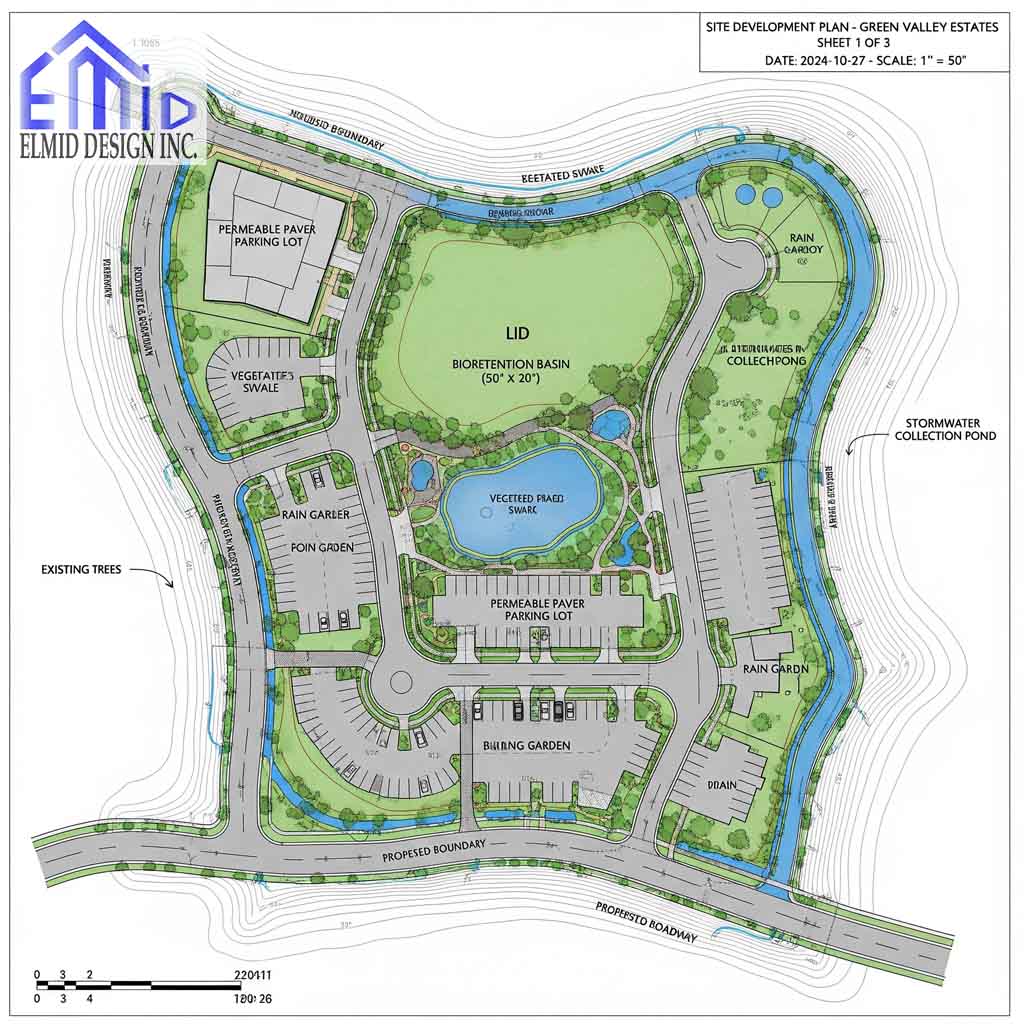
Green infrastructure strengthens stormwater management Richmond Hill because it uses vegetation and soil to absorb and filter runoff naturally. Rain gardens, swales, and permeable surfaces reduce peak flows and improve water quality. These features also protect ecosystems and lower pressure on traditional drainage systems. Richmond Hill encourages green infrastructure because it offers long-term environmental and economic benefits. Engineers incorporate these elements into projects when soil and space conditions allow effective infiltration.
Stormwater Needs in Residential Areas
Residential properties require thoughtful stormwater management Richmond Hill because homes sit close together and runoff moves quickly across small lots. Proper grading directs water away from foundations, while controlled drainage prevents conflicts with neighbours. Homeowners benefit from engineered plans that manage water safely and meet city standards. Elmid Design Inc designs residential drainage solutions that protect homes from flooding, erosion, and long-term moisture issues.
Commercial Development and Stormwater Control
Commercial developments create significant runoff because large roofs and parking lots shed water quickly. Therefore, stormwater management Richmond Hill requires strong drainage systems for commercial sites. Engineers design detention systems, underground storage, and controlled outlets that move water safely through the property. These designs protect structures and support safe business operations during storms. Elmid Design Inc prepares commercial stormwater plans that align with Richmond Hill’s regulations and offer reliable performance.
Stormwater in Industrial Zones
Industrial areas also require strong stormwater management Richmond Hill because heavy surfaces create rapid runoff. Engineers consider site use, vehicle activity, and storm intensity when designing drainage systems for these areas. Effective solutions reduce flooding, protect assets, and improve site safety. Industrial properties rely on engineered stormwater systems that control flow and support daily operations. Elmid Design Inc provides certified engineering designs that balance functionality and compliance.
Soil Variations Across Richmond Hill
Richmond Hill contains varied soil types, and this variation influences stormwater management Richmond Hill because infiltration depends on soil structure. Clay soils slow absorption and increase runoff, while sandy soils allow water to soak in more easily. Engineers study soil conditions to choose the right methods for each site. Understanding soil creates accurate designs that handle water safely during storms. Elmid Design Inc evaluates soil profiles to ensure long-term drainage success.
Preventing Erosion in Richmond Hill
Erosion control forms an essential part of stormwater management Richmond Hill because fast-moving water damages soil and threatens foundations. Engineers use stable slopes, vegetation, and controlled flow routes to protect properties and natural areas. Without erosion control, stormwater creates hazards and expensive repairs. Therefore, every project needs a strategy that slows runoff and stabilizes ground surfaces. Elmid Design Inc includes erosion prevention in its engineered designs to support safe and durable drainage.
Protecting Watercourses and Valley Lands
Valley lands and natural watercourses guide stormwater during storms and support drainage across Richmond Hill. Stormwater management Richmond Hill protects these areas by regulating how developments interact with natural features. Engineers design systems that slow water near sensitive zones and prevent erosion. These protections maintain ecological health and reduce risks for nearby properties. Elmid Design Inc creates designs that respect natural flow paths and meet regulatory requirements.
Early Stormwater Planning Benefits
Early planning enhances stormwater management Richmond Hill because drainage needs become clear before construction begins. Engineers evaluate slope, soil, and space limitations early so designs remain efficient and cost-effective. Early planning avoids redesigns and prevents delays during municipal review. Elmid Design Inc guides developers and homeowners through planning stages to ensure strong performance and compliance.
Modern Technologies in Stormwater Engineering
Modern technologies improve stormwater management Richmond Hill by allowing engineers to model runoff, design efficient systems, and create adaptable solutions. Advanced sensors, improved materials, and updated design tools support stronger drainage performance. These technologies help properties remain safe during more intense storms. Elmid Design Inc integrates modern engineering tools to deliver reliable and future-ready stormwater plans.
Long-Term Maintenance Needs
Long-term maintenance supports stormwater management Richmond Hill because systems need regular care to stay effective. Homeowners and property managers must monitor grading, remove debris, and inspect drainage features. Engineers design systems that remain easy to maintain and provide guidance for long-term upkeep. Elmid Design Inc explains maintenance needs to clients so their stormwater systems continue working safely through changing weather conditions.
Water Quality Improvements Through Stormwater Design
Stormwater management Richmond Hill improves water quality because engineered systems guide runoff through filtration stages that remove sediment and pollutants. When water slows down and interacts with natural elements such as soil and vegetation, contaminants settle out before they reach creeks. Engineers design these systems to support the health of waterways while protecting properties. Elmid Design Inc includes water quality measures in every stormwater plan to help developments meet environmental expectations and reduce long-term ecological impact.
Economic Value of Reliable Stormwater Systems
Effective stormwater management Richmond Hill strengthens property value because safe and well-managed drainage prevents costly flooding and erosion damage. Buyers trust properties with engineered drainage systems that withstand major storms. Businesses also depend on reliable stormwater performance to maintain operations without interruption. Therefore, strong stormwater systems protect both economic stability and long-term property performance. Elmid Design Inc designs cost-efficient solutions that deliver dependable drainage and support financial security for owners.
How Climate Trends Influence Local Systems
Climate trends increase rainfall intensity, so stormwater management Richmond Hill needs systems that adapt to unpredictable conditions. Engineers study changing storm patterns and design drainage capacities that handle sudden surges in water flow. This preparation reduces infrastructure strain and protects neighbourhoods during extreme weather. Consequently, Richmond Hill benefits from modern stormwater strategies that respond to evolving climate demands. Elmid Design Inc integrates climate-ready engineering into all stormwater plans to ensure long-term resilience.
The Importance of Onsite Stormwater Solutions
Onsite controls strengthen stormwater management Richmond Hill because they reduce runoff volume before water enters municipal systems. Features such as controlled outlets, infiltration zones, and structured grading slow water movement and keep drainage predictable. These controls protect neighbouring properties and support the city’s overall stormwater network. Engineers choose onsite solutions that match soil conditions and property layout. Elmid Design Inc creates onsite strategies that follow Richmond Hill’s requirements and maintain consistent performance.
Stormwater Support for Older Neighbourhoods
Older neighbourhoods often require upgrades because previous drainage systems no longer meet modern standards. Stormwater management Richmond Hill focuses on evaluating these areas and improving grading, drainage paths, and infiltration options. These enhancements reduce long-standing issues such as pooling, basement moisture, and erosion. Engineers design updates that fit limited space and existing layouts. Elmid Design Inc helps homeowners adopt modern stormwater solutions that increase protection while meeting current regulations.
The Relationship Between Drainage and Site Planning
Site planning influences stormwater management Richmond Hill because the position of buildings, driveways, and landscaped areas alters how water travels. Engineers integrate drainage strategies into site layouts so runoff moves safely and consistently. Good planning prevents conflicts between properties and reduces future maintenance needs. Elmid Design Inc collaborates with designers to ensure every part of the property supports efficient stormwater performance.
Engineering Certification for Stormwater Systems
Engineering certification ensures stormwater management Richmond Hill follows technical standards and meets legal requirements. Certified plans confirm that calculations and designs handle real storm conditions safely. Because stormwater affects both public infrastructure and private property, Richmond Hill requires professional oversight. Elmid Design Inc provides certified drainage and grading designs that help clients meet approval requirements and build confidence in their stormwater systems.
Sustainable Development Through Stormwater Practices
Sustainable development depends on stormwater management Richmond Hill because responsible water control reduces environmental stress and supports long-term growth. Engineers use methods that reduce runoff, improve infiltration, and protect natural areas. These practices help the city grow while preserving vital ecosystems. Elmid Design Inc designs sustainable solutions that support Richmond Hill’s environmental goals and promote healthier communities.
Future Innovation in Stormwater Engineering
Stormwater management Richmond Hill continues evolving with new technology and design methods. Engineers explore advanced modelling tools, modern materials, and improved green infrastructure techniques that increase system efficiency. These innovations help reduce flooding, improve water quality, and create resilient infrastructure. Elmid Design Inc stays updated with modern engineering practices to ensure clients receive durable and future-ready stormwater solutions.
Frequently Asked Questions
What is stormwater management Richmond Hill
Stormwater management Richmond Hill controls how rainwater moves across land to prevent flooding, protect properties, and improve water quality. The process uses engineered systems and natural features to keep runoff safe and predictable.
Why does Richmond Hill need strong stormwater systems
Richmond Hill needs strong systems because urban growth and heavy storms create fast runoff that threatens homes and natural areas. Proper stormwater control reduces erosion, protects infrastructure, and maintains community safety.
How do engineers help with stormwater planning
Engineers help by analyzing soil, slope, and drainage patterns before creating designs that follow Richmond Hill’s requirements. Firms like Elmid Design Inc prepare certified plans that ensure safe and effective stormwater performance.
What role does green infrastructure play in Richmond Hill
Green infrastructure supports stormwater management Richmond Hill by absorbing water naturally and reducing runoff volume. It also improves water quality and strengthens environmental health across the region.
Do Richmond Hill homeowners need engineered drainage
Homeowners often need engineered drainage when they notice water pooling, grading issues, or basement moisture. Engineering solutions improve safety and meet municipal standards for drainage performance.
Can older properties upgrade their stormwater systems
Older properties can upgrade through improved grading, added infiltration features, or modern drainage components. Elmid Design Inc designs retrofits that fit site limitations and follow Richmond Hill’s regulations.
How does climate change affect stormwater in Richmond Hill
Climate change increases heavy rainfall, so stormwater management Richmond Hill requires stronger systems that adapt to extreme conditions. Engineers design solutions that manage larger flows and protect communities.

Elmid Design Inc as a Leading Stormwater Engineering Provider in Richmond Hill
Elmid Design Inc delivers professional stormwater management Richmond Hill services through precise engineering, certified planning, and solutions tailored to city standards. The firm holds a certificate of authorization from Professional Engineers Ontario and designs grading plans, drainage systems, and stormwater reports that protect properties during major storms. Elmid Design Inc guides homeowners, builders, and developers through municipal approvals while ensuring every project meets safety, performance, and environmental expectations.
Geographic Locations That We Service:
Our Licensed Professional Engineers specializing in Engineered Site Grading Plans offer the best-engineered site grading plan, lot grading and erosion plan, and drainage plan to obtain site plan approval and building permits in Ontario, including a wide range of municipalities. Each area boasts unique features and requirements, making our tailored approach essential for success.
Toronto and Surrounding Areas
In the vibrant heart of Ontario, we service Toronto (City of Toronto) and surrounding areas. Additionally, we cover Oshawa (City of Oshawa), Pickering (City of Pickering), and Clarington (Municipality of Clarington). Furthermore, our expertise extends to Ajax (Town of Ajax), Whitby (Town of Whitby), Brock (Township of Brock), Scugog (Township of Scugog and Uxbridge (Township of Uxbridge).
Halton Region
Moving to the Halton Region, our services encompass Burlington (City of Burlington) and Halton Hills (Town of Halton Hills). Also included are Milton (Town of Milton) and Oakville (Town of Oakville).
Peel Region
In the Peel Region, we provide services in Brampton (City of Brampton), Mississauga (City of Mississauga), and Caledon (Town of Caledon).
York Region
Our services in the York Region cover Vaughan (City of Vaughan), Aurora (Town of Aurora), and East Gwillimbury (Town of East Gwillimbury). We also cater to Georgina (Town of Georgina), Markham (City of Markham), Newmarket (Town of Newmarket), Richmond Hill (City of Richmond Hill), Whitchurch-Stouffville (Town of Whitchurch-Stouffville), King (Township of King), and Bradford-West Gwillimbury (Town of Bradford-West Gwillimbury). Each municipality here offers a distinct setting, requiring our specialized approach.
Other Southern Ontario Cities and Towns
We also serve many other cities and towns in Southern Ontario. These include Hamilton (City of Hamilton), St. Catharines (City of St. Catharines), Niagara on the Lake (Town of Niagara on the Lake), Brant (County of Brant), Cambridge (City of Cambridge), Kitchener (City of Kitchener), Waterloo (City of Waterloo), and Woodstock (City of Woodstock). Furthermore, we operate in Guelph (City of Guelph), Centre Wellington (Township of Centre Wellington), Shelburne (Town of Shelburne), Orangeville (Town of Orangeville), New Tecumseth (Town of New Tecumseth), Essa (Town of Essa), Collingwood (Town of Collingwood), Wasaga Beach (Town of Wasaga Beach), Barrie (City of Barrie), Midland (Town of Midland), Orillia (City of Orillia), Ramara (Town of Ramara), Minden Hills (Town of Minden Hills), North Kawartha (Town of North Kawartha), Kawartha Lakes (City of Kawartha Lakes), Peterborough (City of Peterborough), Selwyn (Town of Selwyn), and Brighton (Municipality of Brighton).