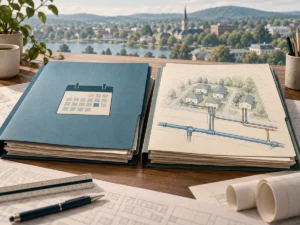

Grading drawings King City property owners and developers require serve as an essential part of successful site development and drainage planning. These technical drawings provide detailed information about site elevations, drainage patterns, and proposed grading improvements. Since grading directly affects water movement, accessibility, and property functionality, accurate engineering drawings remain critical throughout the development process. Moreover, grading drawings help support permit applications, construction planning, and long-term site performance. Homeowners, builders, and developers often rely on professional engineering expertise to prepare reliable grading documents. Therefore, grading drawings remain one of the most important tools for achieving safe, functional, and efficient development projects in King City.
What Are Grading Drawings?
Grading drawings are technical plans that illustrate existing and proposed site elevations. Engineers prepare these drawings to show how grading changes will affect drainage and property functionality. Furthermore, grading drawings provide important guidance for construction activities and permit reviews. Since site elevations influence runoff patterns significantly, accurate documentation remains essential. Effective grading drawings improve communication between project stakeholders. Consequently, these drawings play a vital role in development projects.
Why Grading Drawings Matter
Grading drawings help property owners understand how site improvements will affect drainage and usability. Engineers use drawings to communicate grading strategies clearly and accurately. Moreover, grading documents help identify potential concerns before construction begins. Since grading affects long-term site performance, detailed planning remains important. Effective drawings improve project coordination and decision-making. Therefore, grading drawings support successful project outcomes.
Understanding the Purpose of Grading Drawings
The primary purpose of grading drawings involves documenting site elevations and drainage conditions. Engineers establish grading relationships between structures, landscapes, and drainage features. Furthermore, drawings help demonstrate how runoff will move throughout the property. Since water management depends on elevation changes, technical documentation remains necessary. Effective grading drawings reduce uncertainty during planning and construction. Consequently, they support reliable project execution.
Existing Site Conditions and Grading Drawings
Every grading drawing begins with a detailed evaluation of existing site conditions. Engineers review topography, drainage patterns, structures, and surrounding properties before preparing designs. Additionally, site analysis helps identify challenges and opportunities that influence grading decisions. Since accurate information supports better engineering solutions, evaluation remains important. Effective analysis improves drawing quality and project performance. Therefore, existing conditions form the foundation of grading drawings.
Topographic Surveys and Elevation Information
Topographic surveys provide the elevation data necessary for preparing grading drawings. Surveyors collect detailed measurements that define existing grades and site features. Moreover, engineers use survey information to develop grading solutions that improve drainage. Since grading plans depend on accurate elevations, reliable surveys remain essential. Effective data collection supports stronger engineering outcomes. Consequently, topographic surveys play an important role in grading projects.
Site Analysis and Engineering Review
Site analysis helps engineers understand how grading changes will affect drainage and property functionality. Engineers evaluate site characteristics and identify conditions that require special attention. Furthermore, engineering review supports practical grading recommendations that align with project goals. Since every property contains unique conditions, customized analysis remains necessary. Effective evaluation improves project quality and efficiency. Therefore, engineering review forms a critical step in grading design.
Drainage Design and Water Management
Drainage design remains one of the most important elements shown on grading drawings. Engineers establish elevations that help direct runoff toward suitable drainage locations. Additionally, proper water management helps protect structures and outdoor features from damage. Since runoff affects both the project site and neighboring properties, planning remains essential. Effective drainage design improves long-term site performance. Consequently, drainage management remains central to grading drawings.
Surface Water Control Through Grading
Surface water control focuses on managing runoff generated during rainfall and snowmelt events. Engineers create grading strategies that improve water movement across the property. Moreover, proper runoff management helps reduce erosion and standing water concerns. Since surface drainage influences site usability, thoughtful planning remains important. Effective grading improves safety and functionality. Therefore, surface water control remains a major focus of grading drawings.
Foundation Protection and Grading Plans
Foundation protection depends heavily on grading solutions that direct water away from structures. Engineers establish elevations that help reduce moisture accumulation near buildings. Furthermore, proper grading supports long-term structural performance and durability. Since water-related issues often create costly repairs, preventive planning remains valuable. Effective grading contributes to stronger property protection. Consequently, foundation protection remains an important objective of grading drawings.
Residential Grading Drawings
Residential grading drawings support projects such as new homes, additions, pools, and landscaping improvements. Engineers prepare grading plans tailored to the specific conditions of each property. Moreover, residential drawings help maintain proper drainage and site functionality after construction. Since residential sites vary significantly, customized solutions remain important. Effective grading improves homeowner satisfaction and property performance. Therefore, residential grading drawings provide valuable engineering support.
New Home Development and Grading Drawings
New home construction often requires grading drawings to support drainage and permit requirements. Engineers coordinate grading plans with building locations and site improvements. Furthermore, grading drawings help establish elevations that support long-term site performance. Since construction changes natural drainage patterns, planning remains necessary. Effective design improves project reliability and functionality. Consequently, grading drawings form a critical part of residential development.
Lot Grading Drawings
Lot grading drawings establish site elevations that support drainage throughout a property. Engineers prepare plans that improve runoff management and practical site use. Additionally, lot grading helps coordinate structures, landscaping, and outdoor features. Since grading affects many aspects of property performance, careful design remains important. Effective grading reduces future maintenance concerns. Therefore, lot grading drawings remain essential for development projects.
Landscaping and Grading Coordination
Landscaping and grading drawings work together to create functional and attractive outdoor environments. Engineers consider landscape features while developing drainage and grading solutions. Furthermore, proper grading supports healthy vegetation and erosion control. Since landscaping influences water movement, coordination remains necessary. Effective integration improves both appearance and performance. Consequently, landscaping considerations influence grading drawing preparation.
Driveways and Access Areas
Driveways and access areas require grading solutions that support drainage and usability. Engineers establish elevations that help direct runoff away from structures and paved surfaces. Moreover, proper grading improves accessibility and long-term durability. Since paved areas generate runoff during rainfall events, planning remains important. Effective grading supports reliable drainage performance. Therefore, driveways often influence grading drawing design.
Outdoor Living Areas and Site Functionality
Outdoor living areas benefit from grading solutions that improve accessibility and water management. Engineers establish elevations that support patios, pathways, and recreational spaces effectively. Additionally, proper grading reduces standing water and maintenance concerns. Since outdoor environments contribute to property enjoyment, design remains important. Effective grading enhances functionality and comfort. Consequently, outdoor spaces require careful consideration during grading design.
Stormwater Management and Grading Drawings
Stormwater management addresses runoff generated during development and weather events. Engineers create grading plans that improve water movement and support site performance. Furthermore, proper stormwater planning helps reduce impacts on neighboring properties and infrastructure. Since development often increases runoff volumes, technical analysis remains essential. Effective stormwater strategies improve environmental and property outcomes. Therefore, stormwater management remains an important component of grading drawings.
Professional Engineering and Grading Drawings
Professional engineering expertise helps ensure grading drawings provide accurate and reliable information. Engineers analyze site conditions, prepare grading plans, and develop drainage solutions tailored to project needs. Furthermore, engineering support helps identify concerns before construction begins. Elmid Design Inc provides grading drawing services, drainage design, and site development support throughout Ontario. Holding a Certificate of Authorization from Professional Engineers Ontario demonstrates commitment to professional standards and engineering excellence. Therefore, professional engineering remains essential for successful grading drawing preparation.

Grading Drawings for Permit Applications
Grading drawings King City projects often require support permit applications and development approvals. Engineers prepare detailed plans that illustrate elevations, drainage directions, and proposed grading improvements. Furthermore, these drawings help reviewers understand how development affects site conditions. Since approvals depend on accurate technical information, preparation remains important. Effective grading drawings improve communication and reduce project delays. Therefore, permit applications rely heavily on professional grading documentation.
Supporting Development Approvals
Development approvals often require grading drawings that demonstrate compliance with drainage and site performance requirements. Engineers create plans that explain how grading changes support project objectives. Moreover, grading documents help address concerns before construction begins. Since development activities influence surrounding properties, proper planning remains valuable. Effective submissions improve approval efficiency and project confidence. Consequently, grading drawings contribute significantly to development reviews.
Construction Planning and Grading Drawings
Construction planning depends on grading drawings that guide site preparation and earthwork activities. Engineers establish elevations that contractors use during project implementation. Furthermore, grading documents help coordinate construction activities with drainage objectives. Since accurate grading affects project performance, detailed planning remains essential. Effective drawings improve efficiency and reduce misunderstandings. Therefore, grading documentation supports successful construction projects.
Site Implementation and Field Coordination
Field coordination helps ensure grading improvements align with engineering plans during construction. Engineers communicate grading requirements and provide technical guidance when necessary. Additionally, coordination helps address site conditions that may affect project outcomes. Since construction environments change frequently, professional involvement remains beneficial. Effective communication improves project quality and consistency. Consequently, site implementation benefits from accurate grading drawings.
Drainage and Stormwater Management
Drainage and stormwater management remain key components of grading drawing preparation. Engineers establish elevations that support effective runoff control and site protection. Moreover, grading plans help reduce risks associated with standing water and erosion. Since water management influences long-term property performance, planning remains important. Effective drainage strategies improve site reliability. Therefore, stormwater management forms a major part of grading drawings.
Managing Runoff Through Design
Runoff management requires grading solutions that direct water toward suitable drainage locations. Engineers analyze site conditions and develop practical strategies for water movement. Furthermore, proper runoff control helps protect structures and outdoor features. Since uncontrolled water can create maintenance concerns, preventive planning remains valuable. Effective design supports long-term drainage performance. Consequently, runoff management remains central to grading drawings.
Addressing Common Grading Challenges
Many grading projects involve challenges related to site elevations, drainage limitations, and development constraints. Engineers evaluate these issues and recommend practical solutions. Moreover, professional analysis helps identify opportunities that improve project performance. Since every site contains unique conditions, customized approaches remain necessary. Effective problem-solving supports successful project outcomes. Therefore, grading challenges often require engineering expertise.
Working With Sloped Properties
Sloped properties require grading strategies that manage runoff while maintaining site stability. Engineers evaluate elevation changes and establish practical grading solutions. Furthermore, grading drawings help coordinate development activities on challenging terrain. Since slopes influence drainage patterns significantly, planning remains important. Effective design improves both functionality and safety. Consequently, sloped properties often benefit from detailed grading analysis.
Retaining Walls and Grade Transitions
Retaining walls help manage significant elevation differences within a property. Engineers integrate retaining structures into grading plans when site conditions require support. Additionally, retaining walls improve usable space while maintaining drainage performance. Since elevation changes affect runoff patterns, coordination remains necessary. Effective design enhances accessibility and functionality. Therefore, retaining walls frequently appear within grading drawings.
Design Revisions and Drawing Updates
Project requirements sometimes change during planning and development activities. Engineers revise grading drawings to reflect updated information and project objectives. Furthermore, drawing updates help maintain consistency between site conditions and engineering recommendations. Since development projects evolve over time, flexibility remains important. Effective revisions support accurate project documentation. Consequently, drawing updates contribute to successful project management.
Site Reviews and Quality Assurance
Site reviews help verify that grading improvements align with approved engineering plans. Engineers observe field conditions and evaluate grading performance during development. Moreover, quality assurance helps identify concerns before they affect long-term outcomes. Since grading influences drainage reliability, oversight remains valuable. Effective reviews improve project confidence and performance. Therefore, quality assurance supports successful grading implementation.
Residential Grading Drawing Applications
Residential projects often require grading drawings for new homes, additions, pools, and landscape improvements. Engineers prepare site-specific plans that address drainage and development objectives. Furthermore, residential grading drawings help maintain proper water management after construction. Since residential properties vary significantly, customized planning remains essential. Effective design improves homeowner satisfaction and property performance. Consequently, residential developments benefit from professional grading documentation.
Commercial Grading Drawing Applications
Commercial properties require grading drawings that support larger development areas and more complex drainage systems. Engineers coordinate grading plans with buildings, parking areas, and infrastructure features. Additionally, commercial projects often generate higher runoff volumes that require detailed analysis. Since site functionality influences operational performance, planning remains important. Effective design improves long-term commercial success. Therefore, commercial developments depend on accurate grading drawings.
Choosing a Grading Drawings Engineer
Choosing the right engineer helps improve grading drawing quality and overall project success. Experienced professionals understand drainage principles, grading standards, and development requirements. Moreover, technical expertise supports practical solutions tailored to site conditions. Since grading influences many aspects of property performance, professional guidance remains valuable. Effective collaboration improves planning and decision-making. Consequently, selecting a qualified engineer provides significant project benefits.
Benefits of Early Grading Drawing Preparation
Early grading drawing preparation helps identify challenges before construction and permit applications begin. Engineers evaluate site conditions and develop solutions during project planning stages. Furthermore, proactive involvement improves coordination and reduces future conflicts. Since grading decisions affect drainage performance significantly, preparation remains beneficial. Effective planning supports smoother project execution and stronger outcomes. Therefore, early grading design provides long-term advantages.
Long-Term Benefits of Professional Grading Drawings
Grading drawings King City property owners obtain provide long-term value throughout development and property ownership. Accurate drawings help guide construction and support reliable drainage performance. Furthermore, detailed grading documentation reduces uncertainty during project implementation. Since grading influences many site functions, professional planning remains important. Well-prepared drawings support stronger development outcomes and fewer future concerns. Consequently, grading drawings contribute to lasting property success.
Improving Property Value Through Accurate Planning
Property value often benefits from grading drawings that support effective drainage and site functionality. Engineers create plans that help reduce visible drainage concerns and maintenance issues. Moreover, buyers often appreciate properties with documented engineering solutions. Since site performance influences long-term ownership costs, proper planning remains valuable. Effective grading supports both appearance and functionality. Therefore, grading drawings contribute positively to property value.
Supporting Long-Term Drainage Performance
Drainage performance depends on grading solutions that manage runoff efficiently throughout a property. Engineers establish elevations that direct water toward appropriate drainage locations. Furthermore, proper grading helps reduce standing water and erosion concerns. Since water management affects long-term site reliability, planning remains essential. Effective drainage improves usability and maintenance outcomes. Consequently, grading drawings support dependable drainage performance.
Protecting Structures and Site Features
Structures and site improvements require protection from uncontrolled runoff and moisture accumulation. Engineers prepare grading drawings that support effective water movement away from critical areas. Moreover, proper drainage helps preserve foundations, driveways, and outdoor features. Since water-related concerns often create expensive repairs, preventive planning remains beneficial. Effective grading improves long-term property protection. Therefore, grading drawings provide important safeguards for development projects.
Enhancing Outdoor Spaces
Outdoor spaces perform better when grading supports accessibility and reliable drainage. Engineers establish elevations that improve patios, pathways, and landscaped areas. Additionally, proper grading reduces water accumulation that can limit outdoor use. Since outdoor functionality contributes to property enjoyment, thoughtful design remains important. Effective grading enhances both comfort and convenience. Consequently, outdoor environments benefit from professional grading drawings.
Supporting Sustainable Development
Sustainable development relies on grading strategies that manage runoff responsibly and maintain site stability. Engineers create solutions that improve water control while reducing erosion risks. Furthermore, proper grading supports environmental goals and property performance. Since sustainability focuses on long-term results, planning remains essential. Effective development balances functionality with responsible land management. Therefore, grading drawings contribute to sustainable project outcomes.
Reducing Future Maintenance Costs
Maintenance costs often increase when drainage issues remain unresolved during development. Engineers identify grading concerns early and recommend practical solutions. Moreover, proper grading helps reduce future repairs and corrective work. Since prevention costs less than major reconstruction, planning remains valuable. Effective grading improves long-term property reliability. Consequently, grading drawings help lower maintenance expenses over time.
Planning for Future Property Improvements
Future property improvements often depend on grading systems that support changing development goals. Engineers consider potential additions and modifications during project planning. Furthermore, flexible grading solutions help reduce future site challenges. Since property needs can evolve over time, forward-thinking design remains beneficial. Effective planning improves long-term adaptability. Therefore, grading drawings support future development opportunities.
Why Engineering Expertise Matters
Engineering expertise helps ensure grading drawings address real-world site conditions accurately. Engineers analyze elevations, drainage patterns, and project requirements before developing solutions. Moreover, technical knowledge helps identify concerns before construction begins. Since grading affects drainage and functionality significantly, professional involvement remains important. Effective engineering improves project confidence and quality. Consequently, engineering expertise contributes directly to successful project outcomes.
Choosing the Right Grading Drawings Professional
Choosing the right grading drawings professional helps improve project quality and long-term performance. Experienced engineers understand drainage principles, grading requirements, and development objectives. Furthermore, technical expertise supports practical solutions tailored to each property. Since grading affects many aspects of site performance, professional guidance remains valuable. Effective collaboration improves planning and decision-making. Therefore, selecting a qualified professional benefits development projects greatly.
Professional Grading Drawing Services in King City
Professional engineering firms help property owners prepare grading drawings that support permits and development objectives. Elmid Design Inc provides grading drawing services, drainage planning, and site development support throughout Ontario. Furthermore, the company holds a Certificate of Authorization from Professional Engineers Ontario. Since grading projects require technical expertise and practical experience, professional involvement remains essential. Reliable engineering support helps achieve efficient approvals and long-term site performance. Consequently, professional services play a key role in successful grading projects.
FAQ
What are grading drawings in King City?
Grading drawings are engineering plans that show site elevations, drainage directions, and proposed grading improvements.
Why are grading drawings important?
Grading drawings help manage drainage, support permits, and guide construction activities effectively.
Who prepares grading drawings?
Professional engineers typically prepare grading drawings using survey information and site-specific analysis.
When do I need grading drawings?
You may need grading drawings for new construction, additions, site development, landscaping, or drainage improvements.
What information appears on grading drawings?
Grading drawings usually include elevations, drainage patterns, slopes, structures, and proposed grading features.
How do grading drawings improve drainage?
Grading drawings establish elevations that direct runoff toward suitable drainage locations across a property.
Can grading drawings help with permit approvals?
Yes, grading drawings often form a key part of permit applications and development approvals.
Do grading drawings protect foundations?
Yes, proper grading shown on drawings helps move water away from foundation walls and structures.
Why should I hire an engineer for grading drawings?
Professional engineers provide technical expertise that helps ensure accurate and reliable grading solutions.
What are the benefits of professional grading drawings?
Professional grading drawings improve drainage, support approvals, reduce maintenance concerns, and enhance site performance.

Professional Grading Drawing Services in King City
Elmid Design Inc. provides professional grading drawing services for residential, commercial, and land development projects in King City and throughout Ontario. Our team prepares accurate grading plans, drainage drawings, and site development designs that support effective water management and municipal approval requirements. Backed by a Certificate of Authorization from Professional Engineers Ontario, we deliver reliable engineering solutions tailored to each property’s unique conditions. Through technical expertise, practical design, and careful planning, we help homeowners, builders, and developers achieve efficient approvals, improved drainage performance, and long-term site stability.
Geographic Locations That We Service:
Our Licensed Professional Engineers specializing in Engineered Site Grading Plans offer the best-engineered site grading plan, lot grading and erosion plan, and drainage plan to obtain site plan approval and building permits in Ontario, including a wide range of municipalities. Each area boasts unique features and requirements, making our tailored approach essential for success.
Toronto and Surrounding Areas
In the vibrant heart of Ontario, we service Toronto (City of Toronto) and surrounding areas. Additionally, we cover Oshawa (City of Oshawa), Pickering (City of Pickering), and Clarington (Municipality of Clarington). Furthermore, our expertise extends to Ajax (Town of Ajax), Whitby (Town of Whitby), Brock (Township of Brock), Scugog (Township of Scugog and Uxbridge (Township of Uxbridge).
Halton Region
Moving to the Halton Region, our services encompass Burlington (City of Burlington) and Halton Hills (Town of Halton Hills). Also included are Milton (Town of Milton) and Oakville (Town of Oakville).
Peel Region
In the Peel Region, we provide services in Brampton (City of Brampton), Mississauga (City of Mississauga), and Caledon (Town of Caledon).
York Region
Our services in the York Region cover Vaughan (City of Vaughan), Aurora (Town of Aurora), and East Gwillimbury (Town of East Gwillimbury). We also cater to Georgina (Town of Georgina), Markham (City of Markham), Newmarket (Town of Newmarket), Richmond Hill (City of Richmond Hill), Whitchurch-Stouffville (Town of Whitchurch-Stouffville), King (Township of King), and Bradford-West Gwillimbury (Town of Bradford-West Gwillimbury). Each municipality here offers a distinct setting, requiring our specialized approach.
Other Southern Ontario Cities and Towns
We also serve many other cities and towns in Southern Ontario. These include Hamilton (City of Hamilton), St. Catharines (City of St. Catharines), Niagara on the Lake (Town of Niagara on the Lake), Brant (County of Brant), Cambridge (City of Cambridge), Kitchener (City of Kitchener), Waterloo (City of Waterloo), and Woodstock (City of Woodstock). Furthermore, we operate in Guelph (City of Guelph), Centre Wellington (Township of Centre Wellington), Shelburne (Town of Shelburne), Orangeville (Town of Orangeville), New Tecumseth (Town of New Tecumseth), Essa (Town of Essa), Collingwood (Town of Collingwood), Wasaga Beach (Town of Wasaga Beach), Barrie (City of Barrie), Midland (Town of Midland), Orillia (City of Orillia), Ramara (Town of Ramara), Minden Hills (Town of Minden Hills), North Kawartha (Town of North Kawartha), Kawartha Lakes (City of Kawartha Lakes), Peterborough (City of Peterborough), Selwyn (Town of Selwyn), and Brighton (Municipality of Brighton).