Civil engineering drawings Innisfil support safe development across the community and guide each project with clear and predictable design information. This topic matters because strong engineering drawings help owners understand real site conditions, follow municipal rules, and avoid costly issues during construction. Readers gain value because the sections below explain how proper engineering design improves approvals, drainage, servicing, grading, and long-term site performance across Innisfil. Skilled engineering teams strengthen project outcomes by applying organized methods, technical expertise, and consistent planning strategies.
Why Civil Engineering Drawings Innisfil Matter
Civil engineering drawings Innisfil influence each stage of development because they communicate accurate and reliable information. Reviewers depend on these drawings to confirm safety and compliance. Contractors use them to guide daily decisions in the field. Owners gain confidence because clear drawings reduce uncertainty and limit financial risk. Firms such as Elmid Design Inc prepare these drawings through licensed engineers working under a PEO certificate of authorization. Strong design protects long-term value and supports stable construction in Innisfil.
How Civil Engineering Drawings Innisfil Support Permits
Permit approval in Innisfil depends on complete drawings that follow municipal standards. Engineers include grading, drainage, and servicing information that answers reviewer questions early. Reviewers process organized drawings faster because details remain clear. Owners avoid delays when drawings require fewer revisions. Contractors receive accurate design information that supports correct planning. Smooth permit success begins with clean engineering work. Accurate drawings ensure projects move forward without unnecessary obstacles.
Types of Civil Engineering Drawings Innisfil Requires
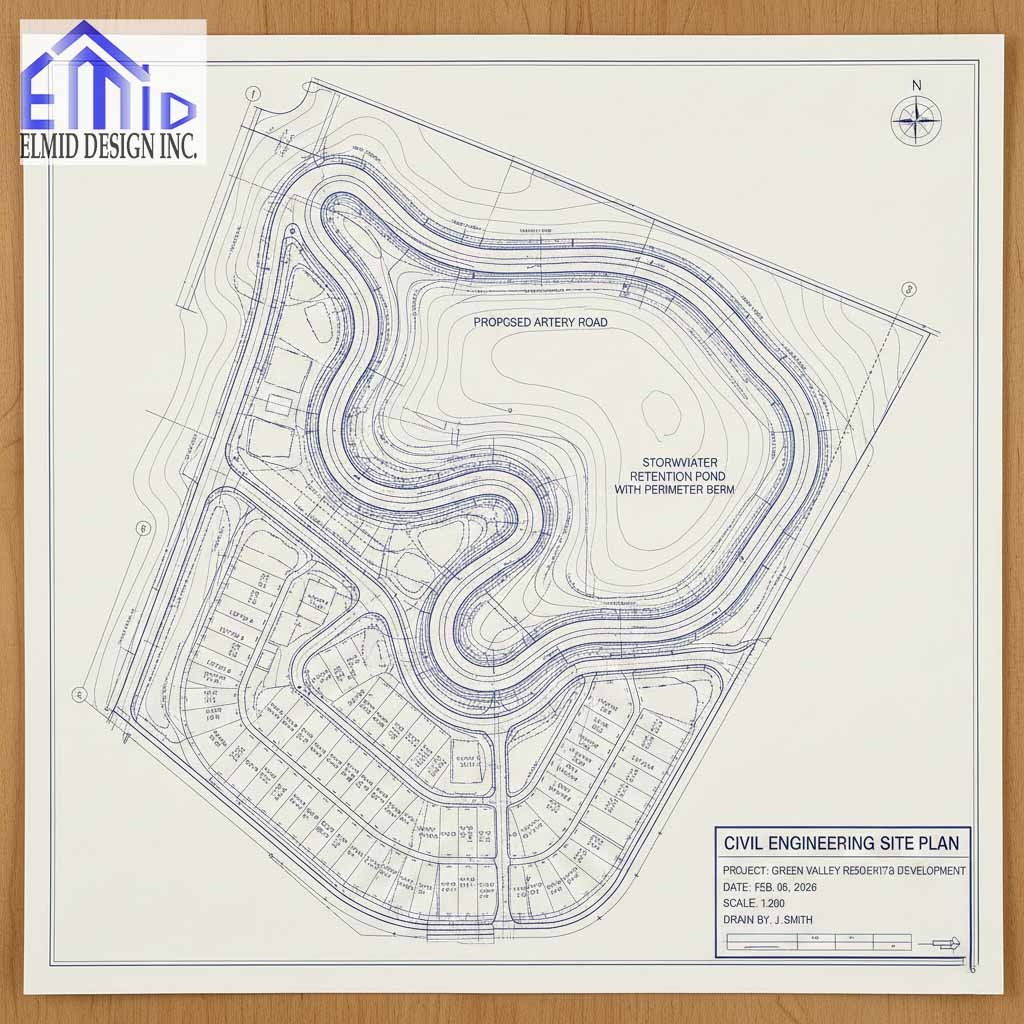
Civil engineering drawings Innisfil include several key sheet types that guide safe development. Site plans show boundaries, access points, and building placement. Grading plans communicate slopes and land elevation changes. Drainage plans direct water movement toward approved outlets. Servicing plans show water, sewer, and utility routes. Detail sheets provide construction instructions written in simple language. Engineers coordinate all sheets so information stays consistent. Reviewers value this clarity because it prevents delays. Contractors rely on complete drawings during construction.
How Civil Engineering Drawings Innisfil Improve Construction
Construction quality improves when teams work from strong drawings. Grading plans guide equipment operators as they shape land. Servicing layouts prevent conflict between utility systems. Drainage patterns protect structures from water issues. Reviewers understand field changes faster when drawings remain clean and consistent. Owners benefit from improved scheduling because strong engineering reduces rework. Innisfil construction becomes more predictable when engineering drawings provide clear direction from start to finish.
Role of Licensed Engineers in Civil Engineering Drawings Innisfil
Licensed engineers shape civil engineering drawings Innisfil through expertise and accountability. Their training helps them design safe grading, drainage, and servicing systems that satisfy municipal rules. Engineers at Elmid Design Inc complete each drawing under a PEO certificate of authorization, which confirms professional responsibility. Owners trust licensed engineers because they deliver reliable and accurate plans. Contractors respect their work because strong engineering reduces risk. Good leadership from licensed engineers improves project outcomes.
Steps Involved in Creating Civil Engineering Drawings Innisfil
Engineering teams follow structured steps to create accurate drawings. Work begins with a full site review and careful study of survey details. Engineers evaluate municipal standards and apply them to layout, grading, and servicing choices. Drawings are prepared with clear labels and simple notes that guide contractors. A final review ensures accuracy and compliance with Innisfil requirements. Owners receive organized drawings that support smooth submission. Structured planning reduces confusion and improves project success.
How Civil Engineering Drawings Innisfil Reduce Project Risk
Project risk decreases when engineering drawings communicate accurate information. Engineers identify slope challenges, utility conflicts, and drainage issues early. Contractors follow clear design instructions to avoid field errors. Reviewers address concerns before construction begins. Owners avoid unexpected cost because designs reflect actual site conditions. Innisfil developments stay safer when planning anticipates potential issues. Strong drawings support stable outcomes and reduce uncertainty.
Common Mistakes in Civil Engineering Drawings Innisfil
Mistakes in drawings create delays and increase cost. Missing elevations cause water problems. Incorrect servicing alignments create utility conflict. Inconsistent labels confuse reviewers and slow approvals. Contractors struggle when drawings lack detail. Owners face redesign expenses when errors appear late. Skilled engineers prevent these issues with detailed review and consistent methods. Clear drawings improve confidence for all parties involved in Innisfil development.
How Technology Improves Civil Engineering Drawings Innisfil
Technology strengthens civil engineering drawings through improved accuracy and simple editing tools. Engineers use advanced software to design grading, servicing, and drainage layouts. Digital models predict water movement and slope behavior. Contractors access updated drawings instantly, which improves coordination. Reviewers understand digital submissions faster because information stays organized. Owners benefit from quick updates when changes arise. Technology helps projects move forward with clarity and efficiency across Innisfil.
Why Experience Matters in Civil Engineering Drawings Innisfil
Experience shapes engineering success because seasoned teams understand local rules and land conditions. Engineers familiar with Innisfil design standards anticipate reviewer concerns. Contractors appreciate drawings prepared by experienced professionals because they match real site behavior. Owners value consistent results created by knowledgeable teams. Elmid Design Inc brings proven expertise that strengthens every drawing set. Experience supports smoother planning and construction.
How Civil Engineering Drawings Innisfil Affect Project Cost
Clear drawings help owners manage budget with confidence. Accurate grading plans reduce excess earthwork. Defined servicing layouts prevent costly utility issues. Faster municipal approvals lower administrative cost. Contractors prepare better estimates when design information remains consistent. Owners avoid financial surprises because engineering predicts site needs. Innisfil projects maintain stronger cost control when drawings follow reliable planning methods.
Civil Engineering Drawings Innisfil and City Compliance
Compliance with Innisfil standards ensures safer and more reliable development. Engineers design drawings that follow municipal rules for grading, drainage, and servicing. Reviewers approve compliant drawings faster because they meet expectations. Contractors follow approved design to meet safety requirements. Owners avoid delays because compliance reduces revisions. Innisfil benefits from structured engineering that supports orderly growth. Strong compliance creates stable long-term results.

Growth in Demand for Civil Engineering Drawings Innisfil
Development across Innisfil continues to rise, which increases the need for civil engineering drawings Innisfil. New homes, commercial buildings, and mixed-use projects depend on accurate drawings that support safe design. Reviewers approve projects faster when drawings present clear information. Contractors trust consistent layouts because they reduce field uncertainty. Owners also gain stability since complete drawings prevent costly redesign. Innisfil development grows stronger when engineering drawings follow reliable standards.
Infrastructure Renewal and Civil Engineering Drawings Innisfil
Infrastructure renewal demands careful planning because older systems require updates. Engineers prepare drawings that show safe routes for new pipes and road improvements. Reviewers study these plans to confirm proper alignment. Contractors use clear drawings to complete work without conflict. Owners benefit from strong planning because upgrades protect essential services. Innisfil infrastructure improves when engineering supports efficient renewal. Renewal success grows when drawings guide safe installation.
Stormwater Planning in Civil Engineering Drawings Innisfil
Stormwater design plays a major role in civil engineering drawings Innisfil. Engineers prepare drainage layouts that manage runoff safely. Reviewers confirm that stormwater systems meet municipal standards. Contractors follow clear details that prevent grading mistakes. Owners avoid water issues because proper planning controls flow. Strong stormwater design protects homes and natural areas. Innisfil developments perform better when drawings guide water movement correctly.
Utility Coordination in Civil Engineering Drawings Innisfil
Utility coordination shapes project success because servicing networks must align with site needs. Engineers design water, sewer, and utility routes with precise placement. Reviewers depend on accurate layouts to protect municipal systems. Contractors work efficiently when servicing routes remain clear. Owners save time and cost because strong coordination prevents conflict. Innisfil projects operate more smoothly when drawings create predictable servicing paths.
Sustainable Design in Civil Engineering Drawings Innisfil
Sustainable design influences every stage of engineering work across Innisfil. Engineers prepare drawings that support natural drainage, reduced runoff, and efficient site use. Reviewers value these features because they align with long-term municipal goals. Contractors install sustainable elements easily when drawings remain simple. Owners appreciate lower maintenance and improved performance. Innisfil benefits from engineering choices that support environmental responsibility.
Civil Engineering Drawings Innisfil for Residential Projects
Residential areas require careful planning because each lot needs safe grading, drainage, and servicing. Engineers prepare drawings that fit local topography. Reviewers confirm compliance with Innisfil standards. Contractors depend on accurate details to avoid problems during installation. Owners understand project impact when drawings remain clear. Innisfil communities grow stronger when residential engineering supports safe land development.
Civil Engineering Drawings Innisfil for Commercial Projects
Commercial sites demand strong engineering because traffic flow, stormwater control, and servicing loads increase. Engineers design layouts that support safe movement and efficient operation. Reviewers check drawings closely to confirm compliance. Contractors rely on consistent information to coordinate multiple trades. Owners appreciate predictable results created by organized drawings. Innisfil businesses benefit from engineering that supports long-term stability.
Sequencing in Civil Engineering Drawings Innisfil
Construction sequencing improves project flow by explaining proper work order. Engineers include structured notes that guide safe coordination. Reviewers appreciate sequencing because it shows strong planning. Contractors reduce conflict between tasks when timing stays clear. Owners enjoy smoother timelines because sequencing removes uncertainty. Innisfil developments progress efficiently when drawings support organized workflow.
Quality Control in Civil Engineering Drawings Innisfil
Quality control maintains accuracy in engineering work across Innisfil. Engineers review each drawing to remove mistakes. Reviewers rely on clear plans because errors cause delay. Contractors need dependable drawings to complete work safely. Owners gain confidence because quality control protects the project. Innisfil developments succeed when engineering teams maintain strong review practices.
Risk Reduction Through Civil Engineering Drawings Innisfil
Risk reduction starts with accurate drawings that reflect real site conditions. Engineers address slope issues, servicing conflicts, and drainage needs early. Reviewers identify concerns before construction begins. Contractors avoid costly errors because drawings guide correct installation. Owners reduce exposure to unexpected problems because design predicts challenges. Innisfil projects remain stable when risk-focused planning leads each stage.
Training Behind Civil Engineering Drawings Innisfil
Training supports engineering quality by giving teams the skills needed to design safely. Engineers apply this training to create clear grading, drainage, and servicing plans. Reviewers trust drawings prepared by trained professionals. Contractors follow layouts confidently because they match field conditions. Owners appreciate simple explanations that support better decisions. Innisfil projects rely on skilled engineers to guide development.
Long-Term Maintenance Supported by Civil Engineering Drawings Innisfil
Long-term maintenance stays easier when drawings present clear information about servicing routes and site grading. Contractors use drawings to complete repairs with confidence. Owners plan improvements using accurate documents. Reviewers reference drawings when analyzing nearby development. Strong documentation reduces confusion and protects site safety. Innisfil properties benefit from engineering drawings that support long-term performance.
Digital Standards Improving Civil Engineering Drawings Innisfil
Digital standards improve civil engineering drawings Innisfil because modern tools create cleaner layouts and more accurate data. Engineers use updated software that supports clear grading, servicing, and drainage design. These tools also allow quick revisions when project conditions change. Reviewers understand digital files easily because the information stays organized. Contractors depend on these drawings to complete work safely. Owners gain confidence because digital accuracy reduces confusion. Development across Innisfil benefits greatly when digital methods support engineering work.
Municipal Expectations for Civil Engineering Drawings Innisfil
Municipal expectations shape each step of engineering design in Innisfil. Engineers follow grading, drainage, and servicing rules that match local standards. Reviewers confirm every detail to ensure compliance. Contractors rely on approved drawings to avoid costly errors. Owners appreciate faster approvals because clear drawings meet expectations early. Strong alignment with municipal requirements improves project results. Innisfil developments function better when engineering teams understand town standards clearly.
Engineering Drawings Innisfil in High-Density Areas
High-density projects in Innisfil require careful and precise planning. Engineers prepare drawings that balance access, elevation changes, and servicing routes within tight spaces. Reviewers study these drawings closely to confirm safe movement. Contractors depend on accurate details to avoid conflict between trades. Owners appreciate certainty created by strong design. High-density areas perform better when engineering drawings support predictable coordination. Safe results grow from clear and consistent planning.
Coordination Between Architects and Civil Engineering Drawings Innisfil
Coordination between architects and engineers strengthens overall design quality. Drawings reflect shared decisions on elevations, grading, and servicing. Reviewers prefer coordinated drawing sets because they reduce conflicting information. Contractors depend on aligned plans that improve workflow. Owners trust teams that communicate clearly because coordination prevents unnecessary changes. Strong cooperation improves construction efficiency. Innisfil projects gain reliable outcomes when all design disciplines work together.
Civil Engineering Drawings Innisfil and Public Safety
Public safety stands at the center of civil engineering drawings Innisfil. Engineers study site conditions to design safe slopes, drainage paths, and servicing systems. Reviewers confirm that safety features satisfy municipal rules. Contractors follow these drawings because they reduce onsite hazards. Owners trust engineering teams that apply safety-focused design. Community well-being improves when drawings support careful planning. Innisfil benefits from engineering that puts safety first.
Future Trends in Civil Engineering Drawings Innisfil
Future trends continue to reshape civil engineering drawings Innisfil. Engineers use modelling tools that show drainage and grading behavior under different conditions. Reviewers understand these models quickly because they present clear patterns. Contractors plan earlier when design software highlights challenges. Owners appreciate improved accuracy and faster updates. New technology strengthens decision-making and supports safer outcomes. Innisfil development grows more efficient as these trends expand.
Education and Awareness in Civil Engineering Drawings Innisfil
Education strengthens project success because informed owners make better decisions. Engineers explain grading, drainage, and servicing in simple language. Clients understand project impact when details remain clear. Reviewers receive stronger submissions prepared by knowledgeable owners. Contractors avoid confusion when expectations stay consistent. Innisfil projects progress smoothly when everyone understands engineering purpose. Awareness supports better communication through each stage.
FAQ
What do civil engineering drawings Innisfil include?
Civil engineering drawings Innisfil include grading details, servicing layouts, drainage paths, and site plans. Engineers prepare these drawings to follow municipal standards. Contractors use them to complete work safely and correctly.
Why do I need civil engineering drawings Innisfil?
Civil engineering drawings support safe planning, permit approval, and reliable construction. Innisfil requires accurate grading, servicing, and drainage information. Strong drawings reduce delays and prevent costly changes during construction.
Who prepares civil engineering drawings Innisfil?
Licensed engineers prepare civil engineering drawings Innisfil. Firms such as Elmid Design Inc complete this work through professionals holding a PEO certificate of authorization. Their training ensures accuracy and compliance with local rules.
How long do civil engineering drawings Innisfil take?
Timelines vary by project size and complexity. Smaller projects require short design periods. Larger developments need more coordination. Engineers complete drawings faster when owners provide complete information early.
Do civil engineering drawings Innisfil help with construction?
Civil engineering drawings guide construction by showing correct elevations, slopes, drainage features, and servicing routes. Contractors rely on these drawings to avoid mistakes. Clear information supports safe and efficient work onsite.

Engineering Expertise Strengthening Innisfil Development
Elmid Design Inc provides civil engineering drawings Innisfil clients rely on for safe, accurate, and compliant development. Licensed engineers complete each project under a PEO certificate of authorization and prepare detailed grading, drainage, and servicing designs that follow municipal standards. Owners value their dependable approach because every drawing improves approval success, reduces construction risk, and supports strong long-term site performance across Innisfil.
Geographic Locations That We Service:
Our Licensed Professional Engineers specializing in Engineered Site Grading Plans offer the best-engineered site grading plan, lot grading and erosion plan, and drainage plan to obtain site plan approval and building permits in Ontario, including a wide range of municipalities. Each area boasts unique features and requirements, making our tailored approach essential for success.
Toronto and Surrounding Areas
In the vibrant heart of Ontario, we service Toronto (City of Toronto) and surrounding areas. Additionally, we cover Oshawa (City of Oshawa), Pickering (City of Pickering), and Clarington (Municipality of Clarington). Furthermore, our expertise extends to Ajax (Town of Ajax), Whitby (Town of Whitby), Brock (Township of Brock), Scugog (Township of Scugog and Uxbridge (Township of Uxbridge).
Halton Region
Moving to the Halton Region, our services encompass Burlington (City of Burlington) and Halton Hills (Town of Halton Hills). Also included are Milton (Town of Milton) and Oakville (Town of Oakville).
Peel Region
In the Peel Region, we provide services in Brampton (City of Brampton), Mississauga (City of Mississauga), and Caledon (Town of Caledon).
York Region
Our services in the York Region cover Vaughan (City of Vaughan), Aurora (Town of Aurora), and East Gwillimbury (Town of East Gwillimbury). We also cater to Georgina (Town of Georgina), Markham (City of Markham), Newmarket (Town of Newmarket), Richmond Hill (City of Richmond Hill), Whitchurch-Stouffville (Town of Whitchurch-Stouffville), King (Township of King), and Bradford-West Gwillimbury (Town of Bradford-West Gwillimbury). Each municipality here offers a distinct setting, requiring our specialized approach.
Other Southern Ontario Cities and Towns
We also serve many other cities and towns in Southern Ontario. These include Hamilton (City of Hamilton), St. Catharines (City of St. Catharines), Niagara on the Lake (Town of Niagara on the Lake), Brant (County of Brant), Cambridge (City of Cambridge), Kitchener (City of Kitchener), Waterloo (City of Waterloo), and Woodstock (City of Woodstock). Furthermore, we operate in Guelph (City of Guelph), Centre Wellington (Township of Centre Wellington), Shelburne (Town of Shelburne), Orangeville (Town of Orangeville), New Tecumseth (Town of New Tecumseth), Essa (Town of Essa), Collingwood (Town of Collingwood), Wasaga Beach (Town of Wasaga Beach), Barrie (City of Barrie), Midland (Town of Midland), Orillia (City of Orillia), Ramara (Town of Ramara), Minden Hills (Town of Minden Hills), North Kawartha (Town of North Kawartha), Kawartha Lakes (City of Kawartha Lakes), Peterborough (City of Peterborough), Selwyn (Town of Selwyn), and Brighton (Municipality of Brighton).